Content Menu
● Molecular Formula and Atom Composition
● Detailed Molecular Structure of Procaine
● Functional Groups and Their Roles
>> Ester Group
>> Amino Group
● Hybridization of Atoms in Procaine
● Procaine in Pharmaceutical Manufacturing
● Difference in Procaine Hydrochloride
● Applications in Biotechnology and Healthcare
● Frequently Asked Questions (FAQ)
>> 1. How many atoms are there in one molecule of procaine?
>> 2. What functional groups are present in procaine?
>> 3. How does procaine's molecular structure relate to its function?
>> 4. What is the difference between procaine and procaine hydrochloride in atomic terms?
>> 5. Why is the atomic composition of procaine important for manufacturing?
Procaine is a synthetic local anesthetic widely used in medical and dental procedures to numb targeted areas. Chemically classified as an amino ester, procaine's molecular formula is C13H20N2O2, indicating that the molecule contains 13 carbon atoms, 20 hydrogen atoms, 2 nitrogen atoms, and 2 oxygen atoms. This totals to 37 atoms in a single procaine molecule. Knowing the atom composition and structure of procaine is crucial for pharmaceutical research, manufacturing, and application development in the fields of biotechnology, medicine, and healthcare devices.
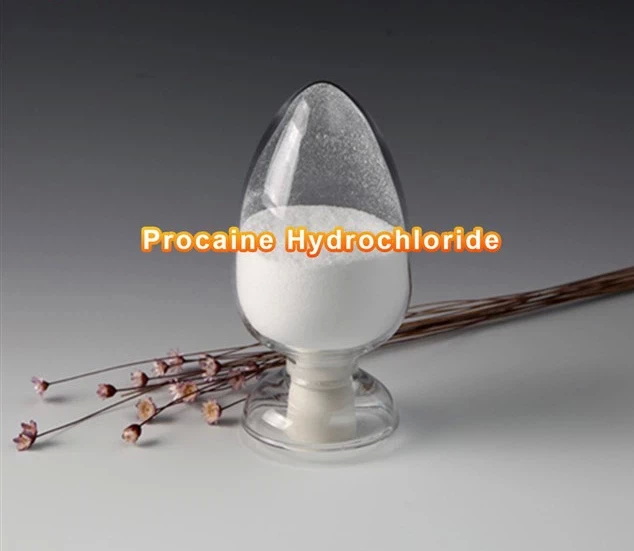
Procaine, also known as Novocain, is an ester local anesthetic developed in the early 20th century. It functions by temporarily blocking nerve signal transmission, providing localized pain relief during surgeries or dental treatments. Procaine belongs to the amino ester group of anesthetics, meaning it contains an ester bond and an amino group within its chemical structure.[3][5]
Its primary usage is to numb tissues and block sensory nerves from transmitting pain signals, thereby allowing procedures without discomfort. Procaine is often preferred for its relative safety and rapid metabolism in the human body compared to other anesthetics.
The molecular formula for procaine is expressed as:
C13H20N2O2
This formula breaks down as:
- 13 carbon (C) atoms
- 20 hydrogen (H) atoms
- 2 nitrogen (N) atoms
- 2 oxygen (O) atoms
Summing these, the total atom count per molecule is:
13+20+2+2=37 atoms
This structure underlies all of procaine's physical and chemical properties.
Understanding the quantity of atoms alone only tells part of the story; their arrangement within the molecule greatly influences procaine's biological functions.
Procaine consists of three key components:
- An aromatic benzene ring (a hexagonal ring of six carbon atoms with alternating double bonds)
- An ester functional group linking the benzene ring to the side chain
- A diethylaminoethyl side chain containing the two nitrogen atoms
The aromatic ring is critical as it provides structural stability and influences how procaine interacts with lipid membranes. The ester linkage (–COO–) is the site where enzymatic hydrolysis occurs in the body, determining the drug's metabolism rate. Nitrogen atoms located in the diethylaminoethyl group contribute to procaine's anesthetic potency by interacting with nerve cell receptors.[1][6]
The benzene ring in procaine is a planar, conjugated system that imparts lipophilicity (fat solubility), important for crossing nerve membranes. The ring also carries an amino group (–NH2), influencing polarity and receptor binding efficiency.
The ester bond is hydrolyzed by plasma esterases after administration, breaking procaine down into para-aminobenzoic acid (PABA) and diethylaminoethanol. This hydrolysis is essential for safety, as it limits the duration of anesthetic effect and reduces toxicity.
The nitrogen atoms are part of the diethylaminoethyl side chain, a tertiary amine that can accept protons. This property affects how procaine binds to sodium channels in nerves, blocking their function and preventing nerves from transmitting pain signals.
In the aromatic ring, carbon atoms adopt an sp2 hybridization, forming planar trigonal bonding arrangements. The side chain carbons are mostly sp3 hybridized, allowing for tetrahedral geometries that contribute to molecular flexibility.
This variety in hybridization states is critical for the molecule's three-dimensional conformation, directly impacting how well procaine fits into receptor sites and penetrates lipid membranes.[11]
Procaine works by blocking voltage-gated sodium channels in nerve cell membranes. When these channels are blocked, sodium ions cannot enter the nerve cells, preventing the generation and propagation of electrical impulses that convey pain to the brain.
This blockade is thought to occur at the intracellular portion of the sodium channel, close to where the nitrogen atoms in procaine bind. The molecular structure, particularly the arrangement of its functional groups and atom types, is crucial for this interaction.[4][3]
An in-depth understanding of procaine's atomic and molecular structure helps manufacturers ensure quality and efficacy during production. The synthesis process involves creating the ester bond by reacting 4-aminobenzoic acid derivatives with diethylaminoethanol. Strict control of reaction conditions ensures accurate atom placement and high purity.
Quality control tests often analyze the molecular weight, atom composition, and structure using tools like Nuclear Magnetic Resonance (NMR) and mass spectrometry, which rely on molecular formula accuracy.[5][10]
Pharmaceutical-grade procaine is often formulated as procaine hydrochloride for improved stability and solubility. This salt form adds one chlorine atom per molecule, changing the molecular formula to:
C13H21ClN2O2
Thus, the total atom count increases to 38. This modification does not affect the anesthetic qualities but enhances drug handling and delivery.[12]
Procaine's metabolism mainly occurs via plasma esterases that hydrolyze the ester bond, resulting in inactive metabolites excreted through the kidneys. Understanding how atoms rearrange during metabolism helps in predicting drug behavior, side effects, and interactions.
The composition and bond locations—especially the ester and amino groups—are critical in these metabolic pathways, informing dosing and safety in clinical use.[4]
Procaine is not only used in local anesthesia but also explored for additional pharmacological effects, such as potential anti-inflammatory and neuroprotective actions. Biotechnology firms leverage the knowledge of its molecular formula and structure to develop novel formulations, drug delivery systems, and combined therapies.
In conclusion, the molecule of procaine consists of 37 atoms—13 carbon, 20 hydrogen, 2 nitrogen, and 2 oxygen—that assemble into a distinct structure enabling its anesthetic action. The knowledge of this atom count and molecular arrangement is vital for professionals engaged in biotechnology, pharmaceuticals, and healthcare product manufacturing. For companies seeking premium OEM services in procaine production, we provide advanced R&D, quality assurance, and customization tailored to global brands and wholesalers.
Contact us today to learn how we can support your pharmaceutical manufacturing needs with high-quality procaine and related compounds.
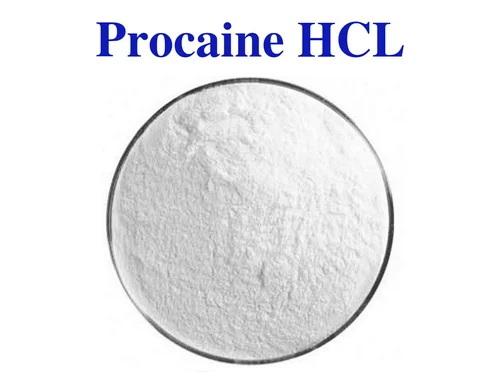
One procaine molecule contains 37 atoms in total: 13 carbon, 20 hydrogen, 2 nitrogen, and 2 oxygen atoms.
Procaine contains an aromatic benzene ring, an ester group, and a diethylaminoethyl side chain with nitrogen atoms.
Its structure allows it to block sodium channels in nerves, preventing pain signals through functional groups that interact with receptors.
Procaine hydrochloride includes one chlorine atom more than procaine, resulting in a total of 38 atoms per molecule.
Precise knowledge of atoms and structure ensures correct synthesis, quality control, and effective pharmaceutical formulations.
[1](https://jglobal.jst.go.jp/en/detail?JGLOBAL_ID=200907067942726284)
[2](https://www.hmdb.ca/metabolites/HMDB0014859)
[3](https://www.ncbi.nlm.nih.gov/books/NBK551556/)
[4](https://go.drugbank.com/drugs/DB00721)
[5](https://en.wikipedia.org/wiki/Procaine)
[6](https://pubchem.ncbi.nlm.nih.gov/compound/Procaine)
[7](https://www.sciencedirect.com/topics/chemistry/procaine)
[8](https://www.sciencedirect.com/science/article/abs/pii/0006291X70905802)
[9](https://www.ebi.ac.uk/chebi/chebiOntology.do?chebiId=CHEBI%3A8430)
[10](https://www.tcichemicals.com/JP/en/p/P1961)
[11](https://askfilo.com/user-question-answers-smart-solutions/procaine-cccccn-cc-ccoc-o-c1ccc-n-o-o-cc1-fig-7-1-a-i-name-3330373331363936)
[12](https://pubchem.ncbi.nlm.nih.gov/compound/Procaine-Hydrochloride)
Hot tags: Procaine Atoms, Procaine Molecular Structure, Procaine Chemical Formula, Procaine Composition, Procaine Atoms Count, Procaine Chemistry, Procaine Molecular Weight, Procaine Elements, Procaine Chemical Properties, Procaine Structure Analysis