Content Menu
● Understanding Lidocaine Powder: Properties and Uses
● Raw Material Selection and Preparation
● Lidocaine Powder Manufacturing: Step-by-Step Process
>> Chemical Synthesis Pathways
>> Purification and Quality Control
● Factory Equipment and Technology
● OEM and Customization Capabilities
● Key Benefits of Partnering with a Chinese OEM Manufacturer
● Conclusion and Call to Action
● FAQ
>> 1. What is the minimum order quantity (MOQ) for lidocaine powder OEM?
>> 2. What purity levels are achievable for lidocaine powder?
>> 3. How long does the manufacturing and delivery process take?
>> 4. Can you supply supporting technical documents and compliance certificates?
>> 5. Is your lidocaine powder suitable for pharmaceutical, cosmetic, or veterinary applications?
Lidocaine powder is a vital pharmaceutical ingredient widely used in the medical, dental, and cosmetic industries as a local anesthetic and antiarrhythmic agent. As a Chinese factory specializing in biotechnology, pharmaceutical health, and medical devices, we provide high-purity lidocaine powder and OEM services for overseas brands, wholesalers, and manufacturers. This article explores the detailed manufacturing process of lidocaine powder, the technologies involved, quality standards, and how OEM partners can benefit from reliable Chinese suppliers. Multiple diagrams, videos, and real-world images clarify each phase for both technical readers and business decision-makers.
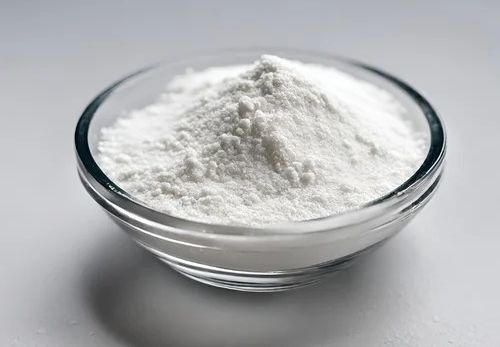
Lidocaine, also known as lignocaine, is a white crystalline powder with potent anesthetic properties. It is commonly used as a local anesthetic to numb tissue in specific areas, and as an antiarrhythmic drug to manage irregular heart rhythms. Beyond its medical applications, lidocaine serves as a key ingredient in various topical creams, sprays, and gels designed for pain relief. Moreover, it acts as a raw material for producing different pharmaceutical and cosmetic formulations, making it an indispensable compound in healthcare.
Its chemical stability, rapid onset, and moderate duration of action make lidocaine widely preferred by healthcare professionals. The powder form allows for easy incorporation into various formulations and ensures a longer shelf life under appropriate storage conditions. The chemical name for lidocaine is 2-(diethylamino)-N-(2,6-dimethylphenyl)acetamide, with the molecular formula C14H22N2O.
The quality and efficacy of the final lidocaine powder product depend substantially on the purity and consistency of the raw materials used in its manufacture. Primary raw materials include:
- 2,6-Dimethylaniline
- Chloroacetyl chloride
- Diethylamine
- Solvents such as acetone, toluene, and water used in various synthesis steps
These raw materials must meet strict pharmaceutical-grade standards, ensuring they are free from contaminants and impurities that could compromise the safety or potency of the lidocaine powder. Incoming quality control involves physicochemical property testing, screening for foreign materials, and verification of purification levels using chromatographic techniques. This strict selection helps prevent any downstream production issues and guarantees the integrity of the synthesized lidocaine.
In a typical pharmaceutical manufacturing facility, traceability is maintained from raw material reception to the final product, supported by recording batch numbers, supplier certificates, and analytical results. This system aligns with global GMP (Good Manufacturing Practices) requirements and ensures regulatory compliance.
The manufacturing of lidocaine powder primarily follows a chemical synthesis route involving acylation and alkylation reactions. This method enables production of lidocaine base with high purity.
1. Acylation Step
2,6-dimethylaniline reacts with chloroacetyl chloride in an organic solvent (usually acetone), in the presence of a carbonate catalyst. This forms an intermediate compound called 2-chloro-N-(2,6-dimethylphenyl)acetamide.
2. Alkylation Step
The intermediate is subsequently reacted with diethylamine, resulting in the formation of lidocaine base. This step often requires refluxing under controlled temperature for several hours to ensure complete reaction and yield optimization.
The process typically involves:
- Precise weighing and mixing of raw materials to maintain stoichiometric balance
- Controlled reaction conditions (temperature, pH, time) to optimize chemical conversions
- Isolation and purification of intermediates through filtration and washing
- Solvent recovery and reuse to minimize environmental impact
After the synthesis reaction, the crude lidocaine product undergoes recrystallization and vacuum drying to achieve the desired powder purity (commonly above 99%). The powder is then sieved to ensure uniform particle size distribution, improving its suitability for further pharmaceutical processing and formulation.
Critical purification steps ensure that impurities such as residual solvents, defined by regulatory limits, are drastically reduced. The powder undergoes:
- Filtration to remove particulate matter
- Recrystallization to eliminate by-products
- Drying via vacuum ovens or spray dryers to reduce moisture content below specified thresholds
Stringent quality assurance protocols include:
- High-performance liquid chromatography (HPLC) for assay and impurity profiling
- Gas chromatography-mass spectrometry (GC-MS) for residual solvent analysis
- Moisture content testing using Karl Fischer titration
- Microbiological examinations to ensure sterility or low bioburden
Only batches meeting pharmacopeial specifications (USP, EP, ChP) are released for packaging and distribution.
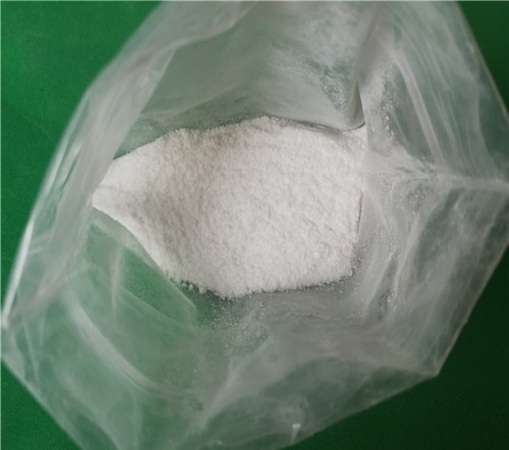
Manufacturing lidocaine powder requires specialized equipment designed to handle corrosive chemicals and maintain sterile environments:
- Reactors: Glass-lined or stainless steel reactors with automated temperature and agitation control for reproducible chemical reactions
- Filtration Units: To separate solids from liquids efficiently at different process stages
- Dryers: Vacuum dryers, fluid bed dryers, or spray dryers fashioned for moisture removal without degrading product quality
- Milling and Sieving Machines: For particle size adjustment to meet client specifications
- Cleanrooms: Controlled environments minimizing contamination during final packaging stages, adhering to ISO standards and GMP guidelines
These technologies not only ensure high product quality but also improve production efficiency and scalability.
Our factory excels in providing extensive Original Equipment Manufacturer (OEM) services tailored to client requirements. Key services include:
- Contract manufacturing allowing clients to leverage our expertise for high-quality bulk lidocaine powder production
- Custom packaging solutions ranging from small sample packs (e.g., 1kg) up to industrial volumes (100kg or more) in client-branded containers
- Private labeling and customized documentation such as Certificates of Analysis (COA), Material Safety Data Sheets (MSDS), and compliance certifications
- Flexible manufacturing adjustments including particle size specification, moisture content control, and impurity thresholds calibrated per international market needs
This client-oriented approach means that brands, wholesalers, and pharmaceutical manufacturers can streamline product development and market entry with trusted supply and consistent quality.
Proper packaging is critical for protecting lidocaine powder from contamination, moisture, and degradation during storage and transit. Packaging materials typically include:
- Food-grade double polyethylene (PE) bags ensuring moisture barrier
- Sturdy fiber drums or export-grade plastic barrels for bulk shipment
- Cartons with clear labeling in multiple languages, including safety handling and storage instructions
Our logistics capabilities cover air freight, sea shipping, and express courier options, fully supported by efficient customs clearance processes. We serve customers globally, providing tailored logistics solutions that balance cost, speed, and safety.
Choosing our Chinese factory as your lidocaine powder OEM partner offers several competitive advantages:
- Cost-effective manufacturing enabling competitive pricing without compromising quality
- Advanced quality management systems aligned with global GMP and ISO standards ensuring pharmaceutical-grade products
- A skilled professional team offering technical support, regulatory compliance assistance, and rapid response to client inquiries
- Flexible scale of production from trial batches to large-scale commercial volumes, enabling business growth
- Strong global supply chain experience, shipping to key markets such as Europe, North America, Africa, and Asia-Pacific with reliable delivery timelines
These features make us a trustworthy partner for brands and companies seeking stable, high-quality lidocaine powder supply.
The manufacture of lidocaine powder is a sophisticated process demanding precise chemical synthesis, rigorous purification, and comprehensive quality control. Our state-of-the-art manufacturing facility and expert team ensure consistent delivery of pharmaceutical-grade lidocaine powder suitable for diverse applications in medicine, veterinary care, and cosmetics.
We invite you to explore a cooperation opportunity with our factory as your trusted OEM supplier. Whether you need bulk supplies, private labeling, or custom formulations, our professional services will support your brand's success. Contact us today to request samples, pricing, or technical discussions and take your product to the next level with high-quality lidocaine powder from an experienced Chinese partner.
Our MOQ typically starts at 1kg. We offer competitive pricing discounts for bulk orders and flexible packaging sizes to accommodate different supply chain needs.
Our manufacturing process consistently produces lidocaine powder with a purity of 99% or higher, adhering to USP, EP, and Chinese Pharmacopeia standards.
Production lead times range from 7 to 15 days depending on order size and customization. We support expedited shipping options with global delivery services.
Yes, all orders come with detailed Certificates of Analysis (COA), Material Safety Data Sheets (MSDS), GMP certificates, and other requested regulatory documentation.
We supply lidocaine powder suitable for all major applications, including human pharmaceuticals, veterinary formulations, and topical cosmetic products. Custom product specifications are available to meet specific market requirements.
[1] https://patents.google.com/patent/CN102070483B/en
[2] https://www.made-in-china.com/products-search/hot-china-products/Lidocaine_Factory.html
[3] https://carolinachemical.com/product/lidocaine-powder/
[4] https://patents.google.com/patent/CN112521298A/en
[5] https://pmc.ncbi.nlm.nih.gov/articles/PMC7182823/
[6] https://www.cerritos.edu/chemistry/chem_212/Documents/Lab/10_lidocaine.pdf
[7] https://www.supplybenzocaine.co.uk/how-to-make-lidocaine-powder.html
[8] https://www.sciencedirect.com/science/article/pii/S0378517324006112
[9] https://en.wikipedia.org/wiki/Lidocaine
[10] https://bg.xazbbio.com/active-pharmaceutical-ingredient/pure-lidocaine-powder
[11] https://pmc.ncbi.nlm.nih.gov/articles/PMC9025765/
[12] https://pmc.ncbi.nlm.nih.gov/articles/PMC9191217/
[13] https://www.spectrumchemical.com/media/flowchart/Flow_Chart_LI102.pdf
[14] https://www.sciencedirect.com/science/article/pii/S1742706122002720
[15] https://www.sigmaaldrich.com/JP/en/product/sigma/l7757
[16] https://www.supplybenzocaine.co.uk/how-to-make-lidocaine-hcl-powder.html
[17] https://www.webmd.com/drugs/2/drug-170340/aspercreme-lidocaine-hcl-topical/details
[18] https://www.sciencedirect.com/topics/chemistry/lidocaine
[19] https://www.nbinno.com/article/active-pharmaceutical-ingredients-apis/navigating-the-global-market-sourcing-high-quality-lidocaine-hydrochloride-powder
[20] https://go.drugbank.com/drugs/DB00281
[21] https://www.sigmaaldrich.com/MZ/en/product/sigma/l7757
[22] https://www.uv.mx/personal/izcamacho/files/2012/02/Pharmaceutical-Manufacturing-Handbook-Production-and-Processes-Wiley-2008.pdf
[23] https://egrove.olemiss.edu/cgi/viewcontent.cgi?article=2826&context=etd
[24] https://www.youtube.com/watch?v=9kteY5zUIhk
[25] https://www.journals.innovareacademics.in/index.php/ajpcr/article/download/27057/16038/141754
[26] https://www.youtube.com/watch?v=mVBBJiTGfMo
[27] https://www.hkstp.org/en/directory/biomedical-technology/powder-pharmaceuticals-incorporated
[28] https://pubs.acs.org/doi/10.1021/acs.oprd.6b00165
[29] https://www.sigmaaldrich.com/VU/en/product/sigma/l7757
[30] https://www.spectrumrx.com/media/flowchart/LI103_-_flowchart.pdf
[31] https://www.youtube.com/watch?v=RiTN1EYB-rs
[32] https://www.indiamart.com/proddetail/lidocaine-hydrochloride-powder-14895796573.html
[33] https://www.pmda.go.jp/files/000221481.pdf
[34] https://jpdb.nihs.go.jp/jp14e/14data/Part-I/Lidocaine.pdf
[35] https://www.supplybenzocaine.co.uk/how-to-turn-liquid-lidocaine-into-powder-form.html
Hot tags: Lidocaine Manufacturing Process, How Lidocaine is Made, Lidocaine Production Companies, Lidocaine Powder Suppliers, Lidocaine Manufacturing Standards, Lidocaine Chemical Production, Lidocaine Powder Quality Control, Lidocaine Production Methods, Lidocaine Manufacturing Regulations, Lidocaine Industry Overview