Content Menu
● Acid-Base Properties in Depth
● pH-Dependent Behavior and Solubility
● Functional Group Contributions
● Historical and Pharmaceutical Significance
● Laboratory Characterization Techniques
● Modern Industrial and Research Applications
● Safety, Handling, and Regulatory Notes
● Advanced Spectroscopic and Computational Insights
● Metabolic and Toxicological Pathways
● Formulation Challenges and Solutions
● FAQ
>> 1. What is the pH of Phenacetin in water?
>> 2. Why is Phenacetin considered basic rather than acidic?
>> 3. Does Phenacetin react differently with acids versus bases?
>> 4. How does pH affect Phenacetin solubility?
>> 5. Is Phenacetin available for current industrial use?
Phenacetin, once a widely used analgesic and antipyretic, exhibits weak basic properties primarily due to its acetamido functional group. This characteristic significantly influences its chemical behavior, solubility profiles, and potential applications in modern research and industrial settings. Understanding whether Phenacetin leans acidic or basic helps researchers, formulators, and manufacturers optimize its handling and integration into pharmaceutical processes.
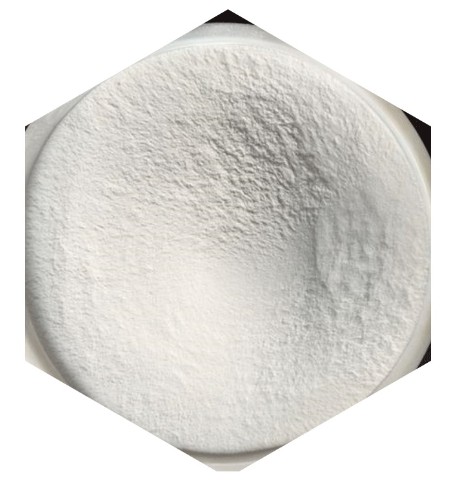
Phenacetin, chemically known as N-(4-ethoxyphenyl)acetamide, carries the molecular formula C₁₀H₁₃NO₂ and a molecular weight of 179.22 g/mol. First synthesized in 1878 by the German chemist Ludwig Darmstaedter and later marketed by Bayer in 1887 under the trade name Acetophenetidin, it served as a popular pain reliever and fever reducer until safety concerns led to its withdrawal from consumer markets in the 1980s. Despite its historical ban due to nephrotoxicity, Phenacetin remains relevant in laboratory research, chemical synthesis, and as a reference standard for analytical chemistry.
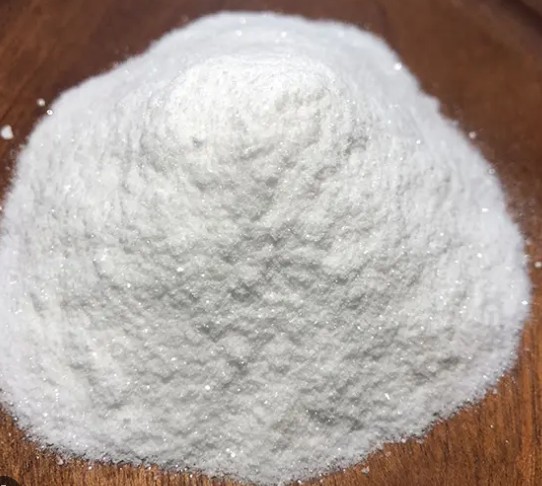
Its white, crystalline powder form, with a characteristic odorless profile and melting point between 134-136°C, makes it stable under standard conditions. Solubility plays a key role in its behavior: sparingly soluble in water (about 1 g per 1310 mL at room temperature), yet more freely soluble in ethanol, chloroform, and acetone. This solubility pattern hints at its amphiphilic nature, bridging hydrophobic and hydrophilic environments, which ties directly into its acid-base classification.
At the core of Phenacetin's chemistry lies a benzene ring substituted at the para position with an ethoxy group (-OCH₂CH₃) and an acetamido group (-NHCOCH₃). The ethoxy moiety introduces mild electron-donating effects through resonance and inductive influences, while the acetamido group features a nitrogen atom sandwiched between an electron-withdrawing carbonyl and the aromatic ring. This structural arrangement determines its acid-base tendencies.
Visualize the molecule: the nitrogen lone pair in the -NH- linkage remains available for protonation, albeit weakened by the adjacent carbonyl's pull. No strongly acidic protons, such as those in carboxylic acids or phenols, exist in the structure. Instead, the ether oxygen and amide contribute to overall neutrality, but the nitrogen tips the scale toward basicity. Synthetic routes typically involve acetylation of p-phenetidine with acetic anhydride, a reaction yielding high purity under controlled pH conditions.
Quantum mechanical calculations, such as those using density functional theory (DFT), reveal electron density concentrated on the nitrogen, supporting its role as a weak base. The para substitution enhances molecular planarity, improving crystal packing and optical properties, which find niche uses in materials science today.
Phenacetin classifies as a weak base, not acidic. The key evidence stems from the acetamido group's nitrogen, which has a pKa of its conjugate acid around 0.5 to 2.5—typical for amides with aromatic conjugation. This low pKa indicates feeble proton acceptance compared to aliphatic amines (pKa ~10-11), but sufficient to distinguish it from acidic compounds.
In practical terms, Phenacetin does not donate protons readily; titration curves show it requires strong acids like HCl to form soluble salts, confirming basic character. No deprotonation occurs in basic media, unlike acids that fizz with NaOH. pH measurements of saturated aqueous solutions hover near 6.0-7.0, reflecting minimal hydrolysis or ionization at neutral conditions.
Temperature and solvent effects modulate this: solubility jumps in hot water (1 g per 82 mL boiling), slightly acidifying solutions due to minor amide hydrolysis. In buffered systems, Phenacetin remains stable, making it ideal for pH-controlled formulations. Comparative studies with analogs like acetanilide (purely neutral) or acetaminophen (mildly acidic due to phenol) underscore Phenacetin's unique weakly basic profile.
When dissolved, Phenacetin maintains near-neutral pH due to low water solubility and limited dissociation. A 0.1% solution might register pH 6.5, shifting mildly alkaline in dilute acids via protonation: RNH + H⁺ → RNH₂⁺. This salt formation dramatically boosts aqueous solubility, a principle exploited in pharmaceutical extractions.
In acidic environments (pH < 4), protonation enhances polarity, aiding dissolution for analytical purposes. Neutral to basic conditions (pH > 7) keep it unionized, favoring organic phase partitioning—useful in chromatography. Volatility data (vapor pressure ~10⁻⁶ mmHg) and low Henry's law constant indicate negligible airborne hydrolysis, preserving pH stability in storage.
Temperature ramps increase solubility exponentially, with Arrhenius-like kinetics; at 100°C, dissolution accelerates without extreme pH swings. Impurities like free p-phenetidine (more basic) can skew measurements, emphasizing purification's role. These traits position Phenacetin as a model for studying pH-responsive drug delivery systems.
Dissecting the structure: the acetamido (-NHCOCH₃) drives basicity. The nitrogen lone pair delocalizes into the carbonyl π-system, reducing availability but not eliminating it. Infrared spectroscopy confirms this: N-H stretches at 3300 cm⁻¹ shift upon acidification, while C=O remains at 1650 cm⁻¹.
The ethoxy group (-O-CH₂-CH₃) acts as an electron donor via +R effect, subtly enhancing nitrogen basicity compared to unsubstituted acetanilide. Aromatic ring π-electrons stabilize the conjugate acid through resonance. Absent are acidic functionalities—no -OH, -COOH, or -SH groups to release H⁺.
Reactivity tests reinforce this: Phenacetin forms pastes with alkalies (no dissolution) but dissolves in dilute HCl, forming the hydrochloride salt. Hydrolysis under harsh basic conditions cleaves the amide, yielding p-phenetidine and acetate, but ambient neutrality prevails. These interactions guide safe handling protocols.
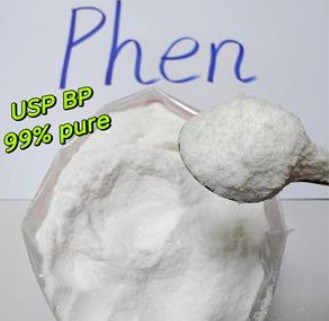
Phenacetin's journey began as a safer alternative to salicylates, prescribed for headaches and fevers. By the early 20th century, it starred in combinations like APC powder (aspirin-phenacetin-caffeine). Metabolism via CYP1A2 demethylates it to acetaminophen, with pH influencing enzyme activity and renal clearance.
Nephrotoxicity emerged in the 1960s-70s, linked to oxidative metabolites forming protein adducts at specific pH. Bans followed in the US (1983), EU, and elsewhere, curtailing clinical use. Yet, its legacy endures in toxicology studies, metabolism research, and as a synthetic intermediate for paracetamol production.
pH control proved crucial historically: alkaline impurities accelerated degradation, while acidic stabilization extended shelf life. Today, reference standards ensure analytical accuracy in drug testing labs worldwide.
Confirming basicity demands precise methods. pH electrometry on fresh solutions provides baseline data. Acidimetric titration tracks equivalence points, with phenolphthalein indicating salt formation.
NMR spectroscopy shines: ¹H NMR shows amide NH at ~9 ppm, shifting downfield in DCl. ¹³C NMR tracks carbonyl deshielding. Mass spectrometry reveals [M+H]⁺ in ESI positive mode, affirming proton affinity.
Conductometric studies measure ionic mobility post-protonation. UV-Vis spectroscopy monitors λ_max shifts ( ~240 nm) in varying pH. These orthogonal techniques converge on weak basicity, essential for quality control.
Contemporary uses span biotech and pharma OEM. High-purity Phenacetin calibrates HPLC columns for amide separations. In crystal engineering, its refractive index suits optical filters.
Chinese manufacturers, like those at supplybenzocaine.co.uk, produce CAS 62-44-2 compliant powder for export OEM. Neutral pH stability aids tableting, encapsulation, and device integration for health products. Scale-up synthesis maintains yield via pH-buffered acetylation.
Research frontiers include pH-sensitive nanoparticles for targeted delivery, mimicking its ionization. Derivatives tweak basicity for reduced toxicity, revitalizing analgesic scaffolds.
LD50 (oral, rat) stands at 1650 mg/kg, with irritancy to skin/eyes. Nephrotoxicity ties to chronic dosing and acidic urine promoting metabolite retention. Store sealed, cool, dry; avoid strong oxidants or bases.
PPE includes gloves, goggles; ventilation prevents dust inhalation. Regulations classify it Schedule 1 in some jurisdictions for research only, prohibiting consumer sales. SDS emphasize neutral pH disposal to minimize environmental impact.
Raman spectroscopy probes vibrational modes: C-N stretches intensify post-protonation. X-ray crystallography reveals zwitterion absence, confirming no acidity. DFT models predict pKa via B3LYP/6-31G*, aligning with experimental ~1.5.
Solvation effects via PCM models explain pH nuances in water vs. DMSO. Molecular dynamics simulate solution behavior, showing hydrogen bonding networks stabilizing the neutral form.
CYP-mediated oxidation yields acetaminophen and hydroquinone, pH-dependent. Acidic conditions favor conjugation; basic shift to oxidation. Glutathione depletion at low pH exacerbates renal damage.
In vitro models use hepatocyte cultures at controlled pH to screen analogs. Pharmacokinetics reveal 80% urinary excretion, modulated by urine pH.
OEM formulators leverage basicity for enteric coatings: protonation in stomach aids release control. Compatibility with excipients demands neutral pH buffers like phosphates.
Lyophilization preserves activity; spray-drying exploits solubility shifts. Stability studies per ICH guidelines confirm 2-year shelf life at pH 6-7.
Phenacetin unequivocally presents as a weak base, governed by its acetamido nitrogen's proton-accepting capacity, balanced against carbonyl moderation for near-neutral pH stability. This profile underpins its utility in research, synthesis, and OEM manufacturing despite historical constraints.
As a premier Chinese factory specializing in biotech, pharma health, and medical devices (supplybenzocaine.co.uk), we deliver top-grade Phenacetin and custom OEM solutions to global brands, wholesalers, and producers. Partner with us for reliable bulk supply, tailored formulations, and innovative R&D—contact our team today for quotes and elevate your production standards! Contact us to get more information!
Saturated Phenacetin solutions exhibit pH 5.5-7.0, reflecting weak basicity and low solubility-driven ionization.
The acetamido nitrogen accepts protons to form salts with acids, lacking acidic protons like -COOH; carbonyl tempers but does not eliminate basicity.
It forms soluble hydrochloride salts with acids but pastes with alkalies, confirming basic tendencies without acidic reactivity.
Acidic pH boosts solubility via protonation; neutral/basic conditions limit it to organic solvents.
Yes, for research, standards, and synthesis via OEM suppliers; clinical consumer use remains banned.
1. https://www.bloomtechz.com/info/is-phenacetin-acidic-or-basic-102701591.html
2. https://pubchem.ncbi.nlm.nih.gov/compound/Phenacetin
3. https://www.drugfuture.com/chemdata/phenacetin.html
4. https://go.drugbank.com/drugs/DB03783
5. https://en.wikipedia.org/wiki/Phenacetin
Hot tags: Phenacetin Properties, Acidic Or Basic Phenacetin, Phenacetin pH Level, Chemical Structure Of Phenacetin, Phenacetin Solubility, Phenacetin Acid-Base Behavior, Phenacetin Uses, Phenacetin Safety Profile, Phenacetin Chemical Formula, Phenacetin Neutrality