Content Menu
● Availability Channels in Vienna
● Regulatory Landscape and Compliance
● Primary Sourcing Channels and OEM Readiness
● How to Evaluate OEM Partners in Vienna
● Quality Assurance and Safety Considerations
● Packaging and Labeling Best Practices
● Logistics and Distribution in Austria
● Market Entry Strategies for International Brands
● Case Study: A Hypothetical OEM Partnership in Vienna
● Why Partner with a Chinese OEM for Paracetamol in Vienna
● Visual and Video Considerations (Editorial Guidance)
● FAQ
>> 1. Where can I source paracetamol in Vienna for private-label projects?
>> 2. What documentation is required to import paracetamol into Austria?
>> 3. Can foreign brands partner with Austrian OEMs for paracetamol packaging?
>> 4. What are the key quality checks for paracetamol products?
>> 5. How long does a pilot private-label run typically take?
Vienna stands at the crossroads of tradition and innovation in healthcare, hosting a robust pharmaceutical supply chain that supports both local consumption and international trade. For brands seeking reliable OEM partnerships, the city offers a mature ecosystem of distributors, contract manufacturers, and private-label specialists capable of delivering EU-compliant paracetamol products. This article provides an in-depth look at the avenues to source paracetamol in Vienna, the regulatory framework, and practical steps to establish a successful OEM collaboration with an experienced Chinese manufacturer. It also outlines critical quality controls, packaging considerations, and logistics strategies to ensure a smooth market entry for international brands, wholesalers, and manufacturers.
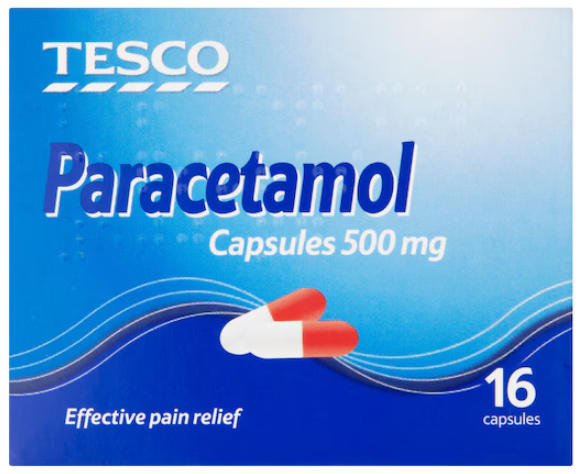
Paracetamol is widely accessible through a mix of channels that cater to different customer needs:
- Community pharmacies (Apotheken) staffed by licensed pharmacists who ensure product authenticity, correct dosing information, and patient counseling.
- Online pharmacies operating within Austria and the broader EU, offering convenient home delivery and digital documentation for reimbursement scenarios where applicable.
- Hospitals and clinical facilities that administer paracetamol in various formulations for inpatient and outpatient care.
- Wholesale distributors supplying pharmacies, clinics, and institutions, often requiring business credentials for account setup and ongoing orders.
- OEM and private-label service providers who specialize in packaging, labeling, and regulatory compliance for EU markets.
For international brands, these channels represent pathways to build distribution networks, establish private-label production agreements, and access market feedback that informs formulation and packaging decisions.
Austria adheres to the European Union pharmaceutical regulatory framework, which governs manufacturing, packaging, labeling, and distribution of paracetamol products. Key compliance considerations include:
- EU pharmacopoeia standards for active ingredients, excipients, and finished dosage forms.
- Multilingual labeling requirements with German as the primary language, along with translations for other EU markets as needed.
- Serialization and traceability for certain product groups to enhance safety and recall capabilities.
- Good Manufacturing Practice (GMP) for any contracted manufacturing, repackaging, or packaging operations.
- Good Distribution Practice (GDP) for storage and distribution, along with appropriate pharmacovigilance mechanisms for post-market oversight.
- Documentation for importation and distribution licenses, including proof of legal business operations and product provenance.
OEM partnerships with European CMOs and packaging houses can streamline regulatory alignment, ensuring that all labeling, artwork approval workflows, and regulatory submissions are handled efficiently.
- Community pharmacies: Useful for direct consumer access and feedback on dosage forms, flavors, and packaging formats.
- Hospitals and institutional procurement: Provide insights into clinical usage patterns, recommended strengths, and safety considerations relevant to hospital formularies.
- Authorized distributors: Offer bulk purchasing, warehousing, cross-border logistics, and compliance-ready documentation for EU markets.
- Private-label and OEM-focused partners: CMOs and packaging specialists that provide formulation support, label artwork, packaging customization, and regulatory submissions to EU authorities.
When selecting an OEM partner for paracetamol in Vienna, consider:
- Regulatory competence: GMP certification, GDP compliance, and access to EU-wide pharmacovigilance systems.
- Quality management: Quality agreements, batch records, stability data, and supplier qualification documentation.
- Packaging flexibility: Ability to deliver German-language labeling, multilingual packaging, and compliant carton design with verifiable artwork approval workflows.
- Process control: Robust QA/QC procedures, in-process controls, and validated packaging lines.
- Logistics and supply chain: Warehousing capabilities, cross-border distribution efficiency, and contingency planning for disruptions.
- Commercial terms: MOQs, lead times, pricing structures, serialization capabilities, and recall management readiness.
- Define product scope: Decide on tablet, capsule, chewable, or liquid formats; specify strengths, packaging sizes, and excipients that meet EU safety standards.
- Identify potential OEM partners: Look for Austrian CMOs with EU certifications or European packaging houses offering private-label solutions for paracetamol.
- Conduct due diligence: Verify GMP certificates, facility audits, past client references, and evidence of successful regulatory filings.
- Negotiate terms: Clarify private-label rights, artwork approvals, regulatory support timelines, and post-market services.
- Pilot production: Initiate a small batch to validate formulation integrity, labeling accuracy, and supply reliability.
- Scale-up plan: Deploy a phased approach aligned with QA clearance, market demand, and distribution readiness.
- API purity and supplier qualification: Demand certificates of analysis (COA) for the paracetamol API and ensure supplier qualification processes are rigorous.
- Excipients and formulation: Select excipients that meet pharmacopeia standards and minimize allergen exposure.
- Stability testing: Obtain stability data under local storage conditions to determine shelf life and appropriate storage recommendations.
- Contaminant testing: Implement impurity profiling in line with EU pharmacopoeia limits and ensure microbiological controls where required.
- Pharmacovigilance and recalls: Establish a robust system for adverse event reporting, recall readiness, and rapid communication channels with regulators and distributors.
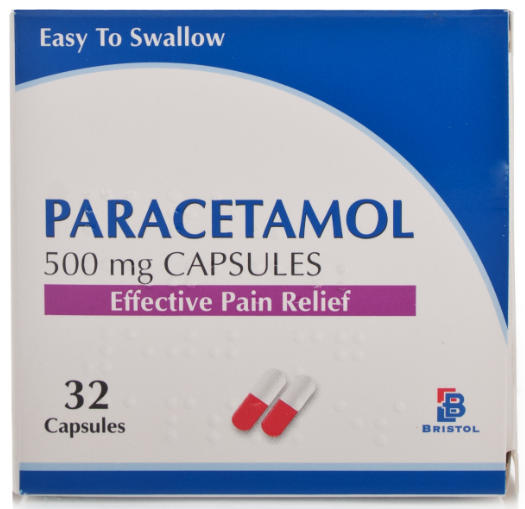
- Language strategy: German labeling is essential; consider multilingual labeling for multi-country EU exposure while ensuring compliance with EU labeling directives.
- Information hierarchy: Prominently display active ingredient, strength, dosage, route of administration, storage conditions, batch/lot numbers, and expiration dates.
- Traceability: Use legible batch/lot coding and robust lot-tracking mechanisms to facilitate recalls if necessary.
- Sustainability: Embrace eco-friendly packaging materials and recyclability guidelines to align with ESG objectives.
- Temperature considerations: Most paracetamol formulations are stable at room temperature; verify specific storage needs for your product.
- Freight and customs: Engage experienced freight forwarders familiar with EU import procedures, VAT, and regulatory documentation.
- Inventory management: Implement forecast-driven safety stock strategies to ensure consistent supply across Austria and neighboring markets.
- Returns and recalls: Define clear procedures for defective lots, safety concerns, and rapid notification workflows.
- Private-label positioning: Leverage EU conformity and local distribution strengths with a coherent packaging and branding strategy suitable for Austrian consumers.
- Co-branding opportunities: Partner with reputable Austrian distributors to build trust and accelerate market acceptance.
- Regional expansion: Plan for passporting into neighboring EU markets through standardized labeling and regulatory alignment.
- Compliance-forward branding: Highlight GMP, safety, and traceability to reinforce brand confidence among pharmacists and clinicians.
A representative collaboration between a European distributor and a German private-label manufacturer illustrates the practical path to EU market entry. The partnership would involve:
- synchronized QA audits and GMP certification verification,
- private-label packaging design with German copy and Austria-specific regulatory notices,
- coordinated logistics planning with stable lead times and serialized batch tracking,
- a joint market activation plan that targets pharmacy channels and clinician education.
- Manufacturing scale and cost efficiency: Access to robust production capabilities while maintaining EU-compliant practices through certified partners.
- Customization capabilities: Private-label packaging, branding, and label artwork tailored to Austrian regulations and consumer preferences.
- End-to-end support: From regulatory compliance and QA to logistics and after-sales service, a capable OEM can streamline market entry.
- Risk mitigation: Proven quality systems and traceability help minimize compliance and recalls risk.
- Incorporate high-level visuals such as generic imagery of Austrian pharmacies, packaging lines, and warehouse environments to illustrate the supply chain without linking to specific vendor sites.
- Use infographics to convey EU regulatory pathways, labeling requirements, and serialization concepts.
- Include short, informative videos (15–60 seconds) showing tablet compression, coating, QA checks, and packaging workflows to supplement the narrative.
- Include testimonial-style clips from pharmacists or distributors with appropriate consent to demonstrate market reception.
A well-structured OEM strategy in Vienna enables international brands to enter the EU market efficiently while maintaining rigorous quality, regulatory compliance, and reliable logistics. A proficient Chinese OEM partner can deliver private-label solutions, packaging customization, and end-to-end support that reduce time-to-market and mitigate regulatory risk. If you seek a dependable OEM collaborator to manufacture, label, and distribute paracetamol in the EU, our team at supplybenzocaine.co.uk stands ready to tailor a scalable production and packaging plan to your private-label needs, regulatory obligations, and distribution objectives. Engage with us to initiate a pilot project and establish a robust supply chain for Austria and beyond. Contact us to know more!
Answer: Private-label and OEM services are available through Austrian and EU-based distributors and CMOs that provide GMP-compliant manufacturing, packaging, labeling, and regulatory support for EU markets.
Answer: Typical requirements include GMP certificates, COAs for API and excipients, batch records, registration or notification with national authorities, and German labeling compliant with EU directives.
Answer: Yes. Private-label partnerships are common, with OEMs offering formulation, labeling, packaging, and regulatory support to align with EU requirements.
Answer: Critical checks include API purity, impurity profiling, stability testing, microbiological considerations where applicable, and adherence to EU pharmacopoeia standards.
Answer: A pilot run generally spans 4 to 8 weeks, influenced by formulation complexity, packaging design approval, and QA readiness.
Hot tags: Buy Paracetamol Vienna, Paracetamol Pharmacies Vienna, Where to Buy Painkillers Vienna, Paracetamol Online Vienna, Best Pharmacies Vienna, Paracetamol 24/7 Vienna, Buy Pain Relief Vienna, Paracetamol Delivery Vienna, Cheap Paracetamol Vienna, Paracetamol Near Me Vienna