Content Menu
● Understanding Benzocaine Physical Form and Drying Characteristics
● Benzocaine Powder Stability and Crystallization Tendency
● Does Benzocaine Dry Too Powder in Its Commercial Forms?
● Best Practices in Formulating Benzocaine Powders and Suspensions
● Applications of Benzocaine Powder in Medical and Consumer Products
● FAQ
>> 1. What causes benzocaine powder to form large crystals during drying?
>> 2. How can crystal growth in benzocaine suspensions be prevented?
>> 3. Is benzocaine powder chemically stable during drying and storage?
>> 4. What excipients help maintain benzocaine powder suspension?
>> 5. How should benzocaine powders be stored after drying?
Benzocaine is a widely used topical anesthetic in various pharmaceutical and health-related products. It is commonly formulated as gels, ointments, sprays, and powders that provide localized numbing and pain relief. A frequent question arises on whether benzocaine, when formulated as a powder or suspended in formulations, "will dry too powder?"—meaning, does benzocaine tend to dry out excessively to become crystalline or dusty powder, affecting its stability and performance? This article explores the drying behavior, stability, crystal growth tendencies of benzocaine powder, and best practices for pharmaceutical formulation, backed by scientific evidence, and multimedia content suggestions.
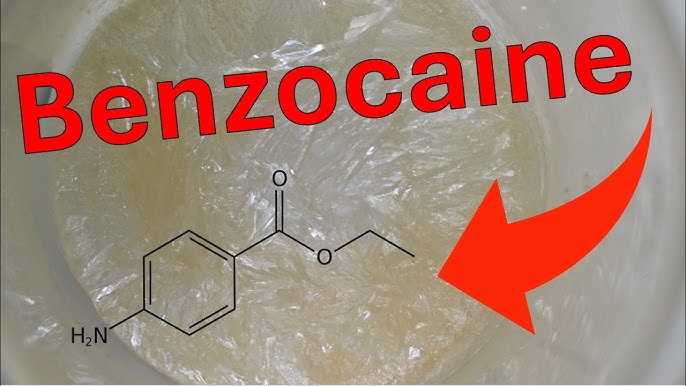
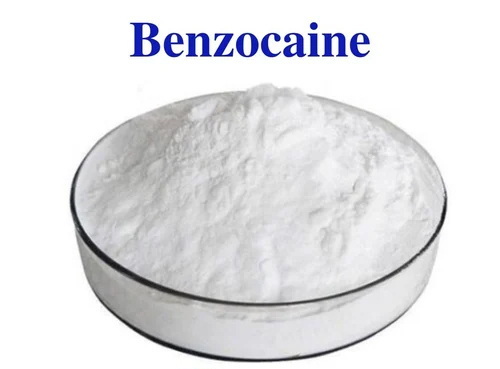
Benzocaine chemically is the ethyl ester of p-aminobenzoic acid (PABA). It appears as a fine, white, crystalline powder that is odorless and tasteless. In pharmaceutical formulations, benzocaine's physical form critically impacts product quality, efficacy, and stability.
Benzocaine is sparingly soluble in water and more soluble in organic solvents such as alcohol or ether. Due to its limited solubility in aqueous environments, benzocaine powder in products tends to exist as suspended particles rather than dissolved molecules.
When benzocaine formulations—especially suspensions—dry, the moisture content reduces, potentially leading to different behavior:
- It may crystallize, forming larger needlelike crystals,
- Or remain in finely powdered or amorphous form depending on formulation components.
This drying behavior is influenced by the nature of the formulation vehicle, temperature, humidity, and drying time. In some aqueous suspensions, benzocaine particles can aggregate or grow in size during drying, which could affect the texture and efficacy of the final product.
Videos demonstrating the drying of benzocaine-containing suspensions can visualize the changes in particle morphology under a microscope, helping formulators understand and optimize drying processes to prevent unwanted crystallization.
Scientific studies and patents have shown that benzocaine powders in anhydrous (water-free) vehicles may undergo crystal growth during storage, especially under fluctuating temperature conditions. This phenomenon is particularly noticeable in oil-based suspensions where benzocaine is initially present as a fine powder but may later form larger, sharp needlelike crystals.
This crystal growth is a challenge because it affects:
- The texture of topical preparations, making them gritty,
- The uniformity of dosing,
- Packaging problems such as clogging aerosol valves,
- Patient experience and effectiveness.
At elevated temperatures, a portion of the benzocaine dissolves in the vehicle and recrystallizes upon cooling into larger crystals. These crystals disrupt the smooth consistency of formulations, reducing consumer acceptability.
To combat this, pharmaceutical scientists incorporate specific crystal growth inhibitors into benzocaine formulations. One such class of additives includes linear copolymers of vinylpyrrolidone and long-chain alpha-olefins (e.g., Ganex V polymers). These polymers work by stabilizing benzocaine particles, inhibiting the nucleation and growth of large crystals during drying and storage.
Apart from crystal inhibitors, maintaining controlled storage temperatures and minimizing exposure to moisture or heat fluctuations are crucial factors that improve benzocaine powder stability.
Benzocaine powders are manufactured and used in several dosage forms, including ointments, sprays, gels, and powders themselves. Drying processes in pharmaceutical manufacturing must be carefully controlled to avoid excessive moisture loss that could promote crystal growth or powder aggregation, compromising product stability.
Research reveals that benzocaine maintains chemical stability in dry powder forms and direct compression tablets, showing minimal degradation when stored properly. However, drying benzocaine-containing powders can lead to changes in moisture content, indicating complex interactions between benzocaine and water molecules.
Studies also emphasize that inappropriate excipients or exposure to high humidity and heat can lead to degradation pathways such as the Maillard reaction, particularly when formulations contain sugars or reactive functional groups.
Successful stabilization requires a holistic approach—selecting the right excipients, controlling the drying process, and using crystal growth inhibitors. These strategies ensure that benzocaine powders do not "dry too powder," but instead maintain a fine, stable particle size for consistent dosing and application.
Formulating benzocaine powders and suspensions presents unique challenges that demand expertise and careful design. Key best practices include:
- Selecting anhydrous or minimally aqueous vehicles to reduce hydrolytic degradation,
- Employing crystal growth inhibitors like vinylpyrrolidone-long chain alpha-olefin copolymers to maintain particle size integrity,
- Incorporating suspending agents such as bentonite or polyethylene polymers to ensure uniform particle distribution before drying,
- Optimizing viscosity and texture modifiers to improve the sensory attributes of the final product,
- Packaging in airtight containers to prevent moisture ingress,
- Controlling storage temperature and humidity to prevent recrystallization and preserve chemical stability.
Emphasizing these factors during development leads to benzocaine products that consistently deliver effective anesthesia, good shelf stability, and pleasant application experiences.
Pharmaceutical OEMs offering tailored formulation development services play a vital role in helping foreign brand owners and wholesalers achieve high-quality benzocaine products for competitive markets.
Benzocaine powder is integral in various topical products targeting pain relief for numerous conditions such as:
- Burns and sunburns,
- Insect bites and stings,
- Hemorrhoids,
- Oral mucosa discomfort (such as gels for teething or sore throat),
- Vaginal or rectal irritations.
These applications require benzocaine to be available in stable, finely divided, and bioavailable forms. Benzocaine powders serve as compounding bases for ointments, creams, and sprays. As an active ingredient, its anesthetic effect depends on uniform particle size and consistent dosing, both of which hinge on controlled drying and stabilization.
Manufacturers benefit from expertise in benzocaine powder processing, ensuring formulations meet regulatory standards, efficacy expectations, and consumer preferences.
Videos illustrating the topical application of benzocaine products on different body areas can enhance understanding of its practical benefits and varied uses.
In summary, benzocaine does not "dry too powder" in a detrimental sense when properly formulated, dried, and stored. Its drying, crystallization, and stability behaviors are well-studied and manageable with advanced pharmaceutical technologies, such as crystal growth inhibitors and optimized excipients.
Producers and brand owners can rely on controlled drying and formulation methods to ensure that benzocaine powders retain their desired physical and chemical properties, enabling consistent product performance and patient satisfaction.
For manufacturers seeking high-quality benzocaine-based topical products, collaborating with experienced OEM suppliers who specialize in tailored formulations is essential. This partnership ensures the delivery of innovative, stable, and efficacious benzocaine products to the global market.
Contact our team today for customized advice and OEM services designed to meet your benzocaine pharmaceutical needs with the highest quality standards.
Benzocaine exhibits temperature-dependent solubility in formulation vehicles. Upon heating, some benzocaine dissolves and recrystallizes as large needlelike crystals upon cooling, leading to unwanted crystal growth.
The addition of vinylpyrrolidone-long chain alpha-olefin copolymers effectively inhibits benzocaine crystal formation during drying and storage, stabilizing particle size and preventing texture deterioration.
With appropriate excipients and controlled drying conditions, benzocaine powder maintains excellent chemical stability with minimal degradation under standard storage environments.
Suspending agents such as bentonite clays, polyethylene polymers, and fumed silica enhance suspension stability, preventing particle sedimentation and promoting uniformity before drying.
Benzocaine powders should be stored in cool, dry, and airtight containers to minimize moisture absorption and recrystallization risks. Controlled temperature and humidity conditions are ideal for preserving stability.
[1](https://patents.google.com/patent/US4241048A/en)
[2](https://www.maxill.com/us/blog/post/because-you-asked-%7C-all-about-benzocaine-an-in-depth-exploration-)
[3](https://www.uspharmacist.com/article/benzocaine-2-and-vitamins-a-and-d-ointment)
[4](https://www.sciencedirect.com/topics/pharmacology-toxicology-and-pharmaceutical-science/benzocaine)
[5](https://en.wikipedia.org/wiki/Benzocaine)
[6](https://www.mayoclinic.org/drugs-supplements/benzocaine-topical-application-route/description/drg-20072913)
[7](https://www.mayoclinic.org/drugs-supplements/benzocaine-oral-route-oromucosal-route/description/drg-20072824)
[8](https://www.bbc.com/news/uk-10909884)
[9](https://www.webmd.com/drugs/2/drug-1564-1459/benzocaine-topical-mucous-membrane/benzocaine-mucous-membrane/details)
[10](https://pmc.ncbi.nlm.nih.gov/articles/PMC3840786/)
[11](https://pmc.ncbi.nlm.nih.gov/articles/PMC6099396/)
[12](https://hellodoktor.com/en/benzocaine-topical/)
[13](https://keypublishing.org/jhed/wp-content/uploads/2020/07/13.-%C5%BDeljka-Marjanovi%C4%87-Balaban.pdf)
[14](https://patents.google.com/patent/EP3492071A1/en)
[15](https://pubs.rsc.org/en/content/articlelanding/2020/ce/d0ce01306d)
[16](https://www.webmd.com/drugs/2/drug-6069/benzocaine-topical/details)
[17](https://pubmed.ncbi.nlm.nih.gov/23990120/)
[18](https://pmc.ncbi.nlm.nih.gov/articles/PMC6572324/)
[19](https://reference.medscape.com/drug/benzocaine-343361)
[20](https://www.sciencedirect.com/science/article/abs/pii/S0022354915379387)
[21](https://www.sciencedirect.com/science/article/pii/S004060312300182X)
[22](https://go.drugbank.com/drugs/DB01086)
[23](https://account.allinahealth.org/library/content/45/5360)
[24](https://cdn.who.int/media/docs/default-source/medicines/pharmacopoeia/omitted-monographs/benzocaine.pdf?sfvrsn=623167ea_5)
[25](https://www.sciencedirect.com/science/article/abs/pii/S004060312300182X)
[26](https://www.ncbi.nlm.nih.gov/books/NBK541053/)
[27](https://pmc.ncbi.nlm.nih.gov/articles/PMC11322916/)
Hot tags: Benzocaine Drying Process, Benzocaine Powder Properties, Benzocaine Usage Instructions, Benzocaine Storage Tips, Benzocaine Powder Handling, Benzocaine Solubility, Benzocaine Chemical Stability, Benzocaine Powder Effects, Benzocaine Application Methods, Benzocaine Powder Safety