Content Menu
● Introduction to Boric Acid Flakes
● Key Chemical Properties of Boric Acid Flakes
● Manufacturing Process Overview
● Applications of Boric Acid Flakes
>> Pharmaceutical and Medical Use
>> Pest Control and Agricultural Uses
>> Cosmetic Industry Applications
● How to Purchase High-Quality Boric Acid Flakes
>> Essential Factors to Consider When Buying
● Safety and Handling of Boric Acid Flakes
● Proper Storage and Usage Tips
● Frequently Asked Questions (FAQs)
>> 1. What is the difference between boric acid flakes and powder?
>> 2. Are boric acid flakes safe for use in medical products?
>> 3. How are boric acid flakes manufactured?
>> 4. Can boric acid flakes be used as a pesticide?
>> 5. What are the recommended storage conditions for boric acid flakes?
Boric acid flakes, scientifically known as orthoboric acid (B(OH)3), are a white, crystalline solid widely used across various industries. Their distinctive flaky texture provides multiple advantages over powder forms, including easier handling, precise measurement, and improved solubility. This makes boric acid flakes especially sought after in pharmaceutical, industrial, agricultural, pest control, and cosmetic applications. This comprehensive guide explores the chemical properties, manufacturing process, diverse applications, safety practices, and key purchasing considerations of boric acid flakes, providing crucial information for brands, wholesalers, and manufacturers seeking high-quality OEM supply.
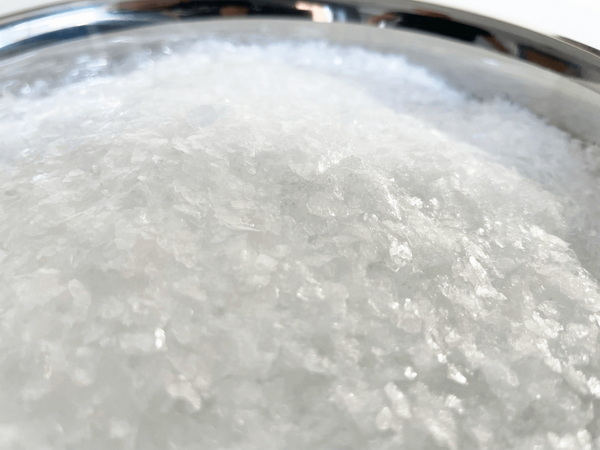
Boric acid flakes are crystallized boric acid produced in a flake form rather than powder or granular. The flake structure offers a larger surface area, which facilitates better solubility and dosing accuracy during use. Moreover, flakes produce less dust during handling, reducing respiratory and environmental hazards commonly associated with powdered forms. Typically, these flakes are derived through controlled crystallization from borax solutions, resulting in a high-purity product suitable for sensitive medical, cosmetic, and industrial uses.
Boric acid flakes possess distinct physical and chemical properties that determine their performance in various applications:
- Molecular Formula: B(OH)3
- Molecular Weight: 61.83 g/mol
- Appearance: White translucent or opaque crystalline flakes
- Solubility: Moderately soluble in cold water, with solubility increasing in warm water
- pH: Slightly acidic, typically between 4.5 to 5.5 in aqueous solutions
- Thermal Stability: Stable under normal storage conditions but decomposes when heated above 170°C
- Hygroscopicity: The flakes can absorb moisture in humid environments, which necessitates proper storage
These properties make boric acid flakes an excellent candidate for precise chemical formulations and manufacturing processes.
The production of boric acid flakes involves several carefully controlled steps to ensure purity, uniformity, and optimal crystallization:
1. Borax Dissolution: The process begins by dissolving borax (sodium borate) in water at controlled temperature and pH conditions.
2. Acidification: A mineral acid, commonly hydrochloric acid or sulfuric acid, is incrementally added to the borax solution to trigger precipitation of boric acid crystals.
3. Crystallization: The solution is allowed to cool slowly over several hours (commonly 4-6 hours), fostering uniform crystal growth into distinct flakes rather than powdery particles.
4. Filtration: The boric acid crystals (flakes) are separated from the mother liquor using filtration equipment.
5. Washing: The flakes are washed to remove residual salts and impurities, enhancing purity.
6. Drying: The washed flakes are dried in temperature-controlled environments to remove moisture, yielding a free-flowing, stable product.
7. Purification (optional): For pharmaceutical or cosmetic-grade flakes, further purification steps like recrystallization or ion-exchange filtration may be employed.
This methodical process ensures consistent quality, meeting regulatory and industry standards essential for sensitive applications.
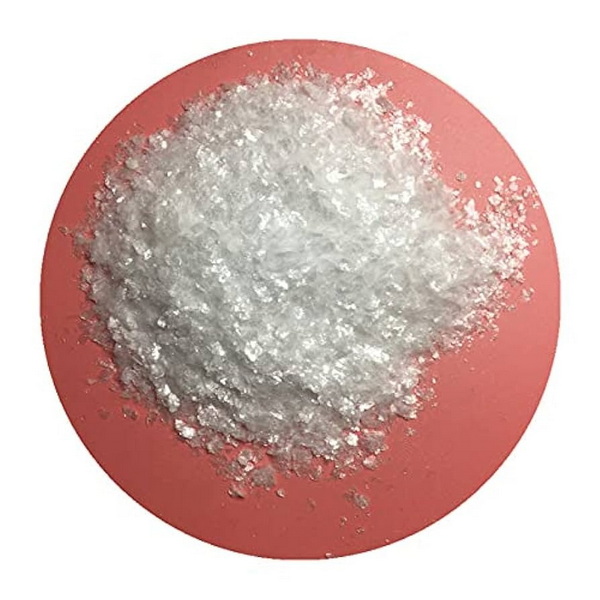
Boric acid flakes hold significant value in the pharmaceutical and healthcare industries due to their antiseptic, antifungal, and antibacterial properties. They are widely incorporated in the formulation of wound care products, antiseptics, eyewashes, and topical powders aimed at treating minor burns, cuts, and skin infections. Their use helps maintain cleanliness by preventing microbial growth. Due to the controlled crystallinity and purity, boric acid flakes ensure reliable dosing, which is critical in medical products. They also act as mild pH buffers in formulations, stabilizing product efficacy and skin compatibility.
In the realm of industrial manufacturing, boric acid flakes serve as a critical raw material. They are used extensively in:
- Glass and Ceramics Manufacturing: Boric acid acts as a fluxing agent improving the thermal and chemical resistance of glass and ceramic products.
- Enamel and Glaze Production: The flakes provide smooth finishes and durability in enamel coatings.
- Flame Retardants: Boric acid compounds derived from flakes contribute to reducing flammability in plastics, textiles, and insulation materials.
- Soldering and Metallurgy: It is used to prepare soldering fluxes enhancing metal joining.
- Fiberglass Manufacture: Boric acid improves the strength and heat resistance of fiberglass composites.
The flakes' chemical stability and uniformity make them ideal for these precision-demanding industrial sectors.
Boric acid flakes are a potent, environmentally friendly insecticide widely employed in pest control. Their mechanism involves damaging the exoskeletons of insects and interfering with their metabolism, leading to death. This method is preferred for its low toxicity to mammals and birds compared to synthetic pesticides. Boric acid flakes are commonly used against ants, cockroaches, termites, silverfish, and other household pests. Their inclusion in bait formulations improves efficacy by attracting insects while minimizing human and pet exposure. In agriculture, they serve as fungicides and protectants against soil-borne diseases and insect pests.
Boric acid flakes are also utilized as a preservative treatment for wood, providing resistance against fungal decay and termites. The chemical acts as a natural fungicide and insecticide without the harmful effects associated with conventional wood preservatives, making it an eco-friendly alternative. Treated wood exhibits enhanced durability suitable for construction and furniture.
In cosmetics, boric acid flakes are valued for their absorbent properties and mild antiseptic action. They are incorporated into powders, lotions, and creams designed to soothe irritated skin, control odor, and maintain balanced pH levels. Their low irritation profile allows use in delicate skin formulations. Careful control of flake purity and particle size is essential to meet cosmetic safety standards.
When sourcing boric acid flakes, several factors must be taken into account to align with the intended application and regulatory requirements:
- Purity: Pharmaceutical-grade flakes typically require over 99% purity, while industrial grades may be somewhat lower but must still meet standardized quality benchmarks.
- Particle Size & Uniformity: Consistent flake size ensures predictable dissolution and formulation behavior.
- Certifications: Suppliers should provide certifications such as ISO, GMP, REACH, and where applicable, pharmaceutical or food-grade compliance.
- OEM Capabilities: Opting for manufacturers that offer tailored packaging, private labeling, and formulation assistance can provide added value.
- Safety Data: Comprehensive Material Safety Data Sheets (MSDS) supporting safe handling are indispensable.
China remains one of the largest producers and exporters of boric acid flakes with many reputable OEM suppliers offering competitive pricing and customizable services. Partnering directly with established factories can reduce procurement costs while ensuring control over quality standards and production volumes. Robust supplier evaluation, including on-site audits and sample testing, is recommended.
Although boric acid flakes are relatively safe when used properly, adherence to safety protocols is fundamental:
- Always use personal protective equipment such as gloves, goggles, and dust masks to minimize skin and respiratory irritation.
- Work in well-ventilated areas to reduce inhalation risks.
- Avoid ingestion; boric acid is toxic if swallowed.
- Store flakes in tightly sealed containers in cool, dry environments to prevent moisture absorption and degradation.
- Keep materials out of children's and pets' reach.
- Follow local and international regulations when using boric acid as a pesticide or in industrial operations.
- Maintain flakes in airtight, moisture-proof packaging to retain quality.
- Avoid prolonged storage after opening to ensure optimal efficacy.
- Gradually dissolve flakes in warm water to improve solubility and avoid clumping in formulations.
- When applying as insecticide baits, place in locations inaccessible to non-target animals and humans.
Boric acid flakes represent a versatile and essential material across pharmaceutical, industrial, agricultural, and cosmetic industries. Understanding their chemical properties, manufacturing process, and varied applications can empower businesses to leverage their benefits effectively. Selecting a qualified OEM supplier who adheres to stringent quality and safety standards is crucial for consistent product performance and customer satisfaction. By choosing high-grade boric acid flakes and implementing proper handling and storage practices, manufacturers and brands can ensure optimal outcomes for their products and end-users.
Contact us today to learn more about our premium boric acid flakes and OEM services that can be customized to meet your exact specifications. Elevate your product quality with our trusted supply chain and expert manufacturing solutions.
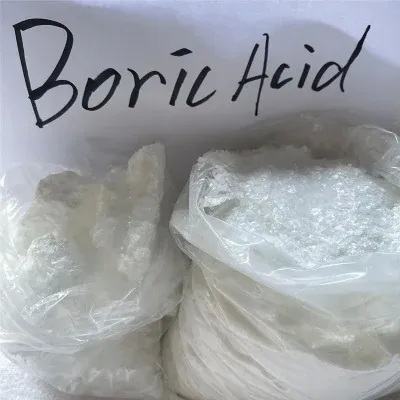
Boric acid flakes are larger, crystallized particles that reduce dust and improve handling safety. They dissolve more predictably due to their uniform size, whereas powders are finer, dustier, and may present dosing challenges, especially in sensitive formulations.
Yes, pharmaceutical-grade boric acid flakes meet stringent purity and safety standards, making them suitable for antiseptic and topical applications. Nevertheless, they should always be used under professional guidance to prevent misuse or ingestion.
They are produced by dissolving borax in water, adding acid to precipitate the acid, slowly cooling to crystallize flakes, then filtering, washing, and drying the crystals to obtain high-purity flakes.
Yes, boric acid flakes effectively control household pests such as ants, cockroaches, and termites by damaging their exoskeletons and disrupting metabolism, with minimal environmental impact.
Store flakes in sealed, moisture-proof containers, in a cool and dry place away from children and pets to prevent contamination and maintain product stability.
[1](https://www.supplybenzocaine.co.uk/how-to-make-boric-acid-flakes.html)
[2](https://alliancechemical.com/blogs/articles/the-power-of-boric-acid-from-pest-control-to-industrial-lubrication)
[3](https://www.demeichemicals.com/boric-acid-falkes/)
Hot tags: Boric Acid Flakes, Buy Boric Acid Flakes, Boric Acid Uses, Pest Control Solutions, Eco-Friendly Insecticides, Boric Acid Safety, How to Use Boric Acid, Boric Acid Flakes Guide, Industrial Boric Acid, Boric Acid Flakes Suppliers