Content Menu
● Understanding Dissociation and Its Importance
>> The Degree of Dissociation (α)
>> Why the Dissociation Factor Matters
● Procaine HCl: Chemical and Physical Background
● How to Calculate the Dissociation Factor for Procaine HCl at 80% Dissociation
>> Step 1: Understand the Variables
>> Step 2: Use the Formula for Dissociation Factor $$ i $$
>> Step 3: Interpretation of the Result
● Practical Application in Drug Formulation and Manufacturing
● Factors Affecting Dissociation
>> 1. What does 80% dissociation of Procaine HCl mean?
>> 2. How is the dissociation factor used in pharmaceutical formulations?
>> 3. Can the degree of dissociation change during storage or manufacturing?
>> 4. Why is Procaine formulated as Procaine HCl instead of pure Procaine?
>> 5. How can the degree of dissociation be measured experimentally?
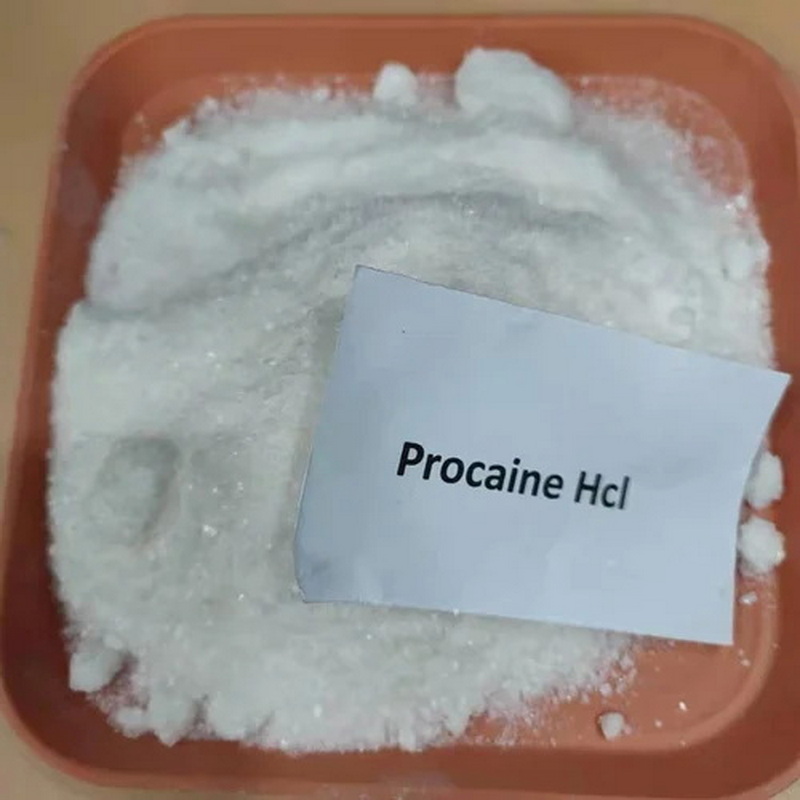
Procaine Hydrochloride, or Procaine HCl, is a widely used local anesthetic in many pharmaceutical and medical applications. It belongs to the class of ester anesthetics and is typically formulated as a hydrochloride salt to enhance its solubility in water. Understanding the dissociation behavior of Procaine HCl in aqueous solutions is essential for the correct formulation of drugs, ensuring their efficacy, stability, and safety. This article will guide readers, especially those new to chemistry, through the step-by-step calculation of the dissociation factor for Procaine HCl when it is 80% dissociated in water.
Dissociation is a chemical process where a compound breaks apart into smaller ions or molecules in solution. For ionic compounds like salts, acids, or bases, dissolving in water results in the separation into positively charged ions (cations) and negatively charged ions (anions). This process is specifically called electrolytic dissociation when the result is ions that conduct electricity in solution.
The degree of dissociation, represented by the Greek letter α (alpha), is the fraction or percentage of the original molecules that dissociate into ions in solution. A fully dissociated compound has an α value of 1 (or 100%), meaning all molecules break into ions. A weak electrolyte dissociates partially; for Procaine HCl at 80% dissociation, α = 0.80, meaning 80% of the molecules dissociate while 20% remain intact.
The dissociation factor is crucial in pharmaceutical sciences and formulation chemistry because:
- It influences how well the drug dissolves and acts in the body.
- It affects the biological availability of the active ingredient.
- It is used to calculate important physical properties such as osmotic pressure, boiling point elevation, and freezing point depression.
- It helps formulate isotonic solutions, which are necessary for safe injections.
- It guides quality control tests to ensure consistency between batches.
Understanding the extent of ionization is important for pharmaceutical manufacturers to optimize drug formulations and ensure therapeutic efficacy.
Procaine hydrochloride has a molecular weight of approximately 273 grams per mole (g/mol) and is classified as a 1:1 electrolyte, meaning it dissociates into one cation (Procaine^+) and one anion (Cl^-). This simple dissociation allows the dissociation factor to be determined straightforwardly using established formulas.
Calculating the dissociation factor involves combining the degree of dissociation with the number of ions produced per molecule upon dissociation.
- Number of ions produced by one formula unit of the compound. For Procaine HCl.
- Degree of dissociation (fraction), which is 0.80 in this case.
The dissociation factor, sometimes called the Van't Hoff factor, denotes how many particles the original compound produces in solution considering dissociation:
nstead of 1 mole of dissolved compound producing 1 mole of particles, it effectively produces 1.8 moles of particles because of partial dissociation.
The dissociation factor helps pharmaceutical scientists understand how the solution behaves in terms of colligative properties and ionic strength. This factor is critical for making accurate calculations related to osmotic pressure, freezing point depression, and other properties critical for formulation.
、
One major application of dissociation factor is in preparing isotonic solutions. When making injectable formulations containing Procaine HCl, solutions need to be isotonic with human blood to avoid damage to cells and tissues. Using the dissociation factor allows chemists to calculate how much salt (NaCl equivalent) or other solutes to add so the solution has the correct osmotic pressure.
Manufacturers can use this dissociation factor to assess batch-to-batch consistency. Measuring electrical conductivity or osmotic pressure compared to theoretical values calculated using $$ i $$ confirms whether the drug substance dissociates as expected.
Understanding the level of dissociation also informs decisions on formulation storage, excipient compatibility, and solubility. Since dissociated ions contribute to chemical activity differently from intact molecules, this knowledge is vital in maintaining drug efficacy over time.
While the example here assumes a fixed 80% dissociation, it is important to recognize that dissociation depends on several parameters:
- Concentration of the solution: Typically, dissociation increases as the solution becomes more dilute.
- Temperature: Higher temperatures generally favor greater dissociation.
- pH of the solution: Changes in pH can shift equilibrium between ions and unionized molecules.
- Presence of other ions or solutes: Ionic strength impacts dissociation.
In manufacturing, controlling these parameters ensures predictable drug performance.
- Procaine HCl dissociates into procaine cations and chloride anions in water.
- Degree of dissociation (α) indicates what proportion of molecules dissociate.
- The dissociation factor quantifies how many particles the compound produces in solution.
- The dissociation factor is fundamental for pharmaceutical formulation calculations including isotonicity and osmolality.
- External factors can influence the degree of dissociation.
Calculating the dissociation factor for Procaine HCl at 80% dissociation is a relatively straightforward but highly important process in pharmaceutical development and manufacturing. Using the dissociation formula, we determined the dissociation factor to be 1.80, indicating that the compound produces 1.8 times more particles than its molecular count due to partial dissociation. This knowledge is essential for optimizing drug formulation, ensuring isotonicity in injectable products, and maintaining consistent product quality.
For companies involved in biotechnology, pharmaceuticals, or medical devices seeking a reliable OEM manufacturing partner with deep expertise in compounds like Procaine HCl, we invite you to contact us. Our factory offers customized, high-quality manufacturing and formulation services to meet your exact specifications with precision and professionalism.
Let us help you succeed with expertly formulated products—reach out today for consultations and collaborations!
It means that 80% of the dissolved Procaine HCl molecules split into ions (Procaine^+ and Cl^-), while the remaining 20% remain as whole molecules.
It helps determine the effective concentration of particles in solution, which is critical for adjusting osmotic pressure to make isotonic solutions and to ensure drug stability.
Yes, it can vary with changes in temperature, concentration, pH, and the presence of other solutes, affecting the drug's performance.
The hydrochloride salt form improves water solubility and stability, making it easier to prepare aqueous injectable solutions.
Common methods include electrical conductivity measurements, freezing point depression tests, osmotic pressure determination, and spectroscopy.
Hot tags: Procaine HCL Calculation, Dissociation Factor Procaine, Procaine HCL 80 Dissociation, Calculate Dissociation Factor, Procaine Hydrochloride Electrolyte, Dissociation Factor Formula, Procaine HCL Chemistry, Electrolyte Dissociation Calculation, Procaine HCL Properties, Procaine HCL Applications