Content Menu
● What Is Novocaine and How Does It Work?
● Medical and Veterinary Applications of Procaine
● Legal Availability for Consumers
● Shift Away from Novocaine in Modern Dentistry
● Industrial Sourcing for OEM and B2B Buyers
● Benzocaine and Related Anesthetics as Alternatives
● Risks and Safety Considerations
● Custom OEM Formulations for Global Brands
● Regulatory Pathways for Market Entry
● FAQ
>> 1. Can Individuals Legally Purchase Injectable Novocaine?
>> 2. Why Have Dentists Stopped Using Novocaine Routinely?
>> 3. How Does Procaine Compare to Benzocaine for OEM Products?
>> 4. What Due Diligence Applies to Sourcing Anesthetics from China?
>> 5. What OEM Services Support Anesthetic Product Development?
Novocaine, the trade name for procaine, remains a well-known term synonymous with dental anesthesia, though its direct availability to consumers is highly restricted in most countries. Businesses in biotechnology, pharmaceuticals, and medical devices can access procaine and related compounds like benzocaine through specialized OEM suppliers for professional applications.[1][2]
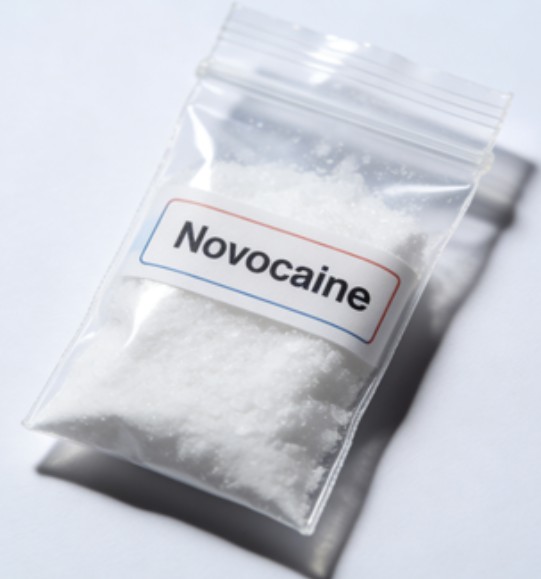
Novocaine refers specifically to procaine hydrochloride, a synthetic ester-type local anesthetic first introduced in 1905 by German chemists Alfred Einhorn and Heinrich Dreser. Developed as a safer alternative to cocaine for surgical pain relief, procaine quickly became a staple in dentistry and minor surgery due to its rapid onset and relatively short duration of action, typically lasting 30 to 90 minutes.[2][1]
Procaine functions by inhibiting voltage-gated sodium channels in neuronal membranes, which prevents the propagation of action potentials along nerve fibers. This blockade specifically targets sensory nerves responsible for pain transmission while sparing motor function at appropriate doses. In practical terms, when injected near a nerve, procaine diffuses into the axon, binds to sodium channels in their inactivated state, and stabilizes the membrane to raise the threshold for depolarization.[3][1]
Chemically, procaine is diethylaminoethyl 4-aminobenzoate hydrochloride, a molecule featuring an aromatic ring, an ester linkage, and a tertiary amine group—hallmarks of ester anesthetics. This structure renders it susceptible to hydrolysis by plasma esterases, contributing to its short half-life and lower risk of systemic accumulation compared to amide-type anesthetics like lidocaine.[1][2]
Historically, procaine revolutionized outpatient procedures by enabling painless dental extractions, biopsies, and suturing without general anesthesia. Its use peaked mid-20th century, but concerns over rare allergic reactions—stemming from para-aminobenzoic acid (PABA) released during metabolism—prompted a shift toward amides, which are metabolized hepatically and less immunogenic.[2]
In human medicine, procaine finds niche roles beyond dentistry, including spinal anesthesia, peripheral nerve blocks, and intravenous regional anesthesia (Bier block). For spinal use, hyperbaric solutions provide reliable lower-body anesthesia for procedures like herniated disc repairs or lower limb surgeries, with effects onset in 5-10 minutes.[4][1]
Veterinary medicine employs procaine extensively for large and small animals. Equine practitioners use it for joint injections, lameness diagnostics, and castration, while in cattle, it facilitates dehorning and wound management. Procaine's solubility allows 0.5-2% solutions for infiltration or 1-5% for nerve blocks, often combined with epinephrine to prolong duration via vasoconstriction.[3][4]
Combination products enhance utility: procaine with adrenaline (1:200,000) extends anesthesia to 1-2 hours, vital for prolonged surgeries. In apiculture, diluted procaine treats venom allergies, and some protocols explore it for trigger point therapy in myofascial pain syndromes.[1][3]
Direct consumer purchase of injectable Novocaine is illegal in the United States, European Union, and most regulated markets, classified as a prescription drug under schedules like the FDA's Rx-only list or EMA equivalents. Online listings for ampoules (e.g., 0.5% 5ml x10) target professionals with licenses, not laypersons, and shipments require customs declarations proving medical intent.[5][1]
Over-the-counter alternatives abound: benzocaine lozenges (10-20mg) for sore throats, lidocaine patches (5%) for neuropathic pain, or prilocaine-oromucosal sprays. These topical agents suit minor burns, canker sores, or teething but lack procaine's penetrative depth for deeper tissues.[6][7][2]
Attempting unregulated imports risks seizure, fines, or health hazards from counterfeits laced with impurities. Health authorities like the MHRA or DEA monitor platforms advertising "research chemicals," emphasizing professional oversight to avert overdoses causing methemoglobinemia, convulsions, or cardiac arrest.[6][1]
Dentists phased out routine Novocaine by the 1980s, favoring articaine (4% with epinephrine) for its 1.5x potency and dual vascular/pulpal penetration, or bupivacaine for long-acting post-op control. Lidocaine (2%) dominates with a perfect safety profile, minimal allergy risk (0.1% vs. procaine's 1%), and adjustable durations via vasoconstrictor ratios.[2]
Patient misconceptions persist: surveys show 70% still request "Novocaine," unaware of receiving alternatives. This linguistic holdover stems from 1950s marketing, but clinically, articaine resolves 95% of inferior alveolar blocks on first injection versus procaine's slower, less reliable diffusion.[2]
Pediatric dentistry favors mepivacaine (plain 3%) to avoid epinephrine's cardiovascular effects in children, while pregnant patients receive amide anesthetics metabolized outside plasma cholinesterase pathways affected by procaine.[2]
Procaine production thrives in China, where facilities like those at supplybenzocaine.co.uk manufacture USP/EP-grade powders (99%+ purity) at scales from kilograms to metric tons. These suppliers cater to OEM partners crafting injectables, topicals, or veterinary combos, offering custom polymorphs, micronization, or sterile lyophilization.[8][6]
B2B procurement demands due diligence: COAs verify HPLC purity (>99.5%), residual solvents (<5000ppm), and heavy metals (<10ppm). GMP certification (China FDA, EDQM) ensures batch consistency, while DMF filings aid FDA/EMA filings for finished drugs.[7][8]
Supply chains integrate seamlessly: bulk API arrives in 25kg fiber drums, progresses to R&D labs for stability testing (ICH Q1A), then scales to 1000L fermenters or reactors yielding 500kg/day. Logistics include DDP Incoterms, temperature-controlled reefer containers, and pharmacovigilance support.[8][6]
Benzocaine, procaine's structural cousin (ethyl 4-aminobenzoate), excels topically due to poor water solubility, forming occlusive films on mucosa or skin. At 20%, it numbs within 15 seconds for endoscopy or hemorrhoid relief; lower doses (5-10%) suit OTC oral gels.[7][6]
Unlike injectable procaine, benzocaine avoids needles, minimizing infection vectors. However, doses >30mg risk methemoglobinemia, prompting FDA warnings on infant teething gels. Industrial grades support sustained-release microspheres or liposomal encapsulations for prolonged effect.[6]
Lidocaine bridges gaps: injectable (1-2%) for dentistry, IV (1mg/kg) for ventricular arrhythmias, topical (4-5%) for herpes zoster. Tetracaine offers ultra-potency for spinals, while ropivacaine provides motor-sparing epidural blocks.[7][2]
Procaine's narrow therapeutic index demands precision: max 7mg/kg without epinephrine, halved in debilitated patients. Overdose triggers CNS excitation (tinnitus, seizures) then depression (apnea, hypotension), treatable with lipid emulsion therapy.[4][1]
Ester allergies manifest as urticaria or anaphylaxis in PABA-sensitized individuals (1-3% prevalence), contrasting amides' rarity. Vasovagal syncope from injection anxiety exceeds true adverse drug reactions 10:1.[2]
Quality lapses plague gray markets: subpotent batches fail anesthesia, contaminants like heavy metals bioaccumulate. Reputable OEMs mitigate via real-time NIR spectroscopy, microbial limits (USP<61>), and 24-month shelf-life guarantees.[8][6]
OEM factories engineer bespoke products: procaine-epinephrine dental cartridges (1.7ml), benzocaine aerosol sprays (10% w/w), or veterinary intramammary infusions. Development pipelines span 6-12 months: feasibility studies, DoE optimization, bioequivalence bridging.[7][8]
Private labeling includes multilingual cartons, serialization (DSCSA-compliant), and eco-packaging. Niches emerge: vegan capsules for neuropathic pain, microneedle patches for no-needle delivery, or cannabinoid-infused topicals.[6][8]
Cost efficiencies shine: Chinese production slashes API prices 40-60% vs. Western peers, with MOQs as low as 50kg enabling startups. Export prowess covers 50+ countries, navigating REACH, PMDA, or ANVISA via Type II DMFs.[8][7]
Launching procaine-derived products requires tailored strategies. US NDA/ANDA demands CMC dossiers, BE studies (n=36 per 21 CFR 320). EU MRP/DCP harmonizes via CMDh, while Asia leverages CTAs under NMPA or PMDA.[6]
Veterinary Master Files streamline animal health filings, bundling toxicology (ICH M3R), residues (EMEA VICH GL18), and efficacy pivots from human data where applicable. OTC monographs (e.g., 21 CFR 348) fast-track benzocaine dentifrices.[7][6]
Novocaine (procaine) endures as a foundational anesthetic, though consumer access remains confined to prescriptions and professional channels due to safety imperatives. Savvy businesses leverage OEM expertise from Chinese hubs to procure high-grade APIs and formulations, fueling innovation in pharma, health, and devices.[1][8][6][2]
Global brands, wholesalers, and producers: secure competitive edges with tailored procaine, benzocaine, or lidocaine solutions. Contact supplybenzocaine.co.uk now for complimentary consultations, samples, and quotes—transform specs into scalable, compliant products shipped worldwide.[8]
No, injectable procaine/Novocaine requires prescriptions in regulated markets like the US, EU, and China, available solely to licensed clinicians via pharmacies or hospitals. OTC topicals like benzocaine gels serve minor needs; self-injection invites legal and health perils.[1][2]
Superior agents like articaine and lidocaine offer faster onset, longer duration, and allergy rates under 0.1%, eclipsing procaine's profile. Legacy term lingers culturally, but practices stock modern amides for efficacy and safety.[2]
Procaine suits injectables and nerve blocks with systemic absorption; benzocaine dominates topicals via surface occlusion. Both source from China GMP plants, customizable for purity, form, and combo therapies.[6][7][8]
Audit GMP status, review COAs/HPLCs, test samples (potency, sterility), secure DMFs, and align with import regs. Reputable OEMs furnish stability data, export docs, and pilot batches.[8][6]
Full lifecycle: API synthesis, formulation (gels/sprays/injectables), scale-up, stability testing, labeling, and logistics. Specify grade, MOQ, markets for optimized quotes and timelines.[7][8]
[1](https://rupharma.com/novokaine/)
[2](https://northwestindianadentalcare.com/blog/dentists-dont-use-novocain-anymore/)
[3](https://homelabvet.com/attribute-name/attribute/active-substances/novocaine/)
[4](https://en.loopyvet.com/product/novokainu-rozchin-2-50-ml/)
[5](https://ru-pills.com/product/novocaine-0-5-5-ml-10-pcs-3/)
[6](https://www.nbinno.com/article/pharmaceutical-intermediates/benzocaine-suppliers-china-buyers-guide-kp)
[7](https://pharmaoffer.com/zh-CN/api-excipient-supplier/local-anesthetics/benzocaine)
[8](https://www.supplybenzocaine.co.uk)
Hot tags: Novocaine Purchase, Buy Novocaine Online, Novocaine Injection, Novocaine for Sale, Novocaine Prescription, Local Anesthetic Novocaine, Novocaine Side Effects, Novocaine Dental Use, Novocaine Alternatives, Novocaine Availability