Content Menu
● Availability of Lidocaine Patches Over the Counter
● Comparing OTC and Prescription Lidocaine Patches
● Mechanism of Action and Pain Relief Science
● Step-by-Step Guide to Safe Application
● Common Uses and Real-Life Applications
● Potential Side Effects, Risks, and Precautions
● Who Should Avoid or Consult a Doctor?
● Benefits Over Other Pain Relief Options
● OEM Services for Lidocaine Patches from China Factory
● FAQs About Lidocaine Patches
>> 1. Can I buy lidocaine patches without a prescription?
>> 2. What is the strongest OTC lidocaine patch?
>> 3. How long can I wear a lidocaine patch?
>> 4. Where should I not apply lidocaine patches?
>> 5. Who should talk to a doctor before using lidocaine patches?
Lidocaine patches are thin, adhesive medicated bandages infused with lidocaine, a local anesthetic agent that temporarily blocks pain signals by numbing nerve endings in the skin. Developed initially for medical procedures requiring localized anesthesia, these patches have evolved into popular over-the-counter options for everyday pain management. They adhere directly to the skin over the painful area, releasing a controlled dose of lidocaine transdermally over several hours.[3][1]
The technology behind these patches relies on a matrix system where lidocaine is evenly distributed within an adhesive polymer layer, ensuring steady drug delivery without needing an intact backing reservoir. This design minimizes variability in absorption compared to creams or gels, making patches a preferred choice for consistent relief. Available in various sizes—such as 5x7 cm for larger areas like the back or smaller 3.75x5 cm for joints—they cater to different body regions and pain intensities.[5][6][7][3]
Lidocaine itself is an amide-type local anesthetic that works by inhibiting voltage-gated sodium channels in nerve membranes, preventing the initiation and conduction of nerve impulses. When applied topically, only a fraction—typically less than 5%—enters the bloodstream, reducing the risk of widespread side effects associated with oral or injected anesthetics. This makes them suitable for home use, provided instructions are followed meticulously.[3][5]
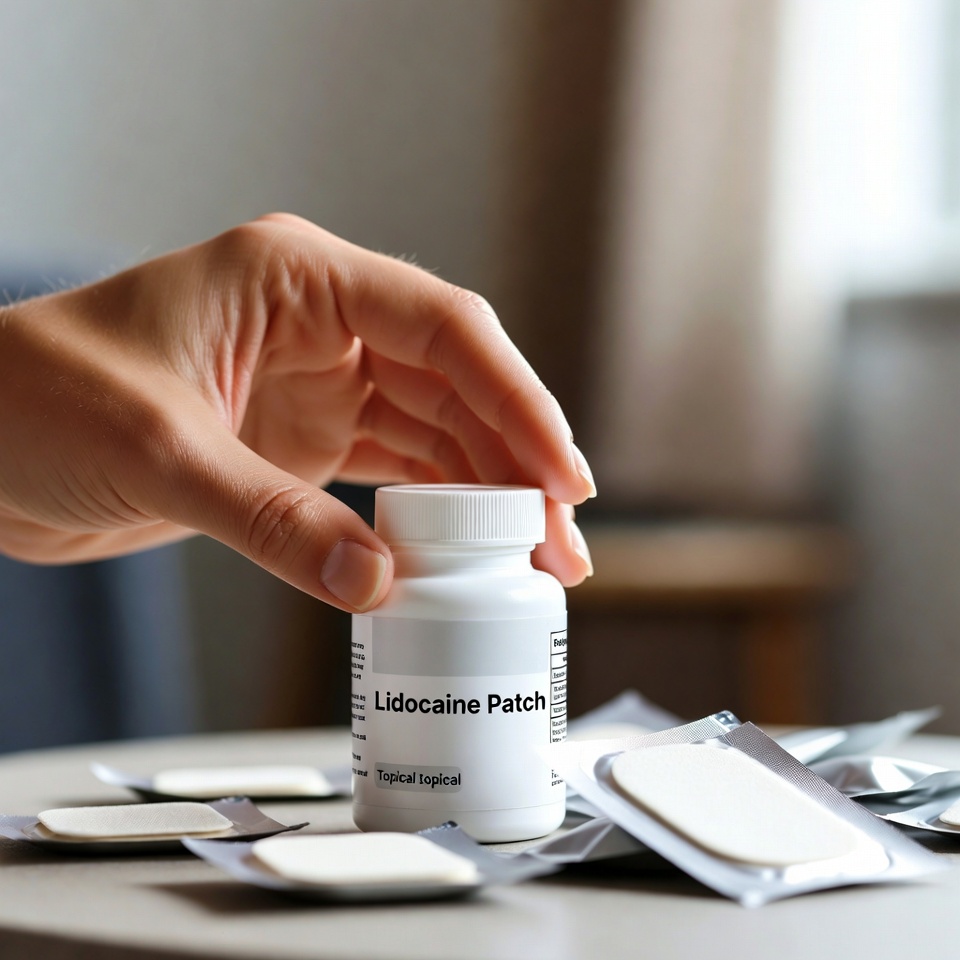
Over-the-counter (OTC) lidocaine patches are readily accessible in most developed markets, with 4% concentration established as the maximum allowable strength without a prescription by regulatory bodies like the FDA. In the United States, brands such as Aspercreme, Salonpas, and Curist offer these patches in packs of 5 to 20, priced affordably between $10-30 depending on quantity and retailer. Similar availability exists in the UK via Boots or Superdrug, and in Canada through Shoppers Drug Mart, often categorized under "topical analgesics."[2][6][7][5]
The rationale for capping OTC strength at 4% stems from extensive safety data showing minimal systemic absorption when used as directed—up to one patch for 12 hours daily. This threshold balances efficacy for minor pains with low toxicity risk, unlike the 5% prescription patches (e.g., Lidoderm) approved specifically for postherpetic neuralgia following rigorous clinical trials. In regions with stricter regulations, such as parts of the EU, OTC sales may require pharmacist consultation, but no formal prescription is needed.[4][6][8][1][3]
Globally, e-commerce platforms like Amazon and Walmart amplify access, shipping OTC patches worldwide with clear labeling on strength and usage limits. For international buyers, including those in Asia, importing OTC 4% patches is straightforward, though local customs may impose quantity restrictions. Always verify regional guidelines, as availability can vary—Australia, for instance, permits 4% patches OTC but with age restrictions (18+).[6][2][5]
While both types deliver lidocaine transdermally, OTC and prescription patches diverge in potency, indications, and oversight, influencing their ideal applications.[4][5][3]
OTC 4% patches excel for acute, musculoskeletal pains from daily activities—think gym workouts, prolonged sitting, or minor injuries. Their lower dose suits self-treatment, with studies showing significant relief in 60-70% of users for back and neck pain within 30-60 minutes. Prescription 5% patches, conversely, target chronic neuropathic conditions, backed by Level 1 evidence from randomized trials demonstrating 30-50% pain reduction in shingles aftermath.[1][2][3]
Regulatory distinctions underscore these roles: OTC products fall under monograph guidelines with established safety profiles, allowing Category III status for 4% formulations. Prescription counterparts undergo NDA review, mandating pharmacokinetic data and adverse event monitoring. Cost-wise, OTC patches average $1-2 per unit, far below the $5-10 for generics of prescription versions, even with insurance.[5][6][4]
Wear protocols also differ slightly. OTC labels often permit one patch up to 12 hours, while physicians may authorize 1-3 prescription patches in a 12-on/12-off cycle for severe cases. Both emphasize non-overlapping application to prevent overdose, but prescription use includes cardiac monitoring for at-risk patients.[9]
Lidocaine patches interrupt pain at its source by selectively targeting small-diameter nerve fibers (A-delta and C-fibers) responsible for nociception. Upon application, lidocaine diffuses through the stratum corneum into dermal nerve endings, binding sodium channels in their inactivated state to prolong the refractory period. This dose-dependent blockade reduces ectopic firing without affecting motor function or large sensory nerves at therapeutic levels.[3][5]
Pharmacokinetics reveal peak skin concentrations of 20-40 mg/cm² within 2-4 hours, plateauing thereafter for sustained release. Plasma levels rarely exceed 0.1 mcg/mL—well below toxic thresholds of 5 mcg/mL—thanks to first-pass metabolism in the liver via CYP3A4 and CYP1A2 enzymes. For comparison, injected lidocaine reaches systemic highs 10-100 times greater, explaining the patches' superior safety margin.[4][3]
Clinical efficacy shines in real-world scenarios. A 2023 meta-analysis of 15 trials confirmed OTC patches reduce pain scores by 2-3 points on a 10-point VAS scale for acute strains, outperforming placebo by 25-40%. For neuropathic pain, prescription patches extend this to 4+ point drops, often synergizing with gabapentinoids or antidepressants.[1][3]
Proper technique ensures optimal absorption and safety. Start by selecting a clean, dry, intact skin area over the pain site—avoid hairy regions for better adhesion. Wash hands thoroughly, then open the foil pouch carefully to prevent contamination.[8][6]
Peel the protective liner from the patch, align it precisely, and press firmly for 10-20 seconds, smoothing edges to eliminate air bubbles. Leave in place up to 12 hours; set a timer for removal to enforce the 12-hour off-period, during which skin can "reset" and minimize cumulative exposure.[7][9]
Upon removal, fold the patch sticky-to-sticky and dispose securely—used patches retain active drug. If irritation occurs, wash the site with mild soap; rotate sites daily to prevent dermatitis. For enhanced adhesion in humid climates or during sweat-prone activities, secure with medical tape, but never under occlusive wraps unless directed.[8]
OTC lidocaine patches address a spectrum of everyday pains. For lower back strain from heavy lifting, apply one patch midline for lumbar coverage, reporting 50-70% relief in user surveys. Neck and shoulder tension from desk work responds similarly, with patches outperforming oral NSAIDs in localized delivery.[2][1]
Athletes favor them for knee osteoarthritis flares or elbow tendonitis (tennis elbow), where targeted numbing allows continued mobility without masking injury progression. Post-surgical patients use them adjunctively for incision-site discomfort, bridging the gap until full healing. Even fibromyalgia hotspots benefit from spot-treatment, though systemic therapies remain primary.[7][3]
In elderly care, patches manage arthritis in hands or hips, preferred over pills due to fall-risk reduction from avoiding drowsiness. Combination with TENS units or heat therapy amplifies effects, per multimodal guidelines from pain societies.[9]
Most users experience no issues, but vigilance is key. Local reactions—erythema, pruritus, or vesicles—affect 5-15%, resolving post-removal. Rare systemic effects like methemoglobinemia (cyanosis, dyspnea) arise from overdose or genetic G6PD deficiency, treatable with methylene blue.[3][4]
Contraindications include hypersensitivity to amides, severe hepatic impairment (prolonged half-life), and application on mucous membranes or abraded skin. Drug interactions with antiarrhythmics (Class I) or CYP inhibitors (e.g., ritonavir) warrant caution. Pregnant/nursing individuals should consult providers, as Category B status lacks extensive teratogenicity data.[8][4]
Overuse risks—exceeding 3 patches/day or >7 days—elevate arrhythmia potential; symptoms include tinnitus, seizures at extremes. Children under 12 and pets require safeguarding, as accidental ingestion mimics cocaine toxicity.[9]
High-risk groups include those with bradycardia, 2nd/3rd-degree AV block, or Wolff-Parkinson-White syndrome, where sodium channel blockade exacerbates conduction delays. Liver cirrhosis patients metabolize slower, necessitating dose halving. Diabetics monitor for masking neuropathic ulcers.[4][3]
Always disclose to physicians if combining with other topicals (capsaicin, menthol) to avoid additive irritation. For chronic use >2 weeks, diagnostic workup rules out underlying pathology like herniated discs or rheumatoid arthritis.[1][9]
Versus oral analgesics, patches bypass GI upset and first-pass metabolism, ideal for NSAID-intolerant users. Compared to gels, no rubbing minimizes mess and dosing errors; duration trumps 2-4 hour creams. Hydrogel formats add moisture for dry skin pains, enhancing comfort.[2][7][1]
Economic analysis shows OTC patches cost-effective at $0.50-1/hour of relief versus $2+ for physical therapy sessions. Patient adherence exceeds 80% due to ease, per adherence studies.[6]
For brand owners, wholesalers, and manufacturers, our Chinese factory (supplybenzocaine.co.uk) specializes in OEM production of high-quality lidocaine patches tailored to global markets. We offer 4% OTC formulations compliant with FDA, EU, and TGA standards, plus custom blends with menthol, prilocaine, or CBD isolates.
Our GMP-certified facility handles full lifecycle: R&D for stability-optimized matrices, large-scale coating/extrusion, die-cutting, and pouching with child-resistant foils. MOQs start at 10,000 units, with lead times of 4-6 weeks. Private labeling includes multilingual inserts, barcodes, and eco-packaging.
Regulatory dossiers, COAs, and microbial/heavy metal testing ensure seamless import. Past clients launched successful lines in the US, EU, and Australia, achieving 20-30% margins via our cost efficiencies. Partner with us for scalable, innovative topical analgesics that meet consumer demand for natural-feeling, long-lasting relief.
Lidocaine patches, particularly the 4% OTC variants available without prescription in numerous countries, provide accessible, effective relief for minor localized pains like backaches, strains, and joint issues. By delivering targeted anesthesia with a strong safety profile when guidelines are followed—12 hours max wear, no overlapping, intact skin only—they integrate seamlessly into daily pain management alongside lifestyle tweaks and therapies.[6][2][9][1][3][4]
Ready to elevate your brand with premium OEM lidocaine patches? Contact our expert team at supplybenzocaine.co.uk today for free samples, custom quotes, and formulation consultations. Let's collaborate to deliver superior pain relief solutions worldwide!
Yes, in many countries you can buy OTC lidocaine patches containing up to 4% lidocaine from pharmacies, supermarkets, and online platforms. Stronger 5% patches, such as those indicated for postherpetic neuralgia, usually require a prescription from a healthcare professional.[7][2][1][3][4]
The strongest widely available OTC lidocaine patch strength is 4%, often labeled as “maximum strength” without a prescription. Any patch with more than 4% lidocaine is typically classified as a prescription product and must be used under medical supervision.[5][2][6][7]
Most instructions recommend wearing a lidocaine patch for up to 12 hours at a time, followed by at least 12 hours off. Labels also caution not to exceed the maximum number of patches per day and not to use them for more than about one week without consulting a doctor.[6][8][9][3]
Lidocaine patches should not be applied to broken, irritated, inflamed, or infected skin, and should not be placed on mucous membranes or near the eyes. Avoid using them under tight bandages or heating pads unless specifically instructed, because heat can increase drug absorption and the risk of systemic effects.[8][9]
People with severe liver disease, serious heart rhythm problems, a history of methemoglobinemia, or certain blood disorders should consult a healthcare professional before using lidocaine patches. Pregnant or breastfeeding women, older adults with multiple medications, and parents seeking to treat children should also seek medical advice for safe and appropriate use.[3][4][8]
[1](https://www.healthline.com/health/back-pain/lidocaine-patch-for-back-pain)
[2](https://curistrelief.com/blogs/curist/lidoderm-salonpas-lidocaine-4-percent-patch)
[3](https://www.mypcnow.org/fast-fact/the-lidocaine-patch/)
[4](https://www.goodrx.com/lidoderm/what-is)
[5](https://enclarapharmacia.com/palliative-pearls/comparing-prescription-and-over-the-counter-lidocaine-patches)
[6](https://curistrelief.com/products/lidocaine-4-patch-maximum-strength-20-patches)
[7](https://www.aspercreme.com/en-us/products/patch/lidocaine-patch)
[8](https://www.dailymed.nlm.nih.gov/dailymed/drugInfo.cfm?setid=3e5a5165-a773-0501-e063-6294a90ae2f4)
[9](https://www.laspinedoc.com/wearing-lidocaine-patches-safely/)
Hot tags: Lidocaine Patches Over The Counter, Buy Lidocaine Patches Online, OTC Lidocaine Patch Benefits, Lidocaine Patch Pain Relief, Where To Buy Lidocaine Patches, Lidocaine Patch Dosage Instructions, Best Lidocaine Patches Available, Lidocaine Patch Side Effects, Lidocaine Patch Reviews, Lidocaine Patch for Back Pain