Content Menu
● Chemical Structure and Properties
● Detailed Mechanism of Action
● Pharmacokinetics and Metabolism
● Clinical Applications and Uses
● Manufacturing and Quality Control
● Safety Profile, Side Effects, and Warnings
● Regulatory Landscape and Future Directions
● OEM Partnership Opportunities
● FAQ
>> 1. What is the primary mechanism of benzocaine?
>> 2. Is benzocaine safe for use on children?
>> 3. How is benzocaine produced industrially?
>> 4. What are the main side effects of benzocaine?
>> 5. Can factories provide OEM services for benzocaine products?
Benzocaine is a widely used ester-type local anesthetic that provides rapid, localized pain relief by blocking nerve signals in the skin and mucous membranes. Commonly found in over-the-counter products like gels, sprays, ointments, and lozenges, it plays a crucial role in biotechnology, pharmaceuticals, and medical device manufacturing, especially for OEM services catering to international brands.
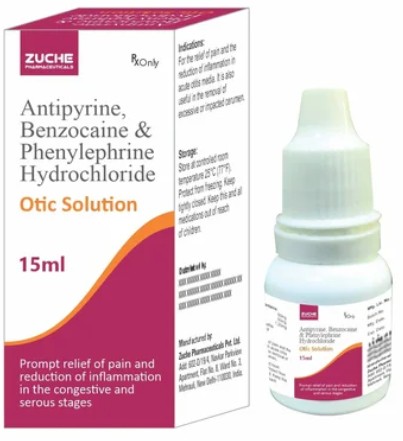
Benzocaine has been a staple in pain management since its introduction in the early 20th century. Developed as a safer alternative to cocaine for topical anesthesia, it revolutionized minor pain relief for conditions like sore throats, toothaches, sunburns, and minor cuts. As a key active pharmaceutical ingredient (API), benzocaine is produced in high volumes by specialized factories, including those in China offering OEM/ODM services for global wholesalers and brands. Its simplicity in formulation allows for versatile delivery systems, from oral sprays to skin creams, making it ideal for private-label production.
Unlike injectable anesthetics such as lidocaine, benzocaine is primarily used topically because it poorly penetrates intact skin but excels on mucous membranes and abraded surfaces. This property stems from its chemical makeup, which we'll explore next. Factories like ours at supplybenzocaine.co.uk leverage advanced GMP-certified processes to ensure purity levels above 99%, meeting stringent international standards for export.
At its core, benzocaine is ethyl 4-aminobenzoate, with the molecular formula C9H11NO2 and a molecular weight of 165.19 g/mol. It consists of a benzene ring substituted with an amino group (-NH2) at the para position and an ethoxycarbonyl ester group (-COOCH2CH3). This structure classifies it as an ester anesthetic, distinguishing it from amide types like lidocaine.
The pKa of benzocaine is approximately 2.6, meaning it exists mostly in its non-ionized, lipid-soluble form at physiological pH (around 7.4). This lipophilicity allows it to diffuse through nerve cell membranes easily. Once inside, the slightly acidic environment near sodium channels promotes ionization, enabling the molecule to bind effectively. Its melting point is 88-90°C, and it's sparingly soluble in water (1.4 g/L) but highly soluble in ethanol, chloroform, and ether—properties critical for formulation into gels and sprays.
In manufacturing, these traits guide purification steps like recrystallization from ethanol, ensuring the final powder is white, odorless, and stable under dry conditions. Stability testing shows benzocaine remains potent for years when stored below 25°C away from moisture and light.
Benzocaine exerts its anesthetic effect by reversibly inhibiting voltage-gated sodium channels in neuronal membranes. Nerve impulses rely on sodium ions rushing into the cell through these channels during depolarization, creating an action potential that propagates pain signals. Benzocaine steps in by binding to the channel's alpha subunit, particularly in its open or activated state—a phenomenon called "use-dependent block."
In its non-ionized form, benzocaine crosses the lipid bilayer of the axon membrane. Intracellularly, it protonates and plugs the sodium channel pore from the inside, preventing Na+ influx. This stabilizes the membrane potential, halting depolarization and thus blocking signal transmission. The effect is rapid, with onset as quick as 15-30 seconds for mucosal applications, and duration typically 10-15 minutes, though formulations with occlusive bases can extend this to 30-60 minutes.
Unlike systemic anesthetics, benzocaine acts locally with minimal vascular absorption when used as directed, reducing the risk of widespread effects. Studies demonstrate it preferentially targets smaller-diameter sensory nerves (A-delta and C fibers) responsible for pain and temperature, sparing larger motor fibers at low concentrations. This selectivity enhances its safety profile for superficial use.
At the molecular level, hydrogen bonding between benzocaine's amino group and channel residues, plus hydrophobic interactions from the aromatic ring, anchor it securely. Recovery occurs as the drug dissociates (rate constant around 0.1-1 s^-1), allowing sodium channels to reopen once concentrations drop.
When applied topically, benzocaine absorbs variably based on site, concentration (typically 5-20%), and vehicle. Mucous membranes absorb faster than skin—up to 30% systemic bioavailability from oral sprays—peaking in plasma within 30-60 minutes. Skin absorption is slower, aided by penetration enhancers like ethanol.
Distribution follows lipid solubility, favoring well-perfused tissues. It's 90% protein-bound, primarily to albumin. Metabolism occurs via hydrolysis by plasma esterases (pseudocholinesterase) into para-aminobenzoic acid (PABA) and ethanol. PABA is further conjugated in the liver and excreted renally; ethanol follows normal alcohol pathways. Half-life is short, about 1 hour, with >90% elimination within 24 hours.
In neonates or those with esterase deficiencies, metabolism slows, heightening toxicity risks. Monitoring plasma levels isn't routine for OTC use but is critical in prolonged or high-dose scenarios.
Benzocaine shines in everyday pain relief. Orally, it's the go-to for aphthous ulcers, denture irritation, teething pain, and pharyngitis—products like lozenges (10-20 mg) provide 5-10 minutes of relief per dose. In dentistry, gels numb gums before injections or procedures.
Dermatologically, 5-20% ointments treat pruritus from insect bites, hemorrhoids, burns, and abrasions. Combined with antipyrine in otic drops, it eases acute otitis media pain. Endoscopically, sprays facilitate procedures like bronchoscopy.
Emerging uses include veterinary anesthesia for amphibians and fish, where low toxicity suits aquatic environments. In biotech, it's explored for wound dressings releasing controlled doses.
Formulations vary: aqueous sprays for throats, liposomal gels for sustained release, and patches for chronic issues. Our OEM lines customize these, blending with antiseptics like chlorhexidine or moisturizers for enhanced efficacy.
Industrial production starts with p-aminobenzoic acid (PABA) esterified with ethanol under sulfuric acid catalysis, refluxed 5-10 hours, then neutralized and purified. Alternatively, ethyl p-nitrobenzoate reduces via iron/HCl or catalytic hydrogenation, followed by filtration and recrystallization.
Chinese facilities excel here, scaling to tons annually under GMP, ISO, and USP standards. Key steps include raw material QC (HPLC purity >99.5%), in-process controls (pH, temperature), and final testing for heavy metals (<10 ppm), microbes, and assay (98-102%).
Packaging options span bulk powder to finished aerosols, with stability batches validated for 24-36 months. For OEM clients, we offer white-labeling, custom concentrations (1-40%), and regulatory dossiers for FDA, EMA compliance.
While safe at recommended doses, benzocaine carries risks. Most common are localized stinging, erythema, or urticaria from sensitivity. Systemically, overdose or overuse triggers methemoglobinemia—oxidizing hemoglobin's iron (Fe2+ to Fe3+), impairing oxygen transport. Symptoms include cyanosis, headache, tachycardia; severe cases cause seizures or death.
Infants under 2 and teething gels prompted FDA bans/withdrawals due to 16+ pediatric cases. Allergic reactions stem from PABA, cross-reacting with sulfonamides. Contraindications: G6PD deficiency, methemoglobin reductase issues, PABA allergy.
Guidelines limit to 20% concentration, max 3-4 applications/day. Antidote: methylene blue 1-2 mg/kg IV. Interactions amplify with prilocaine, nitrates.
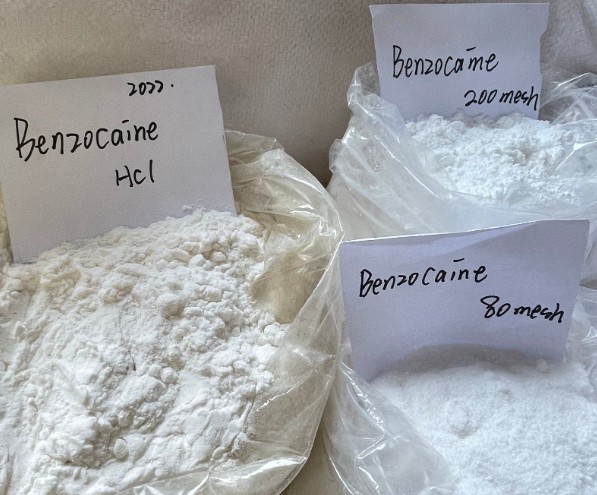
Globally, OTC status prevails (e.g., FDA monograph), but prescription for high-strength. Post-2011 warnings tightened labeling. Research eyes safer analogs, nanoparticle delivery for deeper penetration, and combos with NSAIDs.
In biotech, gene therapy adjuncts or 3D-printed devices embed benzocaine for personalized medicine.
As a leading Chinese factory (supplybenzocaine.co.uk), we specialize in biotech/pharma OEM for benzocaine products. From R&D prototyping to full-scale production, our 10,000 sqm facility serves 100+ international brands. Services include formulation development, stability studies, sterile filling, and logistics to EU/US.
Benefits: Cost savings (30-50% vs. Western), rapid turnaround (4-6 weeks), and customization—vegan formulas, eco-packaging, or private recipes. Compliance with BRC, HALAL, Kosher. Minimum orders flexible for startups.
Benzocaine masterfully numbs pain by precisely targeting sodium channels, offering quick, versatile relief across medical applications. Its proven track record, coupled with rigorous manufacturing, makes it indispensable. Elevate your brand with our premium OEM solutions—contact supplybenzocaine.co.uk today for tailored quotes, free samples, and expert consultation. Partner with us for reliable, high-quality benzocaine products that win markets! Contact us to get more information!
Benzocaine blocks voltage-gated sodium channels in nerve membranes, preventing sodium influx and halting pain signal propagation for rapid numbness.
No, it's contraindicated for children under 2 years due to methemoglobinemia risk; consult physicians for alternatives in young patients.
Primarily via esterification of p-aminobenzoic acid with ethanol or reduction of ethyl p-nitrobenzoate, followed by purification to GMP standards.
Local irritation, allergic reactions, and methemoglobinemia; avoid overuse and monitor for cyanosis, especially in at-risk groups.
Yes, specialized biotech factories offer full OEM/ODM, from custom formulations to branded packaging for global wholesalers.
1. https://en.wikipedia.org/wiki/Benzocaine
2. https://www.ncbi.nlm.nih.gov/sites/books/NBK541053/?report=reader
3. https://www.drugwatch.com/benzocaine/
4. https://patents.google.com/patent/US3037046A/en
5. https://www.pharmacompass.com/listed-active-pharmaceutical-ingredients/benzocaine
6. https://www.ijpsjournal.com/article/Benzocaine+Topical+Spray+A+Local+Anesthetic+For+Pain+Management+
7. https://foodbiomarkers.wishartlab.com/toxins/T3D2980
8. https://hellodoktor.com/en/benzocaine-topical/
9. https://webbook.nist.gov/cgi/cbook.cgi?ID=94-09-7
10. https://www.goodrx.com/benzocaine/side-effects
Hot tags: Benzocaine Mechanism, How Benzocaine Works, Benzocaine Uses, Benzocaine Side Effects, Benzocaine Applications, Topical Anesthetic Benzocaine, Benzocaine Pain Relief, Benzocaine Dental Use, Benzocaine Safety, Benzocaine Products