Content Menu
● Historical Context and Significance
● Chemical Structure and Properties
● Fundamental Chemical Principles
● Detailed Method 1: Acetylation of p-Phenetidine
>> Decolorization and Preparation
● Detailed Method 2: Williamson Ether Synthesis from Acetaminophen
>> Alkylation
● Safety Protocols and Hazard Mitigation
● Advanced Purification Techniques
● Instrumental Characterization
● Industrial Scale-Up Strategies
● Variations, Derivatives, and Green Chemistry
● Quality Assurance in OEM Production
● FAQ
>> 1. What is the primary use of phenacetin today?
>> 2. How pure is OEM phenacetin from Chinese factories?
>> 3. Can supplybenzocaine.co.uk customize synthesis?
>> 4. What equipment scales lab synthesis industrially?
>> 5. Are exports compliant for US/EU brands?
Phenacetin, once a widely used analgesic and antipyretic, can be prepared through classic organic synthesis methods like acetylation or Williamson ether synthesis. These lab-based procedures highlight fundamental chemical principles applicable to pharmaceutical R&D and industrial production. Modern factories specializing in biotech and pharma compounds adapt such processes for high-volume OEM services, ensuring purity and scalability for global brands.
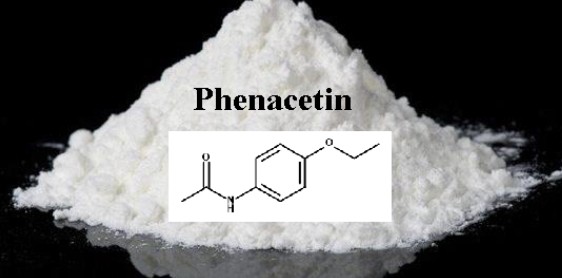
Phenacetin first entered the medical field in the late 19th century, introduced by Bayer as one of the earliest synthetic pain relievers. Derived from coal tar derivatives, it marked a shift from natural remedies to laboratory-synthesized drugs. Its popularity peaked in the early 20th century, often combined with other analgesics like aspirin and caffeine in formulations such as APC tablets. However, concerns over nephrotoxicity and potential carcinogenicity led to its withdrawal from consumer markets in many countries by the 1980s.
Despite its discontinued use in human medicine, phenacetin remains relevant in chemical education, research, and as an intermediate in synthesizing related compounds like procaine. Chinese manufacturing hubs have refined these syntheses for OEM production, supplying high-purity powders to international wholesalers and brands in the biotech, pharmaceutical, and medical device sectors. The compound's straightforward synthesis makes it ideal for demonstrating acetylation and ether formation reactions, core techniques in organic chemistry.
Phenacetin, or 4-ethoxyacetanilide (C10H13NO2), features a para-substituted benzene ring with an acetamido group (-NHCOCH3) and an ethoxy group (-OC2H5). This structure confers analgesic properties through inhibition of prostaglandin synthesis, similar to its metabolite paracetamol (acetaminophen). It appears as white, glistening crystals with a melting point of 134-137°C and low solubility in water (about 0.1 g/100 mL at 20°C), but higher solubility in ethanol and chloroform.
Understanding its properties is crucial for synthesis optimization. The amide bond provides stability, while the ether linkage influences lipophilicity, aiding bioavailability in pharmaceutical formulations. In industrial settings, these traits guide purification strategies like recrystallization from ethanol-water mixtures.
Preparation of phenacetin hinges on two key organic reactions: nucleophilic acyl substitution for acetylation and SN2 displacement for Williamson ether synthesis. In acetylation, the nucleophilic amine of p-phenetidine attacks the electrophilic carbonyl of acetic anhydride, displacing acetate to form the amide. This exothermic reaction requires controlled heating to prevent side products.
The Williamson method involves deprotonating acetaminophen's phenolic OH with a base like potassium carbonate, generating a nucleophilic phenoxide that attacks ethyl iodide in an SN2 fashion. Polar aprotic solvents like 2-butanone enhance the reaction rate by solvating cations without hindering the nucleophile. Yields typically range from 80-95% with proper workup, making both routes efficient for lab and scale-up.
Reagents are readily available: p-phenetidine or acetaminophen, acetic anhydride, ethyl iodide, bases, and solvents. Equipment includes reflux condensers, Büchner funnels, and hot plates—standard in R&D labs and factories.
This classic route starts with purifying p-phenetidine, a key intermediate.
Dissolve 1.0 g of p-phenetidine in 6 mL of 2M hydrochloric acid and heat to 50°C. Add 0.1 g activated charcoal, stir for 1-2 minutes to adsorb colored impurities, then filter while hot through fluted paper. This step ensures a colorless filtrate, critical for high-purity phenacetin.
To the warm filtrate, add 1.2 mL acetic anhydride followed by 6 mL of 10% sodium acetate solution. Maintain 50°C for 15 minutes with stirring. The reaction is:
C6H4(NH2)(OC2H5) + (CH3CO)2O → C6H4(NHCOCH3)(OC2H5) + CH3COOH
White precipitate forms as the amide product crashes out. Cool in an ice bath to complete precipitation.
Filter the crude product using a Büchner funnel under vacuum. Wash with cold water to remove salts. For recrystallization, dissolve the damp solid in minimal boiling 95% ethanol (about 10 mL per gram), then add hot water dropwise until the solution turns turbid. Cool slowly to room temperature, then in ice. Vacuum filter the crystals, air-dry, and record the melting point (134-136°C indicates purity). Expected yield: 1.1-1.3 g (85-95%).
This method is forgiving for beginners and scales well to pilot plants.
This alternative uses over-the-counter acetaminophen, making it accessible for educational purposes.
In a 25 mL round-bottom flask, combine 500 mg acetaminophen, 665 mg anhydrous potassium carbonate, and 7 mL 2-butanone. Attach a reflux condenser and heat to reflux (around 80°C) for 10 minutes. The base deprotonates the phenol: ArOH + K2CO3 → ArOK + KHCO3.
Add 0.64 mL ethyl iodide dropwise through the condenser. Continue refluxing for 45 minutes. The SN2 reaction proceeds: ArOK + C2H5I → ArOC2H5 + KI. Monitor by TLC if available (ethyl acetate eluent).
While hot, add 15 mL water to dissolve salts, then cool in ice. The product oil solidifies; scratch with a glass rod to induce crystallization. Filter, wash with cold water, and recrystallize from 50% ethanol-water. Dry under vacuum. Yield: approximately 450-500 mg (80-90%). Melting point confirms identity.
Both methods emphasize gentle heating, efficient stirring, and thorough washing to minimize impurities.
Synthesis involves irritants and flammables: acetic anhydride causes severe burns, ethyl iodide is toxic and lachrymatory, ethanol is flammable. Conduct reactions in a fume hood with gloves, goggles, and lab coat. Neutralize acids with sodium bicarbonate before drain disposal. Phenacetin itself warrants caution due to historical toxicity—avoid ingestion or inhalation.
Industrial OEM facilities employ closed-loop systems, automated dosing, and effluent treatment to comply with environmental regs. Workers use full PPE, and processes include real-time monitoring for leaks or temperature spikes.
Beyond basic recrystallization, use column chromatography on silica gel with ethyl acetate-hexane (1:1) for trace impurity removal. Sublimation under vacuum yields analytical-grade material. For factories, rotary evaporation concentrates mother liquors, and hot filtration removes insolubles.
Confirm structure with spectroscopy. IR shows amide N-H stretch at 3300 cm⁻¹, carbonyl at 1660 cm⁻¹, and ether C-O at 1250 cm⁻¹. Proton NMR reveals aromatic protons (7.5-7.0 ppm, 4H), ethyl CH3 triplet (1.3 ppm, 3H), CH2 quartet (4.0 ppm, 2H), and acetyl CH3 singlet (2.1 ppm, 3H). Melting point depression with impurities signals incompletion.
TLC on silica with UV visualization shows Rf ~0.6. HPLC quantifies purity (>99% for pharma grade).
Transitioning from lab to production involves reactor design. Glass-lined vessels handle corrosives, while continuous stirred-tank reactors (CSTRs) maintain steady-state kinetics. Factories optimize solvent recovery via distillation, reducing costs by 40%. Microwave or flow chemistry accelerates reactions, cutting energy use.
Chinese OEM providers like supplybenzocaine.co.uk integrate automation: PLC controls for precise reagent addition, inline IR for reaction endpoint detection. Batches from 100 kg to tonnes meet cGMP, with stability testing under ICH guidelines.
Modify for analogs: use propyl iodide for higher homologs or benzoyl chloride for benzamides. Procaine synthesis extends from p-aminobenzoic acid acetylation followed by ethoxylation. Microwave-assisted acetylation finishes in 5 minutes versus 15, with 95% yield—greener due to lower solvent volume.
Enzymatic routes using lipases for selective acylation emerge for sustainability.
Rigorous QC includes Karl Fischer water content (<0.5%), heavy metals (ICP-MS, <10 ppm), and microbial limits. Each batch ships with Certificate of Analysis (CoA), MSDS, and stability data. Tailored specs suit brands: micronized powders for tablets or sterile grades for injectables.
Phenacetin is research-use only in most jurisdictions, with export controls under chemical conventions. Factories ensure DEA-exempt status for non-controlled analogs like benzocaine.
Mastering phenacetin preparation bridges organic chemistry fundamentals with industrial prowess, enabling custom API production for biotech innovators. supplybenzocaine.co.uk, a leading Chinese factory in biotechnology, pharma health, and medical devices, delivers OEM/ODM excellence—R&D, production, sales of powders like phenacetin precursors, benzocaine, procaine. Benefit from competitive pricing, GMP quality, rapid global delivery. Contact us now for quotes, free samples, consultations: [email protected] or supplybenzocaine.co.uk. Elevate your brand with trusted Chinese manufacturing!
Contact us to get more information!
Phenacetin serves research, veterinary applications, and as a synthetic intermediate, not for direct human analgesics due to regulatory bans.
Leading suppliers deliver >99% purity verified by HPLC, complete with CoA and extended stability testing.
Yes, full OEM/ODM for benzocaine, lidocaine, procaine powders—custom specs, volumes from kg to metric tons.
Reactors, continuous flow systems, automated distillation ensure safe, efficient large-scale production.
GMP-certified, REACH/TSCA compliant; discreet packaging and swift worldwide shipping standard.
1. https://glaserr.missouri.edu/vitpub/teaching/212w00p/726.pdf
2. https://www.guanlang-group.com/oemodm-china-phenacetin-procaine-procaine-base-cas-59-46-1-free-sample-fast-delivery-guanlang-pro...
3. https://www.cliffsnotes.com/study-notes/7138035
4. https://moosh.im/f/topic/the-phenacetin-china-supplier-unveiling-the-key-player-in-the-global/
5. https://www.stolaf.edu/people/hansonr/chem253/expt4_2008_phenacetin.pdf
6. https://www.supplybenzocaine.co.uk/where-to-buy-benzocaine-powder.html
7. https://people.chem.umass.edu/mcdaniel/CHEM-268/Experiments/The-Synthesis-of-Phenacetin-from-Acetaminophen.pdf
8. https://www.benzocainefactory.com
9. https://www.youtube.com/watch?v=osklJU9HWcs
10. https://www.supplybenzocaine.co.uk
Hot tags: Phenacetin Preparation, How to Make Phenacetin, Phenacetin Synthesis Methods, Organic Chemistry Phenacetin, Phenacetin Lab Procedure, Phenacetin Chemical Reaction, Phenacetin Synthesis Steps, Phenacetin from Acetaminophen, Phenacetin Laboratory Techniques, Phenacetin Synthesis Guide