Content Menu
● Chemical Structure and Properties
● Historical Development and Medical Use
● Pharmacological Mechanism of Action
● Toxicity, Side Effects, and Withdrawal
● Current Legitimate Applications
● Illicit Misuse and Public Health Concerns
● Sourcing High-Quality Phenacetin: OEM Expertise from China
● Selecting a Reliable Supplier
● FAQ
>> 1. What is phenacetin primarily used for today?
>> 2. Why did regulators withdraw phenacetin from consumer markets?
>> 3. Is phenacetin legal for research or industrial purchase?
>> 4. How to verify phenacetin quality from suppliers?
>> 5. Why choose Chinese OEM for phenacetin sourcing?
Phenacetin is a synthetic organic compound historically celebrated as one of the earliest non-opioid analgesics and antipyretics introduced to modern medicine. Developed in the late 19th century, it marked a significant milestone in pharmaceutical innovation by offering a safer alternative to natural remedies like willow bark extracts and opium derivatives. For nearly a century, phenacetin was a staple in households worldwide, found in popular remedies for headaches, fevers, and rheumatic pains. Its white crystalline powder form made it easy to incorporate into tablets, powders, and elixirs, often combined with aspirin and caffeine for enhanced efficacy. However, by the late 20th century, concerns over its long-term safety led to its withdrawal from most therapeutic markets. Today, phenacetin persists primarily as a laboratory reagent, pharmaceutical intermediate, and subject of toxicological research, underscoring the delicate balance between a compound's utility and its risks.
This article delves deeply into phenacetin's chemical identity, historical journey, pharmacological actions, safety profile, modern applications, and sourcing considerations. By examining its multifaceted story, professionals in biotechnology, pharmaceuticals, and medical device sectors can better navigate its procurement and use, especially when partnering with reliable OEM manufacturers.
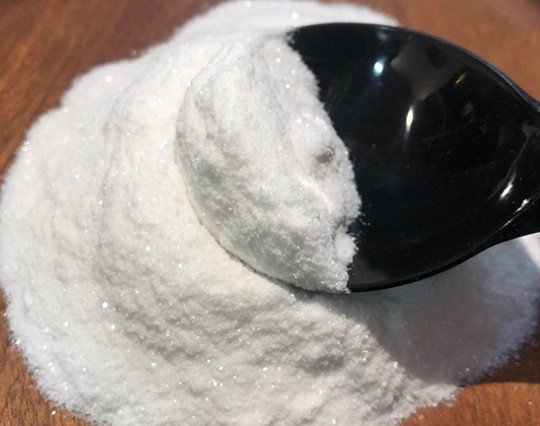
At its core, phenacetin is 4-ethoxyacetanilide, a derivative of acetanilide with an ethoxy group attached to the para position of the benzene ring. This structural modification enhances its lipophilicity compared to its parent compound, allowing better penetration into tissues and the central nervous system. The molecular formula is C10H13NO2, with a molecular weight of 179.22 g/mol. It presents as a fine, white to off-white crystalline powder, odorless or with a faint characteristic scent, and exhibits low solubility in water (approximately 0.076 g/100 mL at 20°C) but good solubility in ethanol, chloroform, and diethyl ether.
These physical properties make phenacetin ideal for certain industrial processes, such as crystallization experiments where controlled precipitation is key. Its melting point ranges from 134-136°C, and it decomposes slightly above 170°C, which researchers must consider during synthesis or purification. Stability-wise, phenacetin remains robust under normal storage conditions—cool, dry, and away from light—but prolonged exposure to moisture or strong oxidants can lead to degradation products.
In analytical chemistry, phenacetin serves as a standard for techniques like high-performance liquid chromatography (HPLC) and gas chromatography-mass spectrometry (GC-MS). Its UV absorbance maximum around 245 nm facilitates detection in complex mixtures. For those in R&D, understanding these traits is crucial for formulating stable intermediates or designing metabolic studies.
Phenacetin entered the pharmaceutical scene in 1887, synthesized by the German chemist Ludwig Weickert while working for the dye manufacturer Farbwerke (later part of Bayer). Marketed under names like Acetophenetidin, it quickly gained traction as part of the "coal-tar dye" analgesics revolution, alongside antipyrine and acetanilide. By the early 1900s, it was a global bestseller, embedded in brands such as APC powders (aspirin-phenacetin-caffeine) and marketed for everyday ailments.
Medically, phenacetin excelled at alleviating mild to moderate pain—think tension headaches, menstrual cramps, toothaches—and reducing fever by acting on the hypothalamus. Rheumatologists prescribed it for subacute arthritis, while general practitioners used it for intercostal neuralgia and post-infectious fevers. Its onset was moderate (30-60 minutes orally), with effects lasting 4-6 hours, and minimal gastrointestinal irritation compared to salicylates. Dosing typically ranged from 300-600 mg every 4-6 hours, not exceeding 4 grams daily.
Peak popularity came in the mid-20th century, with billions of doses consumed annually. In the U.S., it featured in over-the-counter remedies until the 1970s. Europe and Australia saw similar enthusiasm, though early whispers of renal issues emerged in Scandinavian studies during the 1950s. Combination products amplified its reach, synergizing caffeine's stimulant effects with phenacetin's analgesia for "headache powders" popular among laborers and office workers alike.
Phenacetin's activity stems from both direct effects and active metabolites. Primarily, it inhibits prostaglandin synthesis in the central nervous system, akin to modern NSAIDs, though less potently. This reduces nociceptive signaling in spinal cord pathways and modulates hypothalamic fever centers by lowering the temperature set-point.
A key twist: hepatic metabolism via CYP1A2 and CYP2D6 converts about 80-90% of phenacetin to paracetamol (acetaminophen), the primary analgesic contributor. Paracetamol then undergoes further conjugation to non-toxic glucuronides and sulfates, or oxidation to NAPQI, which glutathione detoxifies. Phenacetin itself contributes mild COX inhibition peripherally and depressant cardiac effects at higher doses.
Pharmacokinetics reveal rapid absorption (peak plasma 1-2 hours), a half-life of 1-1.5 hours, and renal excretion of metabolites. Bioavailability hovers around 80%, with food slightly delaying but not reducing absorption. These dynamics explain its reliability for acute use but highlight accumulation risks in chronic scenarios, especially in patients with impaired liver or kidney function.
Phenacetin's downfall traces to dose- and duration-dependent toxicities. Short-term, side effects were benign: rare nausea, dizziness, or cyanosis from methemoglobinemia. But chronic use—common among pain-dependent populations—unveiled nephrotoxicity. Analgesic nephropathy featured papillary necrosis, interstitial fibrosis, and eventual renal failure, striking "pill-poppers" who consumed grams daily for decades.
Epidemiology sealed its fate. Swiss and Australian cohorts in the 1960s-1970s linked phenacetin to 10-20% of end-stage renal disease cases. Urothelial cancers followed: transitional cell carcinomas of the renal pelvis, ureters, and bladder, with odds ratios exceeding 10 in heavy users. Mechanisms implicate oxidative metabolites damaging renal tubular epithelium and DNA adducts promoting oncogenesis. The International Agency for Research on Cancer (IARC) classified it as Group 2B (possibly carcinogenic) in humans.
Hemolytic anemia from methemoglobinemia added to woes, particularly in G6PD-deficient individuals. Cardiovascular depression—negative inotropy—posed risks in overdose. By 1970, Sweden banned it; Australia in 1977; the U.S. FDA in 1983. The EU followed, citing safer paracetamol as a direct successor. Withdrawals weren't absolute—some developing markets lingered longer—but global consensus prioritized public health.
Banned for human meds, phenacetin endures in controlled niches. Laboratories prize it for recrystallization demos, its predictable solubility gradients teaching organic purification. In analytical chemistry, it calibrates HPLC columns and validates method linearity.
Pharma R&D employs it as a metabolic probe, studying CYP450 induction or paracetamol pathways sans ethical hurdles of dosing humans. Toxicology labs use it to model analgesic abuse syndromes in rodents, informing drug safety profiles. Industrially, vestiges remain in hair bleach stabilizers (hydrogen peroxide adjunct) or dye intermediates, though substitutes dominate.
Regulatory allowances vary: Schedule 6 poisons in Australia for research; EU REACH-registered for industrial use; U.S. DEA List I precursor watchlisted due to diversion risks. Buyers must secure permits, often navigating dual-use export controls.
Darkly, phenacetin adulterates illicit drugs—cocaine, heroin, MDMA— as a cheap bulking agent mimicking textures and hues. European and U.S. forensics report 10-30% contamination rates in seized powders, exacerbating nephrotoxicity atop drug synergies. Public alerts from CFSRE and EMCDDA highlight renal failures in users mistaking it for benign fillers. This underscores supply chain integrity: legit channels prevent diversion fueling street harms.
China dominates phenacetin production, leveraging scale, tech, and cost. Factories like those at supplybenzocaine.co.uk specialize in biotech/pharma OEM for global brands. Vertically integrated—from synthesis via acetylation of p-phenetidine, through crystallization, drying, milling—they hit 99.5%+ purity via HPLC-validated GMP-like processes.
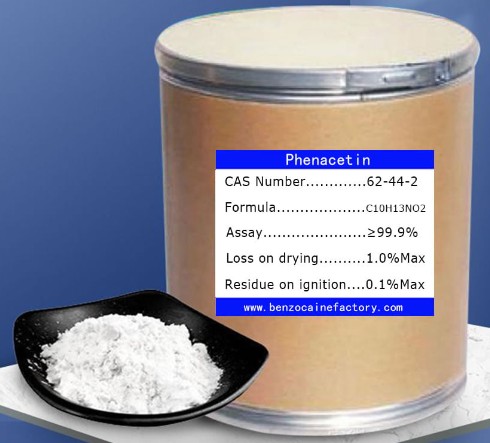
QC rigor includes Karl Fischer moisture (<0.5%), heavy metals (<10 ppm), residue solvents (GC), and microbial limits. COAs detail polymorphs, PSD (D90 <50 μm for tableting), and stability data (6-24 months). Packaging: 25kg fiber drums with PE liners, or custom 1-5kg for R&D.
OEM shines: private labeling, spec tweaks (e.g., micronized for inhalables), blend-ins with excipients. Logistics cover DDP/DAP to EU/U.S., with REACH/SDS prep. Buyers gain 30-50% savings vs. Western sources, sans quality compromise.
Vet via site audits, third-party labs (SGS/Intertek), reference checks. Demand DMF filings, capacity proofs (tonnage/month), IP indemnity. Responsive suppliers offer samples, trial batches, MOQ flexibility (1-100kg).
Risks abound: subpar purity breeds failed assays; contaminants trigger recalls. Top firms prioritize compliance, ESG (green synthesis sans chlorinated solvents), blockchain traceability.
Phenacetin's arc—from miracle analgesic to cautioned intermediate—illuminates pharma evolution: innovation tempered by vigilance. Its legitimate roles in research and industry demand unyielding quality, navigated adeptly by seasoned OEM partners. For biotech innovators, pharma wholesalers, or device makers needing phenacetin, supplybenzocaine.co.uk delivers precision OEM solutions: ultra-pure grades, bespoke specs, seamless global supply. Contact us today for quotes, samples, consultations—elevate your formulations with a trusted Chinese powerhouse. Partner now for compliant, cost-effective excellence!
Contact us to get more information!
Phenacetin serves mainly as a laboratory reagent for crystallization and analytical standards, plus a pharmaceutical intermediate in metabolic/toxicity studies. Industrial niches include select dye stabilizers, all under strict regulatory oversight for non-medicinal applications.
Chronic high-dose use caused analgesic nephropathy—renal papillary necrosis, fibrosis—and elevated urothelial cancer risks via toxic metabolites. Safer paracetamol supplanted it, prompting bans prioritizing public safety.
Yes, in most jurisdictions for vetted non-human uses, but requires permits, import licenses, and compliance docs. Status varies—check DEA/EU REACH/local laws; legit suppliers handle paperwork.
Insist on COAs with HPLC/GC purity (>99%), impurity profiles, heavy metals, microbial tests. Request samples, third-party assays, site audits, and stability data for batch consistency.
China offers GMP-caliber production at 30-50% lower costs, with customization (purity, PSD, packaging), full export support (REACH/SDS), and scalable volumes from kg to tons for global brands.
1. https://en.wikipedia.org/wiki/Phenacetin
2. https://www.benzocainesupplier.com/the-comprehensive-guide-to-choosing-the-best-phenacetin-china-supplier
3. https://go.drugbank.com/drugs/DB03783
4. https://www.supplybenzocaine.co.uk/Article/list-r15.html
5. https://www.ncbi.nlm.nih.gov/books/NBK304337/
6. https://www.guanlang-group.com/oemodm-china-phenacetin-procaine-procaine-base-cas-59-46-1-free-sample-fast-delivery-guanlang-pro...
7. https://www.ebsco.com/research-starters/health-and-medicine/phenacetin
8. https://www.benzocainefactory.com
9. https://www.cfsre.org/nps-discovery/public-alerts/phenacetin-a-toxic-adulterant-found-in-illicit-street-drugs
10. https://www.supplybenzocaine.co.uk/Article/list-r1.html
Hot tags: Phenacetin, Analgesic Drug, Pain Relief, Fever Reducer, Kidney Toxicity, Carcinogenic Risks, Historical Use, Acetaminophen Metabolite, Health Concerns, Pharmaceutical History