Content Menu
● Dosage Equivalence: How Much Procaine Equals How Much Lidocaine?
● Pharmacological Differences and Clinical Implications
>> Metabolism and Allergic Potential
● Practical Applications for OEM Manufacturers
● Frequently Asked Questions (FAQ)
>> 1. How do procaine and lidocaine differ chemically?
>> 2. What is the maximum safe dose of procaine and lidocaine?
>> 3. Which anesthetic acts longer, procaine or lidocaine?
>> 4. Can lidocaine replace procaine in all clinical settings?
>> 5. What are common side effects of procaine and lidocaine?
In pharmaceutical manufacturing and clinical anesthesia, accurate knowledge of dosage equivalence between local anesthetics is vital for efficacy and safety. Procaine and lidocaine are two commonly used local anesthetics with different chemical structures, pharmacokinetics, and potency. This article explores the equivalence between procaine and lidocaine to provide clarity for biomedical product development, clinical use, and OEM manufacturing requirements.
Understanding how much procaine equals how much lidocaine is especially important for companies supplying OEM services for medical devices and pharmaceutical products to international markets. This knowledge aids in formulation accuracy, dosing guidelines, regulatory compliance, and communication with overseas clients.
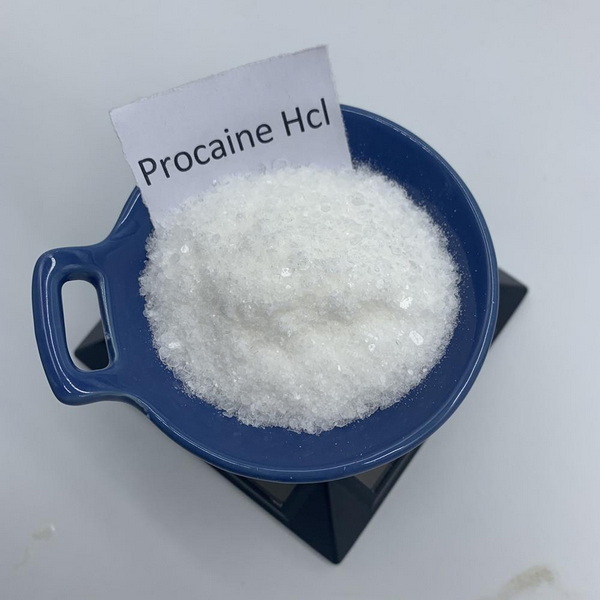
Procaine is an ester-type local anesthetic commonly used for local infiltration and nerve blocks. Historically known as Novocain, procaine was one of the first synthetic local anesthetics introduced in the early 20th century. Its chemical structure as an ester affects its metabolism and allergenic potential.
Procaine has a rapid onset of action, generally within 1 to 2 minutes, but its duration is relatively short, lasting approximately 30 to 60 minutes without vasoconstrictors like epinephrine. This rapid metabolism occurs due to hydrolysis by plasma esterases, breaking procaine down quickly to inactive metabolites. The quick metabolism reduces systemic toxicity risk, but the short duration limits its use in longer surgical procedures.
The maximum recommended dose of procaine without epinephrine is roughly 7 mg/kg, which can be increased to about 10 mg/kg with epinephrine to prolong its effect and reduce systemic absorption. The half-life of procaine in plasma is approximately 30 to 60 minutes.
Procaine use has decreased in favor of amide anesthetics, such as lidocaine, due to its comparatively shorter duration and some allergenic risk related to its metabolism to para-aminobenzoic acid (PABA).
Lidocaine belongs to the amide class of local anesthetics and is widely used worldwide due to its reliability and longer duration of action. Introduced later than procaine, lidocaine has become the preferred choice for many clinical applications, including dental procedures, minor surgeries, and cardiac arrhythmia treatment.
Lidocaine also has a rapid onset of action, typically within 1 to 2 minutes, but its effects last longer than procaine—commonly 30 to 90 minutes without added vasoconstrictors. Lidocaine is primarily metabolized in the liver by cytochrome P450 enzymes, giving it a longer half-life of approximately 1.5 to 2 hours.
The appropriate maximum dose of lidocaine without epinephrine is conventionally set at 5 mg/kg, which can be safely increased to 7 mg/kg when combined with epinephrine. Lidocaine's amide structure contributes to a lower incidence of allergic reactions compared to ester anesthetics like procaine.
Direct dosage equivalence between procaine and lidocaine is not one-to-one due to differences in potency, metabolism, and pharmacodynamics. However, clinical data indicate that approximately 7 mg/kg of procaine roughly equals 5 mg/kg of lidocaine in terms of local anesthetic effect.
Lidocaine is more potent and has a longer duration, so lower doses achieve effective anesthesia for extended periods. For example, if a patient safely tolerates 300 mg of lidocaine, administering roughly 400 to 420 mg of procaine could achieve a similar anesthetic effect based on mg/kg principles.
Clinical studies comparing spinal anesthesia with procaine and lidocaine found lidocaine to have a longer duration of both sensory and motor block. However, procaine was associated with a lower incidence of certain adverse effects such as transient neurological symptoms (TNS). That said, procaine demonstrated a higher failure rate in achieving adequate anesthesia in some patients.
For other uses such as intraperitoneal analgesia or infiltration, lidocaine and procaine may provide similar pain relief profiles when dosed appropriately, but the pharmacokinetic profiles and metabolic pathways should guide clinical choice and product formulation.
Lidocaine's superior potency enables effective nerve blockade at lower doses compared to procaine. This potency translates into longer-lasting anesthesia, making lidocaine more suitable for procedures requiring extended numbness.
Procaine is an ester anesthetic metabolized quickly in plasma, which limits systemic toxicity but also leads to formation of metabolites that may cause allergic reactions in susceptible individuals. Lidocaine's amide structure reduces allergic risks but requires careful liver function consideration due to its hepatic metabolism.
Both anesthetics are generally safe when used within recommended doses but have distinct side effect profiles. Procaine may cause allergic responses more frequently, while lidocaine carries a higher risk of central nervous system toxicity when overdosed.
Clinical evidence shows lidocaine has a slightly higher incidence of transient neurological symptoms post-spinal anesthesia, while procaine's shorter duration can be a clinical limitation in some cases.
Manufacturers offering OEM pharmaceutical and medical device products, such as those involved in producing injectable anesthetics or topical applications, must grasp the dose equivalence and safety profiles of these anesthetics to ensure product quality and regulatory compliance.
- Formulations must consider maximum allowable doses based on mg/kg guidelines.
- Stability and sterility testing should be tailored for the specific anesthetic compound.
- Labeling must include accurate dosage instructions to ensure practitioner safety.
- Awareness of metabolism differences informs packaging with appropriate storage and expiration standards.
OEM companies servicing international markets must ensure formulations meet global pharmacopeia and drug regulatory standards, making knowledge of local anesthetic equivalence essential.
The equivalence between procaine and lidocaine is an important consideration for clinical practice and pharmaceutical manufacturing. While approximately 7 mg/kg of procaine corresponds to about 5 mg/kg of lidocaine, clinicians and manufacturers must also account for differences in onset, duration, metabolism, potency, and safety profile when selecting the appropriate anesthetic and dosage.
For OEM manufacturers like supplybenzocaine.co.uk specializing in biotech and medical devices, delivering high-quality, compliant anesthetic products tailored to client needs is key to success. Expert knowledge of anesthetic properties supports superior product design and customer satisfaction.
Contact us today to learn how our advanced R&D and manufacturing capabilities can help bring your pharmaceutical and medical device products to global markets with confidence and compliance.
Procaine is an ester-type local anesthetic metabolized by plasma esterases, while lidocaine is an amide anesthetic metabolized mainly in the liver, impacting duration and allergic risk.
Procaine's maximum dose without epinephrine is approximately 7 mg/kg, increased to about 10 mg/kg with epinephrine. Lidocaine's maximum dose is typically 5 mg/kg without epinephrine and 7 mg/kg with epinephrine.
Lidocaine generally has a longer duration of action, lasting up to 90 minutes, compared to procaine's shorter duration of around 30 to 60 minutes.
Lidocaine can often replace procaine due to its potency and duration advantages, though specific clinical situations or patient allergies might favor one anesthetic over the other.
Procaine may cause allergic reactions due to its ester metabolism, while lidocaine carries risks of central nervous system toxicity at high doses but is less likely to cause allergies.
[1](https://pubmed.ncbi.nlm.nih.gov/11394516/)
[2](https://www.drugs.com/compare/lidocaine-vs-procaine)
[3](https://pmc.ncbi.nlm.nih.gov/articles/PMC6049527/)
[4](http://www.ijvm.org.il/sites/default/files/7kilbar.pdf)
[5](https://www.jstage.jst.go.jp/article/jphs1951/31/1/31_1_85/_pdf)
[6](https://www.sciencedirect.com/science/article/abs/pii/S1098733900900014)
[7](https://onlinelibrary.wiley.com/doi/10.1111/jvp.13493)
[8](https://jamanetwork.com/journals/jama/fullarticle/328299)
Hot tags: Procaine Dosage, Lidocaine Comparison, Local Anesthetics, Procaine vs Lidocaine, Anesthetic Dosage, Pain Management, Anesthesia Guidelines, Local Anesthetic Conversion, Procaine Lidocaine Ratio, Anesthetic Efficacy