Content Menu
● Chemical Composition and Properties
● Molecular Structure in Detail
● Historical Development and Discovery
● Synthesis and Manufacturing Processes
● Pharmaceutical Applications and Formulations
● Mechanism of Action at the Cellular Level
● Safety Profile, Risks, and Precautions
● Quality Control in OEM Production
● Advantages of Partnering for OEM Services
● Regulatory Landscape and Global Standards
● FAQ
>> 1. What is the chemical composition of benzocaine?
>> 2. What are the primary uses of benzocaine in medicine?
>> 3. What purity standards does your factory meet for benzocaine?
>> 4. Can you handle custom OEM formulations and packaging?
>> 5. What safety precautions should be taken with benzocaine products?
Benzocaine stands as a cornerstone in topical anesthesia, prized for its ability to provide quick, localized pain relief without invasive procedures. This ester local anesthetic, chemically ethyl 4-aminobenzoate, powers countless over-the-counter products from oral gels to sunburn creams, making it essential in both consumer and professional medical settings.
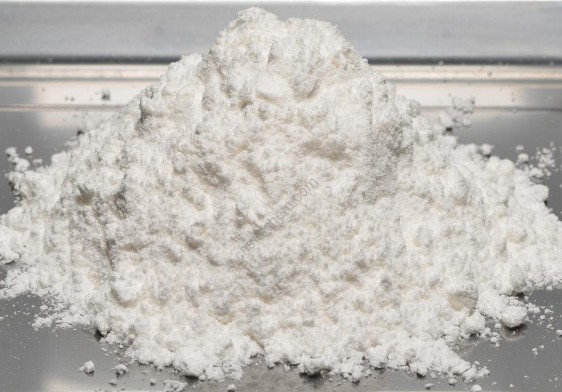
At its core, benzocaine is defined by the molecular formula C9H11NO2, with a molecular weight of 165.19 g/mol. This compound features a benzene ring substituted with an amino group (-NH2) at the para position and an ethyl ester (-COOCH2CH3) linkage, classifying it as an amino benzoate ester. Its structure grants it low water solubility (approximately 0.4 g/L at 20°C) but high solubility in organic solvents like ethanol, chloroform, and ether, which influences its formulation in pharmaceutical products.
Physical properties further distinguish benzocaine: a melting point between 88-92°C, boiling point around 310°C, and a density of 1.17 g/cm³. These traits ensure stability during storage and manufacturing, while its logP value of 1.97 indicates moderate lipophilicity, aiding penetration into skin and mucous membranes. Purity standards for pharmaceutical use demand at least 99% assay, free from heavy metals, residual solvents, and microbial contaminants, as per USP and EP monographs.
The compound's spectroscopic signatures—IR peaks at 3460 cm⁻¹ (N-H stretch), 1680 cm⁻¹ (C=O ester), and NMR signals confirming aromatic protons—verify its identity in quality control labs. Impurities like p-aminobenzoic acid or ethyl 4-nitrobenzoate are tightly controlled to below 0.1%.
Benzocaine's SMILES notation, CCOC(=O)c1ccc(N)cc1, encapsulates its planar aromatic core with flexible ethyl and amino appendages. The para substitution minimizes steric hindrance, optimizing electron delocalization that contributes to its anesthetic potency. In 3D conformations, the molecule adopts a near-planar geometry for the benzoate moiety, with the ethyl chain rotatable, as seen in computational models from PubChem.
This architecture binds to voltage-gated sodium channels in their open state, stabilizing an inactivated conformation via hydrophobic interactions with the channel's S6 helix and hydrogen bonding from the amine group. The ester linkage, prone to hydrolysis by plasma esterases, ensures rapid metabolism and low systemic toxicity when applied topically.
Quantum mechanical calculations reveal a dipole moment of 3.5 Debye, underscoring its polar nature despite lipid solubility, which balances permeation and retention in tissues.
Benzocaine's journey began in 1890 when Eduard Ritsert, a chemist at Farbwerke Hoechst, synthesized it from p-nitrobenzoic acid derivatives seeking cocaine alternatives. Patented as "Anästhesin" in 1902, it quickly supplanted cocaine in dentistry due to minimal central nervous system effects. By the 1920s, it featured in products like Americaine and Orajel, cementing its role in oral care.
Mid-20th-century refinements addressed stability issues, leading to micronized powders for better bioavailability. Today, amid regulatory scrutiny, it remains a workhorse anesthetic, with global production scaled for pharmaceutical demands.
Industrial production favors multi-step routes from cost-effective precursors. One pathway nitrates toluene to p-nitrotoluene (60-70% para selectivity), oxidizes it with KMnO4 to p-nitrobenzoic acid, esterifies with ethanol/HCl to ethyl p-nitrobenzoate, and reduces via catalytic hydrogenation (Pd/C) or iron/HCl to yield benzocaine at 85-95% overall efficiency.
Alternative Fischer esterification directly couples p-aminobenzoic acid with ethanol under acid catalysis, though prone to side reactions like transesterification. Advanced methods employ enzymatic reduction for greener processes, minimizing waste.
In GMP facilities like ours at supplybenzocaine.co.uk, synthesis occurs in stainless steel reactors under nitrogen inertion, with in-process controls via HPLC monitoring impurities below 0.05%. Crystallization from ethanol-water purifies the white crystalline powder (particle size 10-50 μm for optimal dissolution), followed by drying, milling, and packaging in HDPE drums. Yield optimization through DOE (design of experiments) achieves 98% purity post one recrystallization.
Scale-up considerations include heat transfer in exothermic reductions and effluent treatment for nitrate wastes, ensuring environmental compliance.
Benzocaine's versatility shines in diverse indications: 20% gels for teething infants (despite age restrictions), 10% sprays for sore throats, 5-20% creams for pruritus, and otic solutions for ear pain. In dentistry, it numbs gingival tissues pre-injection; in proctology, it soothes hemorrhoids alongside protectants like zinc oxide.
Novel uses extend to medicated condoms (7.5% for premature ejaculation), veterinary amphibian transport (MS-222 analog), and wound dressings with antimicrobial synergies. Combination products pair it with antipyrine for aural use or menthol for cooling effects.
Excipients like polyethylene glycol, glycerin, and flavorants tailor viscosity and taste, while micronization enhances spreadability. Stability studies confirm 3-year shelf life under ICH conditions, with no degradation above 40°C/75% RH.
Benzocaine partitions into nerve membrane lipids, diffusing to hydrophobic sodium channel pockets. It non-competitively blocks Na⁺ influx by altering gating kinetics—prolonging recovery from inactivation and shifting voltage dependence. Use-dependence amplifies efficacy during repetitive firing, ideal for nociceptor silencing.
Unlike amides like lidocaine, its ester hydrolysis by butyrylcholinesterase yields PABA and ethanol, excreted renally. This short half-life (minutes topically) limits toxicity, though mucosal absorption can reach 5-10% systemic levels.
Electrophysiology patch-clamp studies quantify IC50 at 1-3 mM for Nav1.7/1.8 pain channels, with selectivity over cardiac Nav1.5.
While effective, benzocaine carries black-box warnings for methemoglobinemia (MetHb), oxidizing ferrous hemoglobin to ferric, impairing oxygen delivery. Infants under 6 months and G6PD-deficient patients face highest risk; FDA logged 400+ pediatric cases by 2011, prompting reformulations.
Contact dermatitis affects 1-2% users, linked to PABA cross-reactivity in sunscreens. Overdose risks seizures, hypotension, or arrhythmias via Na⁺ blockade in heart/brain. Max daily dose caps at 3.6 g for adults.
Monitoring includes pulse oximetry (falsely normal in MetHb) and methylene blue antidote. Contraindications span broken skin, allergies, and concurrent dapsone therapy.
As a China-based biotech factory specializing in pharma OEM (supplybenzocaine.co.uk), we enforce pharmacopeial compliance from raw material sourcing to release. Vendors supply TSE/BSE-free p-nitrobenzoic acid, verified by NIR spectroscopy.
In-process HPLC (C18 column, acetonitrile-phosphate mobile phase) tracks reaction completion; residual solvents headspace GC ensures <5000 ppm ethanol. Microbial limits: <100 CFU/g total count, pathogens absent. Heavy metals ICP-MS <10 ppm.
Batch records detail 21 CFR Part 11 electronic signatures, with 18-month stability data supporting retest periods. Custom specs accommodate client needs, like non-GMO status or vegan certifications.
Our facility integrates R&D, pilot scaling, and commercial fills (50kg-10T batches) under one roof, slashing lead times to 4-6 weeks. English-speaking QA liaisons facilitate EU/UK audits, supplying DMFs and ASMF for registrations.
Competitive edges include REACH pre-registrations, low MOQs (25kg), and flexible logistics via DHL/FedEx for samples. Past clients praise 99.8% on-time delivery and zero OOS incidents.
Private labeling spans jars, tubes, pumps—silkscreened or labeled per artwork briefs.
Benzocaine navigates FDA monograph OTC status (up to 20% topical), EMA cosmetic allowances, and PMDA Japan approvals. Post-marketing vigilance tracks ADRs via EudraVigilance.
Our products bear CE marks for devices, with COSHH assessments for handlers.
Benzocaine's elegant composition—a para-amino ethyl benzoate—delivers potent, targeted anesthesia across medical realms, from everyday pain relief to specialized therapies. Mastering its synthesis, applications, and safeguards unlocks reliable product innovation.
Partner with supplybenzocaine.co.uk, your premier Chinese OEM factory in biotech, pharma, and devices. We craft pharmaceutical-grade benzocaine tailored to your brand—high purity, custom formulations, seamless compliance. Contact us now for quotes, free samples, and consultations: elevate your supply chain with trusted expertise! Contact us to get more information!
Benzocaine is ethyl 4-aminobenzoate (C9H11NO2), an ester of p-aminobenzoic acid with ethanol, featuring a benzene ring, amino, and ethyl ester groups for anesthetic activity.
It numbs skin/mucosa for oral pain, burns, earaches, and procedures; found in gels, sprays, lozenges, and combos for teething, sore throats, and minor wounds.
We deliver >99.5% purity per USP/EP, with full CoA, low impurities (<0.1%), and GMP/ISO certifications for global regulatory acceptance.
Yes, full-service OEM includes private labeling, custom excipients, stability formulations, and packaging (tubes, bottles) at competitive MOQs.
Avoid in infants <2 years, monitor for methemoglobinemia signs (cyanosis), limit dose to <3.6g/day, and discontinue if rash or breathing issues occur.
1. https://en.wikipedia.org/wiki/Benzocaine
2. https://www.molinstincts.com/structure/benzocaine-cstr-CT1000336141.html
3. https://www.ijpsjournal.com/article/Benzocaine+Topical+Spray+A+Local+Anesthetic+For+Pain+Management+
4. https://www.drugwatch.com/benzocaine/
5. https://www.sciencesnail.com/science/benzocaine-synthesis-from-toluene-and-p-xylene
6. https://www.supplybenzocaine.co.uk/top-5-trusted-benzocaine-suppliers-in-the-uk-quality-and-reliability.html
7. https://stock.adobe.com/search?k=benzocaine
8. https://www.youtube.com/watch?v=c-UZEmfqNRY
9. https://www.pharmacompass.com/chemistry-chemical-name/benzocaine
10. https://foodbiomarkers.wishartlab.com/toxins/T3D2980
Hot tags: Benzocaine Ingredients, Benzocaine Uses, Benzocaine Side Effects, Benzocaine Gel, Benzocaine Allergy, Benzocaine Dosage, Benzocaine Topical Anesthetic, Benzocaine Safety, Benzocaine Composition, Benzocaine Drug Interactions