Content Menu
● Chemical Composition and Structure
● Synthesis and Manufacturing Process
● Medical and Pharmaceutical Applications
● Forms, Dosage, and Administration
● Safety Profile and Side Effects
● Quality Control and Regulatory Compliance
● OEM Services for International Partners
● FAQ
>> 1. What is Benzocaine used for?
>> 2. How does Benzocaine work so quickly?
>> 3. Is Benzocaine safe for children?
>> 4. What are the main side effects of Benzocaine?
>> 5. Can businesses source Benzocaine for OEM production?
Benzocaine stands as a cornerstone in local anesthetics, widely utilized in medical, dental, and consumer health products for its effective numbing properties. This comprehensive exploration delves into its chemical makeup, production processes, applications, safety profile, regulatory considerations, and OEM manufacturing opportunities, tailored for brands, wholesalers, and manufacturers seeking reliable partners in biotech, pharma, and medical devices.
Benzocaine, systematically named ethyl 4-aminobenzoate, has the molecular formula C9H11NO2 and a molecular weight of 165.19 g/mol. It belongs to the ester-type local anesthetics family, derived from p-aminobenzoic acid (PABA) esterified with ethanol. The molecular structure features a benzene ring with an amino group (-NH2) at the para position and an ethoxycarbonyl group (-COOCH2CH3), which provides the ideal lipophilic-hydrophilic balance for penetrating nerve membranes.
This configuration is key to its function: the lipophilic aromatic ring facilitates diffusion through lipid-rich nerve sheaths, while the hydrophilic ester group interacts with ionic channels. Physically, benzocaine appears as a white, odorless crystalline powder with a melting point of 88–92°C, a boiling point around 310°C, and a density of 1.17 g/cm³. It shows low solubility in water (approximately 0.4 g/L at 20°C) but excellent solubility in organic solvents like ethanol, chloroform, ether, and dilute acids due to protonation of the amino group.
In pharmaceutical grade, purity exceeds 99%, confirmed through techniques like high-performance liquid chromatography (HPLC) and nuclear magnetic resonance (NMR) spectroscopy. Impurities such as p-aminobenzoic acid or ethyl p-nitrobenzoate are strictly limited to below 0.1%. Understanding this composition is crucial for formulators designing stable, bioavailable products.
The story of benzocaine begins in 1890 when German chemist Eduard Ritsert synthesized it in Eberbach, Germany, seeking a safer alternative to cocaine for local anesthesia. Marketed in 1902 as "Anästhesin" by Farbwerke Hoechst, it quickly gained traction for its non-addictive profile and ease of use. By the 1920s, it featured prominently in dental and surgical applications, predating modern injectables like procaine.
Mid-20th century saw benzocaine embedded in over-the-counter (OTC) remedies such as Orajel for teething pain and Cepacol lozenges for sore throats. Regulatory milestones include U.S. FDA approval for OTC status in the 1960s, with expansions to otic and topical uses. Its evolution parallels advances in organic synthesis, shifting from batch lab processes to continuous industrial manufacturing. Today, annual global production exceeds thousands of tons, driven by demand in pain management and veterinary medicine.
Industrial synthesis of benzocaine follows a classic two-step route. First, p-nitrobenzoic acid undergoes reduction to p-aminobenzoic acid using reducing agents like tin/HCl, iron/HCl, or catalytic hydrogenation with palladium on carbon. This step yields the key intermediate in high purity after filtration and neutralization.
The second step is Fischer esterification: p-aminobenzoic acid refluxes with excess anhydrous ethanol in the presence of concentrated sulfuric acid catalyst at 78°C for 4-6 hours. The reaction mixture cools, neutralizes with sodium carbonate, and benzocaine precipitates. Recrystallization from hot water or ethanol purifies the product, achieving yields of 70-85%. Alternative routes employ diazotization of aniline followed by carbonation and esterification, though less common industrially.
In GMP-certified factories like ours at supplybenzocaine.co.uk, production scales to multi-ton batches using stainless steel reactors with precise temperature and pH controls. Automation handles distillation under reduced pressure, drying via vacuum ovens, and milling for uniform particle size (typically 50-200 microns). Quality checkpoints include Karl Fischer titration for moisture (<0.5%), residue on ignition (<0.1%), and heavy metals testing (Pb <10 ppm). We integrate cleanroom packaging to prevent contamination, ensuring compliance with USP/BP/EP/PH.EUR monographs.
Environmental considerations include solvent recovery (ethanol recycling >95%) and waste neutralization, aligning with China's green manufacturing standards. For OEM clients, we customize particle size, polymorphs, or micronization for enhanced bioavailability in sprays or gels.
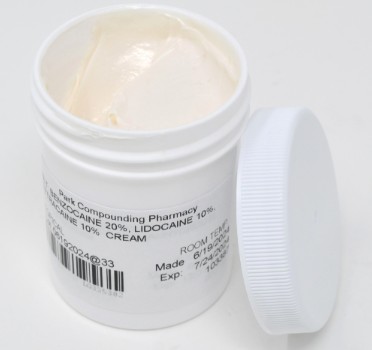
Benzocaine's primary role is surface anesthesia, providing rapid, temporary relief (10-30 minutes) for minor pain and itching. In oral care, 5-20% gels like Orajel numb toothaches, canker sores, braces irritation, and denture sores. Throat sprays and lozenges (e.g., Chloraseptic with 1.5-10% benzocaine) soothe pharyngitis, tonsillitis, and post-procedure discomfort.
Dermatologically, 3-20% creams (Lanacane, Solarcaine) treat sunburns, minor burns, cuts, insect bites, and hemorrhoids. Otic drops combining benzocaine with antipyrine relieve swimmer's ear and aid cerumen softening. Innovative uses include medicated condoms for premature ejaculation delay (5-7.5% benzocaine) and veterinary MS-222 solutions for fish/amphibian anesthesia at 50-500 mg/L.
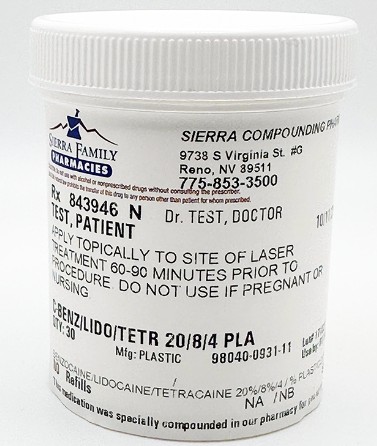
In dentistry, it's a staple for rubber dam clamps, scaling, and pediatric procedures. Combined with other agents like tetracaine in BABY gels, it enhances efficacy. Research explores nanoparticle formulations for prolonged release and reduced dosing frequency.
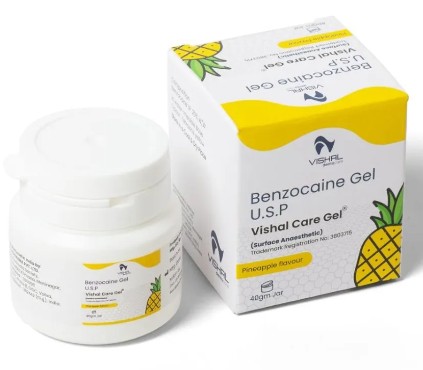
Benzocaine markets in diverse OTC forms: gels, ointments (3-20%), liquids, aerosols, pastes (Orabase), lozenges (5-15 mg), throat sprays (0.5-1.5%), and otic suspensions (1.4%). Application involves thin layers to affected areas, up to 4 times daily, with no occlusion unless specified.
Dosage guidelines: adults 5-20% topicals; children >2 years half-adult dose; infants under 2 only under medical advice. Maximum single application is 2g for 20% products. Otic use: 4-5 drops warmed to body temperature. Storage requires airtight containers at <30°C, away from light and moisture; aerosols are flammable.
Our OEM lines offer private-label customization: flavored gels, pump sprays, or stick applicators, with stability-tested shelf lives of 2-3 years.
Benzocaine's anesthetic effect stems from its ability to partition into nerve membrane lipids. In its uncharged base form (pKa 3.5), it accesses the axolemma, binding inactivated voltage-gated sodium channels from the intracellular side. This stabilizes the channel, preventing conformational change to the open state and blocking Na+ influx essential for depolarization.
Unlike injectable anesthetics, topical benzocaine acts superficially on free nerve endings, with minimal systemic absorption due to rapid hydrolysis by tissue esterases into PABA and ethanol. Duration depends on concentration, vehicle, and site vascularity—shorter in mucous membranes. This ester metabolism contrasts with amide anesthetics (lidocaine), reducing allergy cross-reactivity but increasing hydrolysis-related instability.
When used as directed, benzocaine is safe with low incidence of mild, transient effects like stinging, erythema, or bitter taste. However, methemoglobinemia poses the gravest risk, oxidizing hemoglobin's iron (Fe2+ to Fe3+), impairing oxygen transport. Symptoms (cyanosis, headache, dyspnea) emerge 30-60 minutes post-application, especially at >10-20% concentrations or in infants/teething gels.
FDA issued warnings in 2011 and 2019, restricting pediatric dental use and mandating labeling. Incidence: ~1:10,000 exposures, higher in G6PD deficiency or concurrent oxidants (benzoyl peroxide). Allergies affect 1-2% (PABA cross-reactivity), manifesting as contact dermatitis or urticaria. Overdose risks seizures, coma, or arrhythmias from Na+ channel blockade in heart/brain.
Monitoring includes pulse oximetry avoidance (false normals) and methylene blue treatment for methemoglobin >30%. Pregnancy category C; lactation caution advised.
Rigorous QC spans raw materials (IR identity), in-process (reaction completion via TLC), and finished product (assay 98-102%, related substances <0.1%). Microbial limits: TAMC <1000 CFU/g, no pathogens. Stability per ICH Q1A confirms no degradation under accelerated conditions.
Regulations: US OTC monograph (21 CFR 348), EU Ph.Eur 7.4, USP-NF, JP. China NMPA exports require DMF filing. Veterinary GRAS status under 21 CFR 582. Our supplybenzocaine.co.uk facility holds ISO 9001, GMP, and CE certifications, with full CTD dossiers for clients.
As a premier Chinese factory in biotech, pharma, and medical devices, we provide end-to-end OEM for foreign brands: R&D, scale-up, custom synthesis (>99.5% purity), formulation (gels to injectables), packaging (tubes, bottles), and logistics. Cost savings of 30-50% vs. Western producers, with MOQ flexibility and 4-6 week lead times. White-label your benzocaine products today.
Benzocaine remains an indispensable tool in pain management, blending proven efficacy, versatility, and manufacturability over 130+ years. Its journey from lab curiosity to global staple underscores the value of precise chemistry and responsible production. Partner with supplybenzocaine.co.uk for premium, compliant benzocaine solutions that elevate your brand.
Ready to launch superior products? Contact us now for free samples, quotes, and expert consultations—your OEM success starts here! Contact us to get more information!
Benzocaine provides fast-acting local anesthesia for oral pain (toothaches, sore throats), skin irritations (burns, bites), earaches, and more. It's ideal for OTC products like gels, sprays, and lozenges.
It penetrates nerve membranes to block sodium channels, preventing pain signals within 1-5 minutes, with effects lasting 10-30 minutes depending on concentration and site.
Use only under medical supervision for children under 2 due to methemoglobinemia risk; for ages 2+, follow age-appropriate dosing and product labels strictly.
Common: mild stinging or redness. Serious (rare): methemoglobinemia, allergies. Avoid overuse and consult doctors for symptoms like blue skin or shortness of breath.
Yes, factories like supplybenzocaine.co.uk offer GMP-grade benzocaine for custom formulations, packaging, and global export, meeting USP/EP standards.
1. https://en.wikipedia.org/wiki/Benzocaine
2. https://www.alamy.com/stock-photo/benzocaine.html
3. https://www.slideshare.net/slideshow/preparation-of-benzocaine-235703525/235703525
4. https://www.webmd.com/drugs/2/drug-1564-1459/benzocaine-topical-mucous-membrane/benzocaine-mucous-membrane/details
5. https://www.drugwatch.com/benzocaine/
6. https://www.silverlinechemicals.com/benzocaine-usp-bp-ep-pheur-in-europe.html
7. https://zeelabpharmacy.com/generic-salt/benzocaine
8. https://www.youtube.com/watch?v=zeYq5q_7fNo
9. https://www.pharmacompass.com/chemistry-chemical-name/benzocaine
10. https://stock.adobe.com/search?k=benzocaine
Hot tags: Benzocaine Ingredients, Benzocaine Composition, Benzocaine Uses, Benzocaine Safety, Benzocaine Side Effects, Benzocaine Anesthetic, Benzocaine Gel, Benzocaine Dosage, Benzocaine Allergies, Benzocaine Chemical Structure