Content Menu
● Chemical Structure and Fundamental Properties
● Detailed Water Solubility Data and Experimental Evidence
● Key Factors Influencing Solubility
● Comparisons with Structurally Related Compounds
● Historical Background and Pharmaceutical Evolution
● Laboratory and Analytical Determination Techniques
● Formulation Challenges and Solubilization Innovations
● Industrial Production and Sourcing Considerations
● Safety, Handling, and Regulatory Landscape
● FAQ
>> 1. What is the exact water solubility of phenacetin?
>> 2. How does temperature impact phenacetin's solubility?
>> 3. What methods improve phenacetin's water solubility?
>> 4. Is phenacetin suitable for research despite regulations?
>> 5. How to source reliable phenacetin for OEM production?
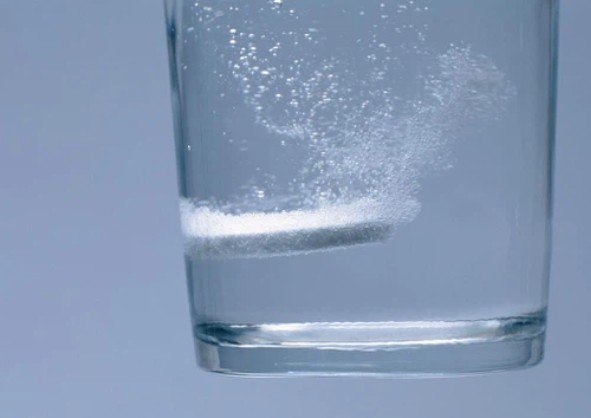
Phenacetin exhibits very limited solubility in water, classifying it as practically insoluble under standard conditions. This characteristic arises from its chemical structure and significantly impacts its use in pharmaceutical formulations, research, and industrial applications.
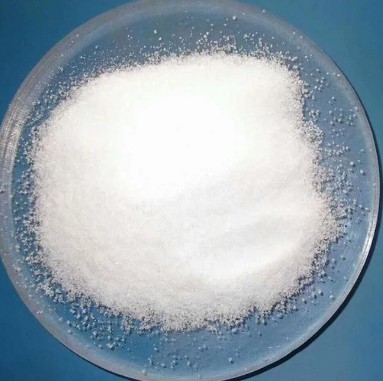
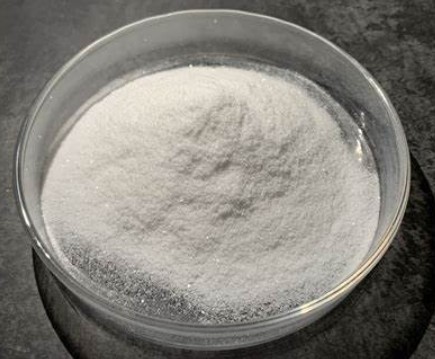
Phenacetin, chemically known as acetophenetidin, has the molecular formula C₁₀H₁₃NO₂ and a CAS number of 62-44-2. It is derived from acetanilide, featuring an ethoxy group (-OCH₂CH₃) attached to the para position of the phenyl ring, which contributes to its overall hydrophobic nature. The molecular weight stands at 179.22 g/mol, and it typically presents as a fine white crystalline powder with a characteristic odor. Its melting point ranges from 133°C to 136°C, while the boiling point exceeds 310°C at reduced pressure, indicating thermal stability under normal handling conditions.
The compound's low polarity stems from the aromatic benzene ring, the amide linkage, and the ether functional group, all of which minimize hydrogen bonding with water molecules. Density is approximately 1.31 g/cm³, and its vapor pressure is negligible at room temperature, making it suitable for solid-state storage. The octanol-water partition coefficient (logP) is about 1.58, further confirming its lipophilic tendency and preference for organic solvents over aqueous media. These properties collectively render phenacetin poorly suited for dissolution in pure water without modification.
In practical terms, this insolubility influences everything from synthesis routes to end-use applications. During production, solvents like ethanol or acetone are preferred for recrystallization to achieve high purity levels, often exceeding 99%. Researchers must account for this when designing experiments involving aqueous environments, such as bioavailability studies or metabolic assays.
Quantitative data consistently shows phenacetin's minimal water solubility. At 25°C, it dissolves to approximately 766 mg/L, equivalent to 0.0766 g per 100 mL or roughly 1 gram requiring 1310 mL of cold water for saturation. In boiling water, solubility improves markedly to about 1 gram per 82 mL, demonstrating temperature's pivotal role. Other reports cite values around 530 mg/L at ambient temperatures or less than 1 mg/mL at 20°C, all aligning with descriptions of "sparingly soluble" or "practically insoluble" in pharmacopeial terms.
These figures derive from classical shake-flask methods, where excess powder equilibrates with water, followed by filtration and analysis via HPLC or UV spectroscopy. Historical references, such as Seidell's 1941 solubility tables and O'Neil's 2001 compilation, provide foundational data still cited today. Modern assessments, including those from national toxicology programs, corroborate these low values, emphasizing consistency across decades of study.
For context, this solubility is orders of magnitude lower than highly water-soluble drugs like aspirin (0.33 g/100 mL) or acetaminophen (14 g/100 mL). In a typical lab setting, adding phenacetin powder to a beaker of water results in the majority settling undissolved even after vigorous stirring or sonication, with only faint cloudiness indicating the saturated fraction.
Temperature exerts the most direct influence, following the van't Hoff equation where solubility rises exponentially with heat due to increased kinetic energy disrupting crystal lattices. At 100°C, dissolution capacity jumps over 15-fold compared to room temperature, though this is rarely practical for formulations due to stability concerns.
pH has a subtler effect; phenacetin remains largely unionized across physiological ranges (pKa ~2.5 for the conjugate acid), but acidic conditions can protonate the amide, slightly enhancing solubility via ion formation. Conversely, strong bases risk hydrolysis. Ionic strength from salts like NaCl follows the Setschenow equation, typically salting out phenacetin further by reducing water's solvating power.
Particle size and polymorphism dramatically affect apparent solubility. Micronized powders (<10 μm) expose more surface area, accelerating dissolution rates per the Noyes-Whitney equation, though equilibrium solubility remains unchanged. Amorphous forms, prepared via freeze-drying or spray-drying, can exhibit 2-5 times higher solubility temporarily before recrystallizing.
Co-solvents represent a cornerstone strategy: ethanol mixtures (1:15 ratio for 1 g) or glycerol boost miscibility through dielectric constant reduction. Surfactants like polysorbate 80 form micelles encapsulating hydrophobic molecules, while cyclodextrins create inclusion complexes, increasing solubility up to 50-fold. pH adjustment with buffers or solid dispersions in polymers like PVP further optimize performance.
Phenacetin metabolizes primarily to acetaminophen (paracetamol) via O-deethylation by CYP1A2 enzymes, explaining shared analgesic properties but divergent solubilities. Acetaminophen's phenolic hydroxyl enables strong hydrogen bonding, yielding 14 g/100 mL solubility versus phenacetin's 0.076 g/100 mL. Aspirin, with its carboxylic acid, offers intermediate solubility (0.33 g/100 mL) and ionizes in basic media.
Local anesthetics like benzocaine mirror phenacetin's profile, both featuring ester linkages and aromatic rings leading to <0.1 g/100 mL solubility. Antipyretics such as salicylamide show similar trends. These comparisons highlight how subtle substituents—ethoxy vs. hydroxy—tip the balance from soluble to insoluble.
In drug design, phenacetin's profile informs prodrug strategies, where insolubility aids sustained release but necessitates enhancement for liquid formulations.
Synthesized in 1878 by H. Glemo and commercialized by Bayer in 1887 as "Acetophenetidin," phenacetin gained popularity as a coal-tar analgesic, often branded as "Phenacetin tablets" alongside quinine or caffeine. By the early 1900s, it dominated over-the-counter pain relief in Europe and the US, prescribed for headaches, rheumatism, and fevers.
Toxicity concerns emerged in the 1960s: nephrotoxicity from chronic use led to papillary necrosis, and methemoglobinemia from metabolites prompted bans. The WHO listed it as obsolete by 1980, with the FDA prohibiting sales in 1983. Today, it survives in analytical chemistry as a calibration standard and in research probing analgesic pathways or dye synthesis.
Chinese manufacturing has revitalized supply for legitimate uses, with GMP facilities producing tons annually for global OEM partners in biotech and pharma R&D.
Standard protocols like OECD Guideline 105 employ the shake-flask apparatus: saturate excess solute in a known water volume, agitate at constant temperature (e.g., 25±0.5°C) for 24-72 hours, filter (0.45 μm), and quantify via HPLC-UV at 245 nm. Turbidimetric methods suit higher solubilities but underperform here.
Alternative shake-vial or generator-column techniques minimize equilibration time. Spectroscopic confirmation ensures no degradation, as phenacetin hydrolyzes slowly in hot water. Reproducibility across labs validates data, with relative standard deviations under 5%.
Phenacetin's Biopharmaceutics Classification System (BCS) status—Class II (low solubility, high permeability)—poses absorption hurdles, with dissolution as the rate-limiting step. Oral tablets risk variable bioavailability, while injectables precipitate upon dilution.
Advanced strategies include:
- Amorphization: Hot-melt extrusion with HPMCAS yields supersaturated solutions.
- Nanotechnology: Lipid nanoparticles or nanocrystals enhance mucosal uptake.
- Self-emulsifying systems: SEDDS with oils and surfactants for lymphatic absorption.
- Prodrug design: Phosphate esters hydrolyze in vivo to soluble metabolites.
In OEM production, scalable techniques like fluidized bed coating or supercritical fluid processing tailor particle engineering for client specs, ensuring batch-to-batch consistency.
China leads global phenacetin output, leveraging cost-effective acetylation of p-phenetidine with acetic anhydride. Factories like those at supplybenzocaine.co.uk operate under ISO/GMP standards, offering 99.5%+ purity verified by HPLC, GC-MS, and NMR. Capacities reach metric tons monthly, supporting OEM/ODM for brands in biotech, pharma, and medical devices.
Key benefits include custom polymorph control, sterile packaging, and regulatory dossiers for export. Wholesale pricing, free samples, and logistics to Europe/USA streamline procurement for foreign wholesalers and producers.
Phenacetin irritates skin/eyes and poses inhalation risks; LD50 (oral, rat) is 1670 mg/kg, but chronic exposure links to renal cancers (IARC 2B). Store below 25°C in airtight containers away from oxidizers. SDS mandates gloves, goggles, and fume hoods.
Regulatory status varies: banned in consumer products (EU/US), permitted for research with controls. Import requires compliance with REACH or TSCA.
Phenacetin's negligible water solubility—766 mg/L at 25°C—defines its formulation demands and niche roles in modern science. As a premier Chinese factory specializing in biotech, pharma, and medical devices (supplybenzocaine.co.uk), we provide OEM services with high-purity phenacetin tailored for your needs. Contact us now for competitive quotes, samples, and expert consultations—partner with us to optimize your production and accelerate innovation! Contact us to get more information!
Phenacetin dissolves at about 766 mg/L (0.076 g/100 mL) in water at 25°C, increasing to 1 g/82 mL in boiling water, confirming its practical insolubility.
Higher temperatures exponentially boost solubility; cold water requires 1310 mL per gram, while boiling water needs only 82 mL, aiding heat-based processing.
Techniques like co-solvents (ethanol), surfactants, cyclodextrin complexes, and amorphous solid dispersions can enhance solubility 10-50 times for formulations.
Yes, for controlled lab use with proper PPE and storage; it's a standard in analytics and enzyme studies, available from GMP suppliers.
supplybenzocaine.co.uk offers GMP-grade, customizable phenacetin with global shipping, third-party testing, and scalable volumes for international clients.
1. https://www.canada.ca/en/environment-climate-change/services/evaluating-existing-substances/screening-assessment-phenacetin.html
2. https://www.benzocainesupplier.com/the-comprehensive-guide-to-choosing-the-best-phenacetin-china-supplier
3. https://www.tnjchem.com/phenacetin-cas-62-44-2_p298.html
4. https://www.supplybenzocaine.co.uk/Article/list-r15.html
5. https://pubchem.ncbi.nlm.nih.gov/compound/Phenacetin
6. https://www.tnjchem.com/buy-phenacetin-powder-at-factory-price-from-china-suppliers_p1571.html
7. https://cameochemicals.noaa.gov/chemical/16235
8. https://www.guanlang-group.com/oemodm-china-phenacetin-procaine-procaine-base-cas-59-46-1-free-sample-fast-delivery-guanlang-pro ...
9. https://www.tcichemicals.com/HK/en/p/P1669
10. https://www.supplybenzocaine.co.uk/Article/list-r20.html
Hot tags: Phenacetin Solubility, Is Phenacetin Soluble, Water Solubility of Phenacetin, Phenacetin in Water, Phenacetin Solubility Properties, Solubility Characteristics of Phenacetin, Phenacetin Chemical Properties, Phenacetin Water Interaction, Phenacetin Dissolution, Phenacetin Solubility Analysis