Content Menu
● Overview
● Chemical identity and history
● Pharmacology and mechanism of action
● Forms and formulations for OEM supply
● Regulatory and quality considerations
● Visual and multimedia strategy (for article enhancement)
● Conclusion and call to action
● FAQ
>> 1. What is the relationship between Procaine and Novocaine?
>> 2. In what forms is Procaine available for OEM use?
>> 3. How does Procaine compare to newer local anesthetics?
>> 4. What safety considerations are important for Procaine products?
>> 5. What documentation is essential for OEM Procaine products?
Procaine and Novocaine refer to the same local anesthetic agent, with Procaine being the generic chemical name and Novocaine (or Novocain) a historic brand name widely recognized in dental and minor surgical practice. This article explains their chemical identity, historical branding, pharmacology, clinical use, and practical implications for original equipment manufacturers (OEMs) and contract manufacturers supplying international brands. The content emphasizes how formulation differences, salt forms, additives, and regulatory labeling—not fundamental chemical differences—shape usage, safety, and supply-chain decisions.
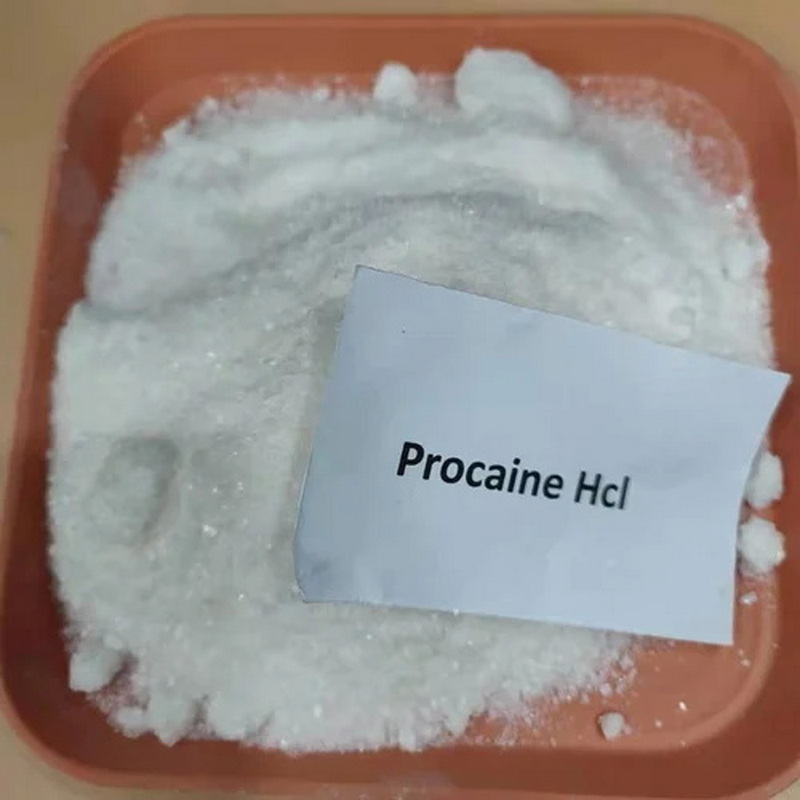
Procaine is an amino ester local anesthetic synthesized in the early 20th century as a safer alternative to cocaine. The brand name Novocaine emerged as the best-known label under which procaine was marketed in many markets. Over time, the industry often references Procaine HCl or other salt forms while retaining the Novocaine name in historical literature and consumer-facing materials. The essential chemistry remains: an ester-linked molecule that blocks voltage-gated sodium channels to prevent nerve conduction and pain signaling. This identity underpins both medical practice and OEM-grade formulations intended for international brands.
Procaine/Novocaine acts by reversibly inhibiting voltage-gated sodium channels (NaV) on sensory nerve fibers. This prevents the initiation and propagation of action potentials, producing localized anesthesia in the targeted region. The ester linkage predisposes the molecule to rapid hydrolysis by plasma esterases, contributing to a relatively shorter duration of action compared with some amide-type anesthetics. When used with vasoconstrictors such as epinephrine, the local vasoconstrictive effect can reduce systemic absorption and prolong the anesthetic effect, which is a common practice in dental and minor surgical procedures. These pharmacological properties are consistent across brand-name and generic presentations, with variations arising mainly from formulation and salt form rather than core mechanism.
Historically, procaine marked a turning point in local anesthesia by offering a synthetic alternative that avoided cocaine's cardiovascular and addictive risks. In contemporary practice, procaine's usage has diminished in many settings in favor of longer-acting or more stable agents (for example, lidocaine, mepivacaine, or bupivacaine). However, procaine remains relevant in certain regional anesthesia contexts and supply-chain scenarios, particularly where OEM specifications require specific salt forms, purity grades, or compatibility with unique delivery systems. When selecting a procaine-based formulation for a product, teams should consider onset time, duration, required margin of safety, and compatibility with chosen vasoconstrictors and device materials. The practical takeaway for OEMs is to align the product's pharmacokinetic profile with the intended clinical or dental application, while ensuring regulatory labeling and safety data sheets reflect the exact salt form and additives used.
- Salt forms: Procaine is commonly supplied as the hydrochloride salt (Procaine HCl) or in other salt derivatives, depending on regulatory approvals and supplier capabilities. The salt form influences solubility, storage, and injection characteristics, so precise specification is essential for private-label products.
- Additives: Vasoconstrictors (e.g., epinephrine) are frequently included to extend duration and reduce systemic absorption. The presence and concentration of additives must be clearly stated in certificates of analysis and regulatory documents for export to international markets.
- Purity and grade: OEM-grade materials require defined purity percentages, residual solvents, and endotoxin limits when applicable, along with batch-specific COAs and stability data to meet international quality standards.
- Packaging and labeling: Multinational supply chains demand labeling in compatible languages, clear indication of chemical form, concentration, storage conditions, and regulatory approvals in each target market.
- Documentation: For OEM and distribution use, ensure comprehensive documentation including CAS number, IUPAC name, salt form, concentration, lot/batch numbers, expiry dates, storage conditions, certificates of analysis, and any applicable GMP/ISO certifications. This enhances traceability for international brands and contract manufacturers.
- Safety and hypersensitivity: Procaine belongs to the ester class of local anesthetics, which can cause hypersensitivity reactions in a minority of patients. Pre-qualification of patients and clear labeling about potential allergies help mitigate risk, particularly when introducing new salt forms or additives.
- Compatibility and device interaction: When supplying procaine for combination products (e.g., device-assisted injections or pre-filled delivery systems), validate chemical stability with device materials, compatibility with sterilization methods, and the effect of any co-administered agents on product performance.
- Define the product scope: Establish target indications (dental anesthesia, minor surgical use, regional blocks) and determine whether the procaine formulation should be an active ingredient alone or combined with vasoconstrictors.
- Specify the chemical form precisely: Document the exact salt form, concentration, and presence of additives in procurement and manufacturing specifications to minimize mislabeling or formulation errors.
- Ensure regulatory alignment: Prepare country-specific regulatory dossiers and ensure labeling complies with regional requirements for drug ingredients, including safety data sheets and marketing authorization when applicable.
- Emphasize supply chain resilience: Highlight scalable production capacity, certified quality management systems, and reliable logistics partners to support international brands and distributors.
- Visuals: Include high-quality product images showing vials, labels, and packaging variations across salt forms, as well as diagrams illustrating the mechanism of action of local anesthetics on nerve fibers.
- Videos: Add explainer videos showing the basic physiology of nerve conduction, the process of local anesthesia administration, and demonstrations of private-label manufacturing workflows. Ensure all media complies with medical advertising and platform guidelines.
- Infographics: Employ flowcharts comparing branding vs generic naming, as well as a concise timeline of procaine/Novocaine development and regulatory milestones.
Procaine and Novocaine are two names for the same foundational local anesthetic molecule, with branding and formulation differences shaping practical use in OEM contexts. For international brands and contract manufacturers, the critical factors are precise chemical form, regulated additives, stringent quality documentation, and robust supply-chain capabilities. Companies seeking to deploy procaine-based private-label products can benefit from a partner with proven expertise in ester-type anesthetics, comprehensive regulatory compliance, and scalable, compliant manufacturing. Interested brands and distributors are invited to contact us to discuss private-label opportunities, regulatory support, and customized production plans that align with global market requirements.
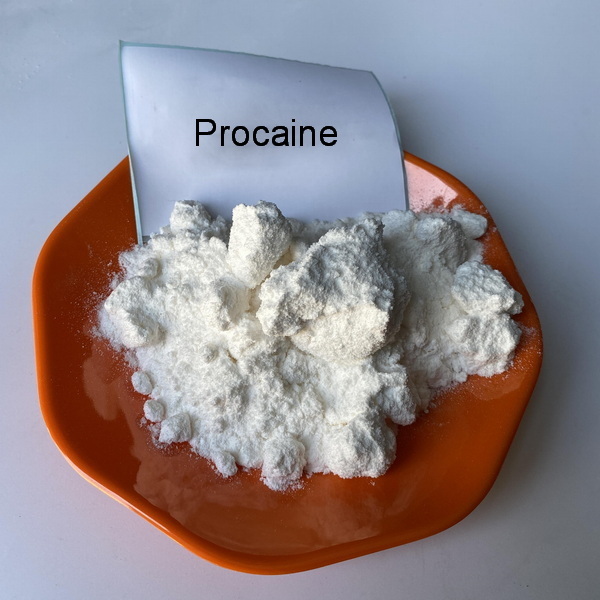
Procaine is the generic chemical name; Novocaine is the historic brand name used in many markets for the same compound.
Commonly as Procaine HCl or other salt forms, often with vasoconstrictors; exact formulation depends on regulatory approvals and supplier capability.
Procaine typically has a shorter duration and different pharmacokinetics than agents like lidocaine or mepivacaine, influencing selection based on application and desired onset/duration.
Watch for ester-type hypersensitivity and ensure accurate labeling of salt forms and additives; monitor patient history and potential allergies.
Include chemical name, salt form, purity, batch/expiry, storage conditions, COA, regulatory approvals, and additive specifications to ensure compliance in international markets.
[1](https://learn.openochem.org/learn/the-alchemy-of-drug-development/from-cocaine-to-novocain-the-development-of-safer-local-anesthesia)
[2](https://dialnet.unirioja.es/descarga/articulo/5628635.pdf)
[3](https://www.nbinno.com/2025/article/active-pharmaceutical-ingredients-apis/procaine-hydrochloride-lidocaine-comparative-analysis)
[4](https://www.sciencedirect.com/topics/pharmacology-toxicology-and-pharmaceutical-science/procaine)
[5](https://onlinelibrary.wiley.com/doi/abs/10.1002/ddr.430160236)
[6](https://www.ncbi.nlm.nih.gov/books/NBK610935/)
[7](https://go.drugbank.com/drugs/DB00721)
[8](https://journals.sagepub.com/doi/10.1177/00220345490280030201)
Hot tags: Procaine Mechanism, Novocaine Effectiveness, Anesthetic Safety, Procaine Allergies, Novocaine Duration, Local Anesthetic Types, Procaine Dosage, Novocaine Injection, Procaine History, Novocaine Efficacy