Content Menu
● What is PPG and the role of Procaine
● Chemical and pharmacological background
>> Procaine and Penicillin G combination
>> Mechanism of action of Penicillin G component
>> Pharmacokinetics and tissue distribution
● Safety, regulatory, and quality-control considerations
>> Safety concerns with Procaine-containing formulations
>> Regulatory frameworks and GMP expectations
>> Quality-control strategies for OEM/ODM
● OEM/ODM applications and manufacturing insights
>> How OEM partners use Procaine-containing formulations
>> Key capabilities for overseas brands
● Comparative considerations: Procaine vs alternative approaches
>> Alternatives to Procaine-based formulations
>> Decision factors for market-specific applications
● Technology and process considerations for OEM collaboration
>> Formulation development and characterization
>> Manufacturing operations and scalability
● FAQ
>> 1. What is the primary function of Procaine in Penicillin G Procaine formulations?
>> 3. How does Penicillin G Procaine's pharmacokinetic profile affect manufacturing decisions?
>> 5.How can a manufacturer demonstrate capability to overseas brands seeking OEM partnerships?
This article provides an evidence-informed overview of Procaine in Penicillin G Procaine (PPG), examining its chemical properties, pharmacology, safety considerations, and implications for OEM/ODM manufacturing in bio-pharmaceutical and medical device contexts. The discussion targets overseas brands, distributors, and manufacturers seeking high-quality, compliant manufacturing partnerships with a Chinese supplier. The aim is to help readers understand the dual role of Procaine in PPG—as both an active antimicrobial component and a local anesthetic adjunct to improve injection tolerability—while clarifying regulatory and quality-control considerations for contract manufacturing.
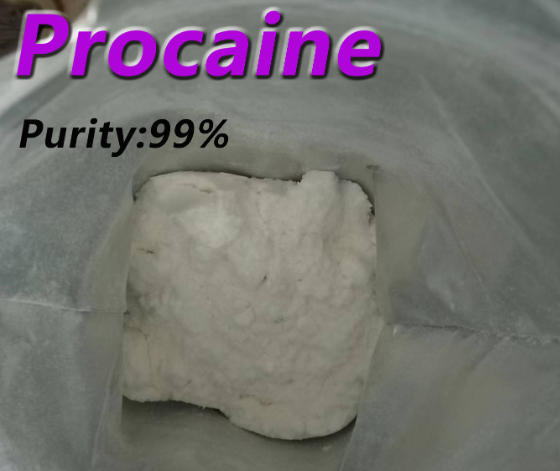
PPG is a long-acting antibiotic combination of benzylpenicillin (penicillin G) and procaine, designed to prolong the systemic exposure to penicillin while reducing injection pain. The Procaine component functions primarily as a local anesthetic at the injection site, dampening nociception and improving patient comfort during intramuscular administration. The Penicillin G portion exerts bactericidal activity by inhibiting bacterial cell wall synthesis, leading to bacterial death in susceptible organisms. In a manufacturing context, separating the roles of an active pharmaceutical ingredient (API) and excipient/vehicle components is critical for quality control, batch-to-batch consistency, and regulatory compliance. This section sets the stage for subsequent sections on mechanism, safety, regulatory considerations, and OEM implications.[11][12][13]
Procaine benzylpenicillin represents a conjugate in which a local anesthetic (procaine) accompanies penicillin G to create a slow-release formulation. Upon administration, the penicillin G is gradually released from the depot, providing extended antibacterial activity, while the procaine component provides local analgesia at the injection site. This dual-function approach has historically supported therapy in settings requiring sustained penicillin exposure with minimized injection pain. The overall pharmacokinetic profile depends on site of administration, local tissue characteristics, and patient-specific factors.[14][15]
The core antimicrobial effect arises from Penicillin G inhibiting the cross-linking of peptidoglycan in bacterial cell walls by binding to penicillin-binding proteins (PBPs). This disrupts cell wall synthesis, increases cell wall vulnerability, and facilitates autolysis, culminating in bacterial cell death. The Procaine portion does not contribute to antimicrobial activity but modulates administration-related tolerability. This mechanism underpins the spectrum of activity and informs considerations for resistance management and regulatory labeling.[1][5][8]
After intramuscular injection, Penicillin G from PP G slowly enters systemic circulation, producing a plateau-like concentration curve for an extended period. Procaine's local anesthetic effect complements this by reducing injection pain. The distribution of penicillin G favors kidneys with varying penetration into liver, skin, and other tissues, and excretion occurs primarily via renal pathways. The precise pharmacokinetic parameters are influenced by formulation specifics, injection technique, and individual physiology, which has implications for dosing regimens in therapeutic contexts and for quality assurance in manufacturing.[5][8][1]
The combination of an antibiotic with a local anesthetic at the injection site requires careful attention to hypersensitivity risks, potential drug interactions, and injection-related adverse events. While procaine can reduce pain, improper administration can lead to local tissue injury or systemic adverse reactions in susceptible individuals. In any manufacturing setting, robust pharmacovigilance data, post-market surveillance, and batch-specific quality checks are essential.[6][8][5]
OEM/ODM manufacturers of PP G-like products operate under stringent GMP standards, including raw-material qualification, process validation, in-process controls, stability testing, and comprehensive documentation (including batch records and stability data). Regulatory labeling must clearly delineate the roles of penicillin G and procaine, potential allergenicity, and appropriate storage conditions. Cross-border supply chains demand traceability and compliance with international guidelines to ensure product integrity throughout distribution.[8][5]
For contract manufacturing, establishing transparent supplier qualification, validated assay methods for active ingredients and impurities, and robust sterilization/containment protocols is critical. Implementing a rigorous QA/QC framework helps ensure batch-to-batch consistency, accurate dosage, and safe administration. Ancillary considerations include packaging integrity, shelf-life determination, and compliant labeling to satisfy both national and international regulations.[1][8]
OEM providers in biopharma and medical devices leverage Procaine-containing formulations like PP G in controlled-release contexts, while ensuring compliance with regulatory standards and quality systems. The manufacturing process prioritizes precise ratio control, clean-in-place/sterilization procedures, and potency verification to satisfy international clients and regulatory authorities.[8][1]
Potential partners should highlight distinct capabilities such as material sourcing, analytical testing for potency and impurities, stability studies under varied storage conditions, and regulatory support for global markets. Demonstrated experience in export-oriented pharmaceutical manufacturing, quality assurance, and supply-chain transparency strengthens collaboration opportunities with foreign brands, wholesalers, and manufacturers.[6][8]
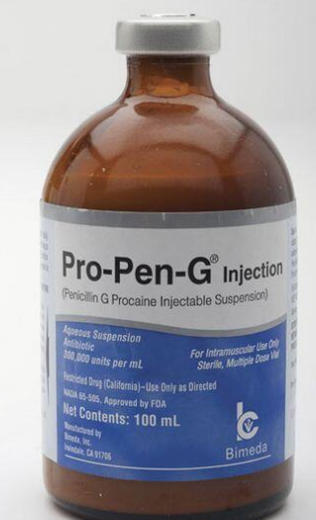
In some therapeutic contexts, penicillin G is delivered without a local anesthetic, or with different formulations designed for patient comfort. The choice between Procaine-containing formulations and alternatives depends on target indications, patient population, route of administration, and regulatory constraints. Each option carries trade-offs related to pharmacokinetics, analgesia, injection tolerability, and manufacturability.[5][8]
Markets with stringent labeling and allergen disclosure requirements will demand clear documentation of the Procaine component, potential cross-reactivity, and compatibility with other medications. Manufacturers should provide end-to-end traceability and supply-chain documentation to support global distribution.[6][8]
Successful collaboration hinges on thorough formulation development, including compatibility studies, stability profiling, and validated analytical methods for API and impurities. Transparent communication about the intended market, packaging, and regulatory pathway is essential to align expectations and ensure a smooth regulatory submission process.[1][8]
Scalable manufacturing processes with validated equipment, validated cleaning procedures, and well-documented change controls support sustained supply for international markets. Investment in digital documentation, batch release protocols, and electronic quality records improves efficiency and regulatory readiness.[8][6]
In summary, the Procaine component in Penicillin G Procaine serves primarily to ease administration through local anesthesia, while the Penicillin G portion delivers the antimicrobial action. For overseas brands seeking reliable OEM/ODM partnerships, a Chinese supplier with demonstrated GMP-compliant capabilities, robust QA/QC programs, and transparent supply chains can provide end-to-end support—from raw-material qualification to global regulatory documentation and post-market surveillance. Prospective collaborators should emphasize quality assurance, regulatory expertise, and the ability to tailor formulation and packaging to meet diverse international requirements. The path to collaboration begins with a detailed needs assessment, a clear regulatory plan, and a precise manufacturing proposal that aligns with both patient safety and market demands.
If your organization is exploring OEM/ODM partnerships for Procaine-containing formulations or related bio-pharmaceutical products, contact the sourcing team to discuss your specifications, regulatory landscape, and timelines. A dedicated technical account manager can provide a tailored plan that accelerates development, validates analytical methods, and facilitates compliant global distribution.
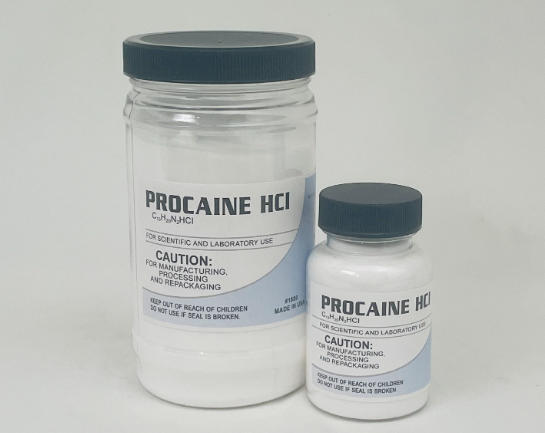
- Procaine provides local anesthesia at the injection site, improving patient comfort, while Penicillin G delivers antibacterial action.[1][8]
- Requirements include GMP-compliant manufacturing, validated analytical methods, batch records, stability testing, labeling with ingredient disclosures, and traceability across the supply chain.[8][1]
- Slow release from the depot leads to extended exposure; manufacturing must ensure consistent release kinetics, dosing accuracy, and proper storage conditions to maintain potency.[5][1]
- Raw-material qualification, in-process controls, validated assays for potency and impurities, sterilization/containment, and comprehensive documentation for regulatory submissions.[1][8]
- Provide GMP-compliant facilities, transparent supplier qualification, robust QA/QC programs, stability data, regulatory support for target markets, and clear communication about timelines and testing protocols.[6][8]
[1](https://go.drugbank.com/drugs/DB09320)
[2](https://www.youtube.com/watch?v=F8kilENrMDc)
[3](https://synapse.patsnap.com/article/what-is-the-mechanism-of-penicillin-g-procaine)
[4](https://labeling.pfizer.com/showlabeling.aspx?id=718)
[5](https://www.ncbi.nlm.nih.gov/books/NBK554560/)
[6](https://www.pediatriconcall.com/drugs/procaine-penicillin/898)
[7](https://en.wikipedia.org/wiki/Procaine_benzylpenicillin)
[8](https://pubchem.ncbi.nlm.nih.gov/compound/Penicillin-G-Procaine)
[9](https://www.sciencedirect.com/topics/neuroscience/procaine-benzylpenicillin)
[10](https://synapse.patsnap.com/article/what-is-penicillin-g-procaine-used-for)
[11](https://cgfarad.ca/wp-content/uploads/2025/04/Chicoine-2009-Kinetics-and-residues-of-PPG.pdf)
[12](https://www.supplybenzocaine.co.uk)
[13](https://www.sciencedirect.com/science/article/abs/pii/S0737080623006883)
[14](https://www.foodchem.cn/products/Procaine-Hydrochloride)
[15](https://beva.onlinelibrary.wiley.com/doi/10.1111/evj.13886)
Hot tags: Procaine Function, PPG Injection Benefits, Procaine Mechanism, Local Anesthetic Properties, Procaine Side Effects, PPG Usage in Medicine, Procaine Benzylpenicillin, Procaine Pharmacology, PPG Injection Guidelines, Procaine in Veterinary Medicine