Content Menu
● Common Uses and Therapeutic Areas
>> Oral and Dental Applications
>> Dermatologic and Hemorrhoid Uses
>> Ear, Nose, and Throat Products
● Dosage Forms and Formulation Options
>> Lozenges and Solid Oral Topicals
>> Ear Drops and Combination Formulations
● Safety, Side Effects, and Precautions
>> Serious Risks: Methemoglobinemia and Allergy
● Regulatory Considerations for Benzocaine Products
● OEM and Private‑Label Opportunities
● Quality Control and Manufacturing Excellence
● Market Trends and Future Development
● FAQ
>> 1. What is benzocaine used for?
>> 3. Who should not use benzocaine products?
>> 4. What are the symptoms of a serious benzocaine side effect?
>> 5. Can benzocaine be customized for my brand as an OEM product?
Benzocaine is an amino‑ester type local anesthetic that is most often applied topically in forms such as gels, creams, sprays, ointments, lozenges, and ear drops. It is a key active ingredient in many products for oral pain, minor skin irritation, hemorrhoids, and pre‑procedural numbing in dentistry and minor surgery.
Benzocaine was first synthesized in the late 19th century and became one of the earliest synthetic topical anesthetics used in medicine. Its long history of use has led to widespread adoption in consumer products and clinical settings across the world.
- Chemical class: Ester‑type local anesthetic (para‑aminobenzoic acid derivative).
- Typical concentration range in products: common OTC formulations often contain around 5–20% benzocaine, depending on indication and local regulations.
- Typical application sites: skin, oral cavity, throat, rectal area, and external ear canal.
In pharmaceutical manufacturing, benzocaine is valued for its good local anesthetic potency, comparatively low systemic absorption at recommended doses, and compatibility with many excipients and dosage forms. For international OEM partners, these properties translate into flexible product design and wide market acceptance in multiple therapeutic segments.
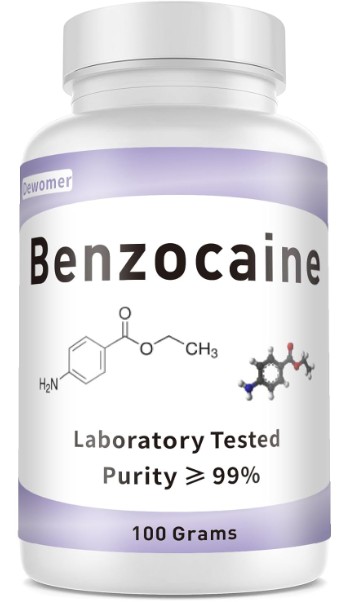
Benzocaine acts by stabilizing neuronal membranes and decreasing their permeability to sodium ions in voltage‑dependent sodium channels. When sodium channels cannot open normally, nerve cells fail to depolarize and cannot generate or conduct pain impulses to the central nervous system.
The effect of benzocaine is local and reversible: once the drug diffuses away or is metabolized, normal nerve function returns. Because it is poorly soluble in water and used topically, systemic absorption is usually limited at recommended doses, which contributes to its safety profile when used correctly.
From a pharmacological point of view, benzocaine belongs to the ester‑type local anesthetics derived from para‑aminobenzoic acid (PABA). Ester anesthetics are typically metabolized by plasma esterases to PABA derivatives, which explains why patients with PABA allergy may react to benzocaine or related compounds.
Key pharmacological characteristics include:
- Onset: relatively rapid when applied to mucous membranes such as oral mucosa.
- Duration: short‑acting, usually providing relief for a limited period, which suits short procedures and temporary symptom control.
- Site specificity: effect is restricted to the area of application, without general anesthesia or loss of consciousness.
This mechanism allows benzocaine to be incorporated into diverse topical products that need a fast but localized numbing effect without systemic sedation. For OEM product developers, understanding this profile helps in selecting appropriate indications, concentrations, and dosage forms.
Benzocaine is used in a wide range of consumer and professional products to provide short‑term relief from pain, itching, and irritation. Its versatility and familiarity among clinicians and consumers make it a core component in many first‑aid and oral‑care portfolios worldwide.
Benzocaine is frequently employed in products aimed at oral and dental discomfort. Typical uses include:
- Toothache and pulpitis‑related pain relief in gels and liquids applied directly to the tooth or surrounding gum.
- Relief of mouth ulcers, canker sores, and minor oral abrasions.
- Denture irritation and sore gums in patients using removable prostheses.
- Topical anesthetic prior to dental injections or minor procedures, often in gel or spray forms.
In dental practice, benzocaine sprays or gels are used on the mucosa before needle insertion to improve patient comfort and reduce anxiety. For OTC oral‑care brands, benzocaine‑containing gels and ointments remain popular for short‑term management of sudden tooth or gum pain.
On the skin and perianal area, benzocaine helps relieve itching, burning, and irritation. It is widely formulated into:
- First‑aid creams for minor cuts, scrapes, insect bites, stings, and sunburn.
- Topical products for external hemorrhoids and anal fissures, often combined with astringents or vasoconstrictors.
By providing localized anesthesia, benzocaine allows patients to better tolerate daily activities and hygiene measures while inflamed tissue recovers. Hemorrhoid formulations especially benefit from fast numbing effects in a sensitive area where non‑pharmacological measures alone may be insufficient.
In otic and throat products, benzocaine is used to control pain and irritation.
- Ear drops: combined with other agents such as antipyrine to manage ear pain associated with otitis media or after certain procedures.
- Throat lozenges and sprays: providing temporary relief of sore throat and minor pharyngeal irritation.
Such products are particularly appealing in cold and flu seasons, when patients seek quick symptomatic relief without systemic analgesics. For OEM brand partners, diversified benzocaine‑containing ENT lines can support seasonal marketing campaigns and line extensions.
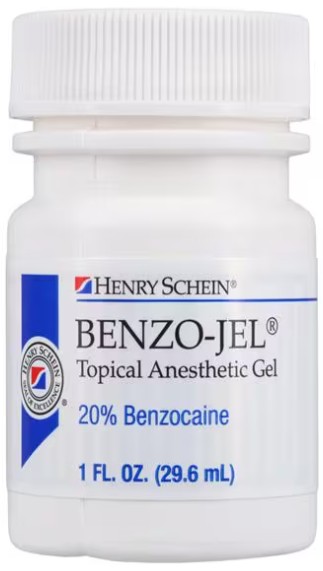
Benzocaine's physicochemical properties make it suitable for many topical dosage forms that serve different markets and usage scenarios. Each form offers unique benefits in terms of convenience, absorption, and patient preference.
Gels and creams are among the most common benzocaine products for both oral and dermatologic use.
- Gels: often preferred in oral and dental indications because they adhere well to mucosal surfaces and provide a concentrated localized effect.
- Creams and ointments: widely used for skin and hemorrhoid indications, pairing benzocaine with soothing bases and other supportive ingredients.
For OEM clients, formulation variables include concentration, choice of base (hydrophilic vs lipophilic), viscosity, flavoring or fragrance, and preservatives. These parameters can be optimized to match target regulatory categories such as OTC drug, medical device, or cosmetic in different countries.
Benzocaine sprays deliver the active ingredient rapidly over a defined area, which is useful in dentistry and throat applications.
- Oral and throat sprays: provide a fine mist that coats mucosal surfaces and offers rapid anesthetic action for short periods.
- Topical skin sprays: convenient for hard‑to‑reach areas or for patients who prefer not to touch a painful site.
Sprays can be formulated with pump or aerosol systems and may include flavoring agents and humectants to enhance patient acceptance. For OEM partners, these formats allow differentiation through packaging design, actuator type, and spray pattern.
In sore throat products, benzocaine is frequently combined with antiseptics or demulcents in lozenges.
- Benzocaine lozenges dissolve slowly in the mouth, releasing anesthetic to the throat and oral mucosa.
- Some products add cooling agents or flavor blends to create a more pleasant mouthfeel.
Manufacturing lozenges requires precise control of heating, cooling, and casting processes, as well as flavor and color stability. An experienced OEM factory can support custom flavors, shapes, and packaging options such as blisters, jars, or strips to meet brand requirements.
Otic solutions may combine benzocaine with anti‑inflammatory or analgesic co‑ingredients to enhance overall effect. These preparations are typically presented in dropper bottles for convenient instillation into the external auditory canal.
Combination formulations (e.g., with hydrocortisone, decongestants, or antimicrobial agents) are common in various benzocaine product categories, as long as they comply with local regulations. OEM development teams can design multi‑ingredient products that fit specific therapeutic niches and regulatory pathways in each target market.
When used according to instructions, benzocaine is generally safe, but improper use or use in high‑risk groups can cause serious adverse effects. Careful labeling, dosage design, and user education are therefore essential parts of responsible product development and OEM supply.
Most side effects of benzocaine are mild and localized. These may include:
- Temporary stinging or burning sensation when the product is first applied.
- Redness, irritation, or mild swelling at the application site.
- Itching or rash that may reflect local intolerance or allergic dermatitis.
Such reactions often resolve after discontinuing the product and may not require medical attention unless they worsen or persist. Nonetheless, OEM product literature should clearly instruct users to stop use and seek advice if severe irritation occurs.
A rare but serious complication associated with benzocaine is methemoglobinemia, in which hemoglobin is oxidized and cannot carry oxygen efficiently. Symptoms can include pale or blue‑colored skin, lips, or nails, shortness of breath, fatigue, confusion, headache, and rapid heart rate.
Regulatory agencies have issued specific warnings, particularly for benzocaine oral products used in infants and young children. Authorities recommend:
- Avoiding benzocaine for teething pain in children under 2 years.
- Using the lowest effective dose for the shortest possible time in older children and adults. - Including clear warnings and instructions on product labels and consumer information leaflets.
Allergic reactions to benzocaine or related ester anesthetics may present as rash, hives, itching, swelling, dizziness, or breathing difficulty. These reactions require immediate discontinuation of the product and prompt medical evaluation, especially if symptoms suggest anaphylaxis.
For OEM manufacturers, integrating up‑to‑date safety warnings and contraindications into labels, packaging, and promotional materials is an important part of compliance and brand reputation protection.
Benzocaine products are regulated differently across countries, often as non‑prescription medicines, medical devices, or in some cases, cosmetic products with specific claims. Understanding these frameworks is crucial when designing formulations and packaging for international OEM clients.
Key regulatory points typically include:
- Maximum allowable concentration of benzocaine in specific dosage forms and indications.
- Required warnings, contraindications, and directions for use on labels and inserts. - Quality standards and pharmacopeial specifications for benzocaine API and finished products.
- Documentation requirements for registration or listing, such as CTD dossiers, stability data, and risk assessments.
A GMP‑compliant manufacturer with regulatory experience can support customers with technical data packages, variation management, and adaptation to local rules in different markets. This partnership model allows brand owners to focus on marketing and distribution while relying on a specialized production base in China.
For international brand owners, wholesalers, and manufacturers, benzocaine offers flexible formulation options across multiple therapeutic niches. A Chinese facility experienced in APIs and finished dosage forms can provide integrated OEM/ODM solutions tailored to diverse markets and regulations.
Typical OEM services for benzocaine products may include:
- Custom formulation development (gels, creams, sprays, lozenges, ear drops, and more) with adjustable strengths and excipients.
- Analytical method development and validation for assay, impurities, and stability testing.
- Scale‑up and process optimization from pilot to commercial batches under GMP standards.
- Comprehensive quality documentation such as COA, MSDS, and stability reports suitable for regulatory submissions.
- Packaging design, artwork support, and multilingual labeling for specific export targets.
For customers seeking differentiation, benzocaine can be combined with other functional ingredients to create value‑added products, provided safety and regulatory requirements are respected. Examples include combinations with astringents for hemorrhoid care, antiseptics for oral lesions, or soothing botanicals for skin irritation.
High‑quality benzocaine OEM products depend on robust quality management systems covering the entire production chain. International partners typically expect:
- Strict control of raw materials, including verified benzocaine API identity, purity, and residual solvents.
- In‑process controls to monitor critical parameters such as mixing, filling volumes, and environmental conditions.
- Finished product testing for assay, impurities, microbiological limits, and performance characteristics like viscosity or dissolution.
Modern production facilities can leverage automated equipment for mixing, homogenizing, filling, and packaging, reducing variability and improving efficiency. Well‑designed quality systems also support audits by international clients and regulatory authorities, giving brand owners confidence in long‑term cooperation.
Demand for topical anesthetic products, including benzocaine formulations, is influenced by consumer preferences, regulatory actions, and innovation in delivery systems. Several trends can be considered by brand owners and OEM manufacturers:
- Growing focus on user safety and clearer labeling, especially in pediatric use and self‑medication.
- Increasing interest in combination products that offer multi‑symptom relief, such as pain relief plus antiseptic or anti‑inflammatory
- Expansion of e‑commerce and cross‑border trade, which encourages differentiated packaging, branding, and regulatory strategies.
Innovative dosage forms such as thin films, patches, or novel spray systems may further expand benzocaine's role in pain management. OEM partners with strong R&D and flexible production capabilities are well‑positioned to help international clients capture these opportunities through tailored product pipelines.
Benzocaine is a well‑established topical local anesthetic that provides fast, localized pain relief by blocking sodium channels in nerve endings and stopping pain signal transmission. With a wide range of applications in oral care, dermatology, hemorrhoid care, ENT products, and minor medical procedures, it remains a core ingredient in many over‑the‑counter and professional healthcare products worldwide.
For international brand owners, benzocaine's versatility in gels, creams, sprays, lozenges, and ear drops creates rich opportunities for differentiated product portfolios that meet local consumer needs and regulatory requirements. A GMP‑compliant Chinese manufacturer with expertise in biotech, pharmaceutical, and medical‑device‑related products can provide end‑to‑end OEM and private‑label services, from formulation development to large‑scale production and global logistics.
If your company is looking for a reliable long‑term partner for benzocaine bulk or finished products, now is an excellent time to explore customized solutions tailored to your target markets, price points, and brand positioning. Share your product ideas, desired dosage forms, and regulatory requirements, and arrange a consultation with a professional technical sales team to receive tailored proposals, samples, and competitive quotations.
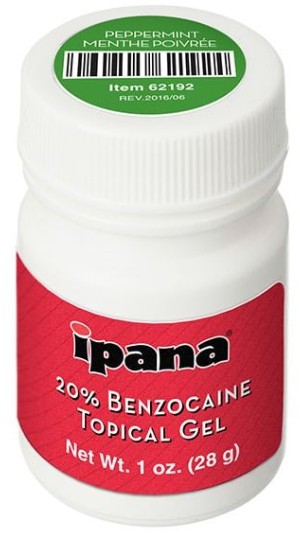
Benzocaine is used for temporary relief of pain and itching associated with minor burns, sunburn, insect bites, skin irritation, oral pain such as toothache and mouth ulcers, hemorrhoids, and minor procedures. It is found in topical gels, creams, sprays, lozenges, and ear drops sold over the counter and in professional healthcare settings.
When used as directed in appropriate concentrations and on intact skin or mucosa, benzocaine is generally considered safe for adults and older children. However, overuse, application to large or damaged skin areas, or use in high‑risk populations can increase the risk of serious side effects such as methemoglobinemia and allergic reactions.
Benzocaine oral products should not be used in infants and children younger than 2 years because of the risk of methemoglobinemia and limited benefit for teething pain. People with a history of methemoglobinemia, certain blood disorders, severe heart or lung disease, or known allergy to benzocaine or other ester anesthetics should consult a healthcare professional or avoid use.
Symptoms of methemoglobinemia include pale, gray, or blue‑colored skin, lips, or nail beds, shortness of breath, fatigue, confusion, headache, lightheadedness, and rapid heart rate. Signs of an allergic or severe reaction include difficulty breathing or swallowing, swelling of the face, lips, tongue, or throat, severe dizziness, rash, or hives, and such symptoms require immediate medical attention.
Yes, benzocaine can be formulated into various dosage forms (gels, creams, ointments, sprays, lozenges, ear drops) with customized strengths, excipients, and packaging to meet your brand and regulatory needs. A qualified Chinese OEM manufacturer can provide R&D support, stability studies, quality control documentation, and private‑label packaging solutions to help you launch or expand your benzocaine product line in international markets.
Hot tags: Benzocaine Uses, Benzocaine Side Effects, Benzocaine Dosage, Benzocaine Mechanism, Benzocaine for Pain Relief, Benzocaine in Dentistry, Benzocaine Safety, Benzocaine Topical Application, Benzocaine Methemoglobinemia, Benzocaine Alternatives