Content Menu
● Chemical Composition of Procaine
● How Is Procaine Made? The Production Process
● Uses and Applications of Procaine
● Procaine's Mechanism of Action
● Quality Control and Regulatory Compliance
● FAQ
>> 1. What are the main raw materials used to make procaine?
>> 2. Is procaine safe for medical use?
>> 3. What forms of procaine are typically used in pharmaceuticals?
>> 4. How long does procaine's anesthetic effect last?
>> 5. Can procaine be synthesized without harmful solvents?
Procaine, commonly known by the trade name Novocain, is a well-known local anesthetic that has been widely used in dental procedures and other medical applications for over a century. It acts by blocking nerve signals, providing temporary numbness to the targeted area to relieve pain during minor surgeries or treatments. Understanding the composition and manufacturing process of procaine is essential for industries involved in pharmaceuticals, healthcare, and biotechnology, particularly those offering OEM services like us.
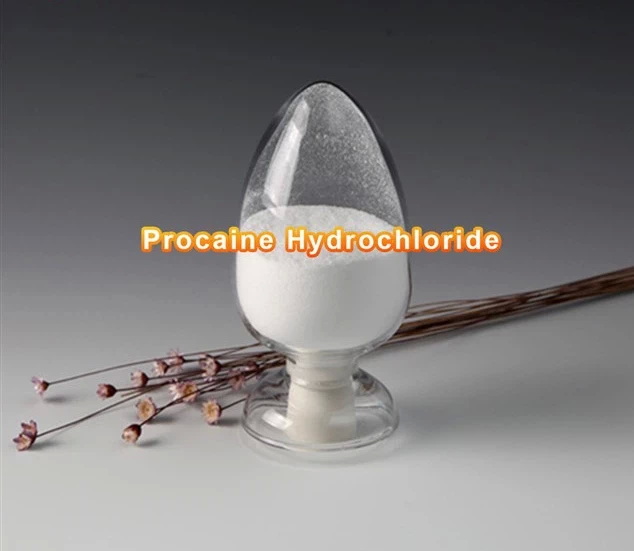
Procaine was first synthesized in 1905 by German chemist Alfred Einhorn as a safer alternative to cocaine, which was the initial local anesthetic but had addictive properties and was chemically unstable. Procaine's chemical name is 2-(diethylamino)ethyl 4-aminobenzoate, and its molecular formula is C13H20N2O2. It belongs to the amino ester group of local anesthetics.
Procaine is widely appreciated for its ability to block sodium channels in nerve cells, which inhibits the transmission of nerve impulses and thus reduces pain sensation.
Procaine is chemically an ester formed from the reaction of 4-aminobenzoic acid (PABA) and 2-diethylaminoethanol. Sometimes it is referred to as an ester of para-aminobenzoic acid. Its chemical specifics include:
- Molecular formula: C13H20N2O2
- Molecular weight: 236.31 g/mol
- Melting point: 61°C
- Solubility: Slightly soluble in DMSO and methanol; hydrochloride salt form is very soluble in water
- pKa: Around 8.9 to 9.04
The hydrochloride salt form, procaine hydrochloride, is the form commonly used in medical preparations due to increased solubility.
The production of procaine involves chemical synthesis that primarily includes:
1. Esterification Reaction:
Procaine is formed by esterifying 4-aminobenzoic acid with 2-diethylaminoethanol. This creates the key ester bond between the acid and the alcohol functional groups.
2. Hydrogenation (in some processes):
In alternate synthesis routes, 4-nitrotoluene is oxidized to 4-nitrobenzoic acid, converted to acyl chloride, and then reacted with 2-diethylaminoethanol to form nitrocaine. This compound undergoes catalytic hydrogenation to reduce the nitro group to an amine, yielding procaine.
3. Purification and Crystallization:
Post synthesis, procaine hydrochloride is purified by crystallization, often involving vacuum azeotropic distillation and temperature-controlled cooling to achieve high purity crystals fit for pharmaceutical applications.
This multi-step process ensures the resulting compound meets the stringent chemical stability and purity standards required for medical use.
In addition to the traditional chemical synthesis methods, there are ongoing developments aimed at making the production process greener and more efficient. Some manufacturers have begun exploring microwave-assisted synthesis techniques which can significantly cut reaction time and reduce the use of harmful solvents. Such innovations not only lower environmental impact but can also improve product consistency and yield.
Furthermore, control of synthesis parameters like temperature, pressure, and catalyst concentration during hydrogenation is crucial to obtaining a high-purity product with minimal impurities. Strict quality control at each stage, from raw materials to the final procaine hydrochloride crystals, ensures the pharmaceutical-grade substance suits medical requirements.
Procaine is primarily used for:
- Local anesthesia in dental and minor surgical procedures.
- Reducing pain during intramuscular injections.
- Occasionally in veterinary medicine.
Though newer anesthetics such as lidocaine and bupivacaine have largely supplanted procaine due to their longer duration and decreased allergic potential, procaine continues to hold an important niche in applications where a short-acting anesthetic is favored.
Interestingly, beyond its local anesthetic properties, procaine has been investigated for other pharmacological effects. Some studies have explored its anti-inflammatory potential, proposing it could aid in reducing inflammation in injured tissues. Other research lines have examined procaine as a cognitive enhancer or anti-aging agent, though these claims require further rigorous clinical validation.
In pharmaceutical manufacturing, procaine's stability and ease of synthesis render it a reliable intermediate or model compound for developing newer ester-type anesthetics. The knowledge of its chemical behavior and manufacturing is also valuable for companies seeking to custom-make novel local anesthetic derivatives tailored for specific therapeutic needs.
Procaine works by blocking voltage-gated sodium channels in nerve cells. This prevents sodium ions from entering the neuron, which inhibits the generation and propagation of nerve impulses. By stopping these signals, procaine effectively numbs the targeted area, preventing the sensation of pain during procedures.
This blocking effect occurs because procaine's chemical structure allows it to bind within the channel's pore in a voltage-dependent manner. The anesthetic preferentially affects rapidly firing nerves, which explains its efficacy in selectively numbing areas of injury or surgical interest without broadly depressing overall nerve function.
The reversible nature of procaine binding means the anesthetic effect wears off as the drug is metabolized and eliminated from tissue, allowing for temporary but controlled pain relief. Its metabolism primarily occurs in the blood plasma via hydrolysis by pseudocholinesterase enzymes, producing para-aminobenzoic acid (PABA), which can be further conjugated and excreted by the kidneys.
While procaine is generally safe when used as prescribed, allergic reactions can occur, often due to its metabolite, para-aminobenzoic acid (PABA). These allergies are more common with ester-type anesthetics like procaine than with amide-type anesthetics such as lidocaine.
Common side effects mostly relate to hypersensitivity, including skin rashes, itching, or more severe responses like bronchospasm or anaphylaxis in susceptible individuals. Physicians usually conduct allergy testing or rely on patient history before administration.
In rare cases, procaine overdose or inadvertent intravascular injection can cause nervous system excitations, manifesting as restlessness, dizziness, seizures, or convulsions. Cardiovascular toxicity such as hypotension or arrhythmia may also occur at high systemic levels.
To minimize risks, medical practitioners carefully control dosage, injection sites, and patient monitoring during use. New formulations combining procaine with vasoconstrictors like epinephrine may prolong anesthetic effect while reducing systemic absorption and toxicity.
Ensuring the quality of procaine, especially for pharmaceutical use, involves rigorous testing for purity, potency, sterility (if injectable), and absence of contaminants such as heavy metals or residual solvents. Standard pharmacopeia guidelines provide specifications that must be met for materials labeled as procaine hydrochloride.
Our factory employs modern analytical instruments including high-performance liquid chromatography (HPLC), infrared spectroscopy (IR), and nuclear magnetic resonance (NMR) spectroscopy to verify the chemical identity and purity of each batch. Continuous process monitoring and validation are also implemented to maintain reproducibility and compliance with international regulations.
Meeting these quality and safety standards not only guarantees the efficacy of the anesthetic product but also builds trust with global OEM partners, brand owners, and distributors seeking reliable pharmaceutical supply.
Procaine is a classic local anesthetic crafted from chemically combining 4-aminobenzoic acid and 2-diethylaminoethanol. Our factory specializes in the research, production, and OEM supply of procaine and related pharmaceutical compounds to international brands and distributors. With advanced synthesis technology, innovative green manufacturing methods, and strict quality control, we ensure high purity and compliance with global standards.
Procaine continues to be a significant anesthetic due to its effective and reversible nerve-blocking properties, with established use in dental and minor surgical procedures worldwide. Its production integrates both traditional chemical techniques and cutting-edge advances for efficiency and environmental responsibility.
If you seek a reliable, experienced partner for procaine supply or custom pharmaceutical manufacturing, contact us today to discuss your requirements and receive tailored solutions that meet your quality and volume needs.
Procaine is made from 4-aminobenzoic acid and 2-diethylaminoethanol through an esterification chemical reaction.
Yes, procaine is safe when used as directed by healthcare professionals, although rare allergic reactions can occur due to its metabolites.
The hydrochloride salt form (procaine hydrochloride) is most commonly used due to its higher solubility in water.
Procaine provides a relatively short duration of anesthesia, usually effective for about one hour.
Recent developments include microwave-assisted solvent-free synthesis methods that reduce environmental impact and improve efficiency.