Content Menu
● How Procaine Penicillin Time Release Works
>> The process can be described as follows:
● Therapeutic Applications and Indications
● Pharmacokinetics and Drug Metabolism
● Advantages of Time Release Delivery
● Safety, Side Effects, and Contraindications
● Clinical Practice: Dosage and Guidelines
● Latest Advances and Market Use
● Frequently Asked Questions (FAQ)
>> 1. What kinds of infections does procaine penicillin time release treat?
>> 2. Why is the “time release” formulation an advantage?
>> 3. Can patients with a history of penicillin allergy receive procaine penicillin G?
>> 4. What precautions should be taken with procaine penicillin G injections?
>> 5. How does procaine penicillin G compare to benzathine penicillin G or plain penicillin G?
Procaine penicillin time release, often referred to as procaine penicillin G or procaine benzylpenicillin, is a formidable long-acting intramuscular antibiotic distinguished by its gradual absorption and sustained therapeutic effect. Designed to combine penicillin G—a β-lactam antibiotic—with the local anesthetic procaine into a single compound, this unique formulation enables slow release from the injection site, ensuring stable blood concentrations over 12 to 24 hours or more, depending on the dosing regimen. This makes it a potent remedy for a wide variety of bacterial infections, especially when consistent, prolonged exposure to penicillin is required.[2][5][11]
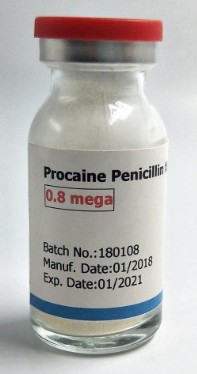
The essence of the time release mechanism lies in the pharmacology of its two primary components. After deep intramuscular administration, the poorly soluble procaine salt of penicillin G forms a depot within the muscle tissue. This depot dissolves and hydrolyzes slowly, gradually releasing active penicillin into systemic circulation. The local anesthetic procaine serves a dual purpose: reducing injection pain and further delaying drug dispersal into nearby capillaries.[5][7][2]
At the cellular level, penicillin G exhibits bactericidal action by binding to penicillin-binding proteins (PBPs) embedded within bacterial cell walls. These PBPs, especially transpeptidase enzymes, are critical for the cross-linking of the peptidoglycan backbone—a structure essential for cell wall stability and strength. When penicillin G inactivates these proteins, bacteria become unable to construct a functional cell wall, which leads to osmotic lysis and cell death as intracellular pressure builds. The β-lactam ring structure of penicillin is crucial for this binding, acting as a molecular impersonator of natural bacterial substrates. Procaine, upon gradual hydrolysis by plasma esterases, yields nontoxic metabolites, leaving penicillin and its antibacterial activity to dominate.[1][3][4][6][7][5]
- Depot Formation: Procaine penicillin injected intramuscularly precipitates, becomes slowly soluble, and forms a localized depot.
- Hydrolysis and Release: The compound is slowly hydrolyzed, releasing penicillin G into the bloodstream over 12–24+ hours.
- Therapeutic Plateau: Drug concentration peaks around 4 hours post-injection and declines slowly as the depot dissolves.
- Systemic Effect: Procaine penicillin G distributes to tissues—with greatest concentrations in kidneys, and notable levels in liver and skin—exerting its action at infection sites.[7][2][5]
Procaine penicillin G's extended-release nature makes it supremely useful in select therapeutic scenarios where prolonged, low-to-moderate, and stable serum drug levels are favored. Its main indications include:
- Syphilis (all stages) and other Treponema pallidum infections: The gold-standard regimen for early and late syphilis therapy, valued for the sustained exposure it provides.[11][12][2]
- Respiratory tract infections: Used in the management of pneumonia, strep throat, tonsillitis, and other Group A Streptococcal infections.
- Scarlet fever and erysipelas: Commonly preferred due to ease of administration in outpatient settings.[2]
- Anthrax and diphtheria adjunct therapy: Occasionally recommended post-exposure for its broad efficacy against susceptible strains.[11][2]
- Skin and soft tissue infections: Its time release characteristics ensure continuous action, especially for patients with compliance challenges.
- Rat-bite fever, erysipeloid, and other rarer infections: Efficacious for diseases in which penicillin-susceptible bacteria are involved.
Owing to its pharmacokinetic profile, procaine penicillin G is infrequently used in emergency or acute settings where rapid serum drug levels must be achieved, but it is ideal for chronic, controlled outpatient regimens.[12][2][11]
Procaine penicillin G's lasting clinical effect is rooted in its low solubility and depot formation after injection. Key pharmacokinetic features include:
- Absorption: Slow hydrolysis in muscle tissue gives a plateau blood level at about 4 hours, which remains elevated for up to 24 hours based on dose and injection depth.[5][2]
- Distribution: Distributes primarily to the kidneys, but also to the liver, skin, and intestines; crosses into most body fluids except cerebrospinal fluid, unless meninges are inflamed.[2]
- Protein Binding: Approximately 60% of penicillin G is bound to serum protein, which creates a reservoir for ongoing release.[5]
- Excretion: The majority (60–90%) of a parenteral dose is excreted unchanged in urine within 24–36 hours through both glomerular filtration and active renal secretion.[2][5]
- Half-life: Plasma half-life is typically about 30 minutes, but therapeutic blood levels persist due to sustained depot absorption.[5][2]
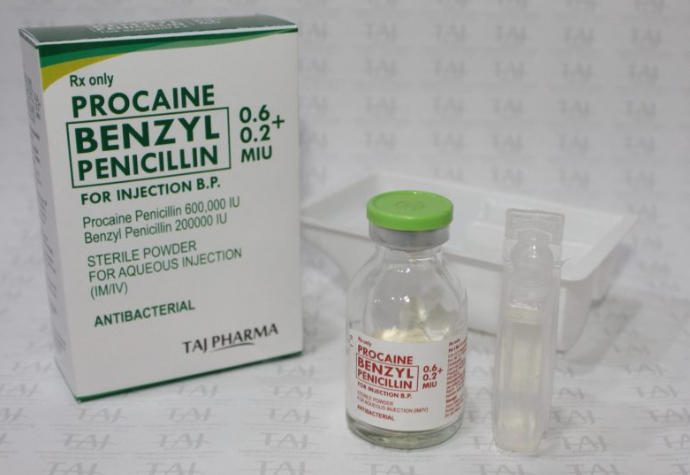
The procaine-based prolonged-release feature provides considerable clinical and practical benefits:
- Steady blood levels: Minimizes subtherapeutic “troughs” common with short-acting penicillins.[13][5]
- Reduced injection frequency: Allows once-daily dosing for most indications, improving compliance for outpatients and children.[2]
- Lower injection site pain: Thanks to procaine's anesthetic properties, these injections are usually better tolerated than other depot forms.[7][5]
- Enhanced outpatient suitability: Streamlines treatment for patients who cannot reliably attend frequent medical appointments.
Veternarian applications are especially notable, as a single injection can maintain therapeutic coverage in animals for prolonged periods.[14][7]
As with all β-lactam antibiotics, procaine penicillin G must be administered with careful consideration of allergies, renal function, and injection technique. The most frequent and significant risks include:
- Allergic and anaphylactic reactions: Any patient with a known or suspected penicillin allergy should not receive this formulation, as reactions can be severe and life threatening.[12][11][2]
- Type I immediate hypersensitivity: Rash, urticaria, bronchospasm, and anaphylactic shock may occur. These reactions demand immediate cessation of the drug and urgent medical intervention.
- Other hypersensitivity reactions: Delayed reactions may include serum sickness-like syndromes, skin eruptions, and fever.
- Jarisch-Herxheimer reaction: Particularly when treating syphilis, patients may experience an acute inflammatory response caused by the rapid lysis of large numbers of spirochetes.[11][2]
- Hoigne's syndrome: A rare CNS/psychiatric syndrome triggered by inadvertent intravascular administration, characterized by agitation, confusion, hallucinations, and anxiety; it resolves spontaneously but can be alarming.[12][2]
- Methemoglobinemia: Owing to the procaine component, this rare reaction occurs more frequently in infants and individuals with certain metabolic disorders.[7][5]
Administration precautions: Only intramuscular injection is recommended; the drug must never be given intravenously or near major nerves and arteries because of the risk of tissue necrosis or severe CNS reactions.[11][12][2]
Special populations: In neonates, infants, and patients with renal impairment, drug elimination is slower, requiring careful dose adjustment and monitoring.[2]
Proper dosing of procaine penicillin G depends on weight, age, infection type, and local protocols. Typical daily adult doses for common infections range from 600,000 to 1,200,000 units intramuscularly. In the treatment of syphilis, higher, single weekly doses or multiple consecutive daily doses are used as recommended by infectious disease authorities. Pediatric dosing must be carefully scaled to body weight, with vigilant monitoring for adverse events.
Compliance and duration: The time release property ensures therapeutic levels for 12–24+ hours, but prescribers must advise patients to complete the full regimen even after symptoms resolve, as premature discontinuation can lead to treatment failure and antimicrobial resistance.[5][2]
Procaine penicillin G still plays a critical role in treating illnesses in resource-limited settings and is a staple in both human and veterinary medicine. Its long-acting form reduces costs, increases compliance, and fits well within modern outpatient models and community-based healthcare initiatives worldwide.[11][5][2]
As bacterial resistance trends evolve, its use may be restricted by susceptibility patterns. However, for syphilis and penicillin-sensitive streptococcal diseases, it remains a first-line treatment.
Pharmaceutical manufacturing note: For overseas brands, wholesalers, and manufacturers seeking a reliable antibiotic supply chain, partnering with experienced Chinese OEM and biopharmaceutical manufacturers provides custom formulations and regulatory-compliant solutions for international markets.
Procaine penicillin time release represents a proven, efficient approach to sustained antibiotic therapy, uniquely combining penicillin G's time-tested efficacy with the analgesic benefits of procaine. Its design ensures easy patient compliance, infrequent dosing, and a comfortable administration experience—making it indispensable for the treatment of listed infections, particularly in ambulatory and resource-challenged settings. For global pharmaceutical partners, sourcing from a trusted Chinese factory guarantees both reliable supply and customizable OEM options for diverse market needs.
Looking for a dependable OEM supplier for procaine penicillin time release? Connect with our expert team today for tailored pharmaceutical solutions designed for your brand's success!
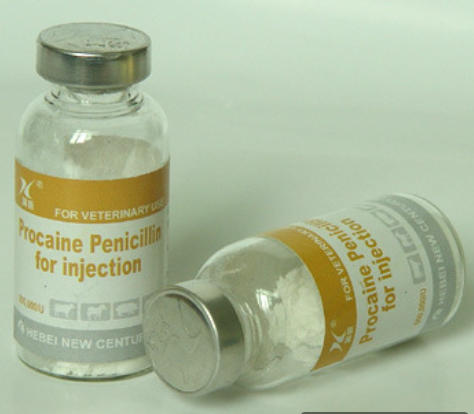
It is effective for syphilis (all stages), respiratory tract infections, scarlet fever, soft tissue infections, anthrax (adjunct), and other susceptible bacterial infections.[12][11][2]
By ensuring steady blood concentrations for 12–24 hours after injection, it allows for less frequent dosing, enhances compliance, and provides sustained bacterial killing.[13][5][2]
No—any patient with penicillin or β-lactam allergy must avoid procaine penicillin G, as reactions may be severe or fatal.[12][11][2]
Always use deep intramuscular injection; never inject intravenously or near nerves/arteries to avoid serious tissue or CNS reactions. Administer only in settings equipped to manage allergic emergencies.[12][2]
Procaine penicillin G offers a moderate duration and less injection pain than benzathine. Benzathine lasts longer (weeks) but is slower to reach peak serum levels, while aqueous penicillin G is rapid-acting for acute infections.[5][11][2]
[1](https://pubchem.ncbi.nlm.nih.gov/compound/Penicillin-G-Procaine)
[2](https://labeling.pfizer.com/showlabeling.aspx?id=718)
[3](https://synapse.patsnap.com/article/what-is-the-mechanism-of-penicillin-g-procaine)
[4](https://www.ncbi.nlm.nih.gov/books/NBK554560/)
[5](https://go.drugbank.com/drugs/DB09320)
[6](https://en.wikipedia.org/wiki/Penicillin)
[7](https://www.sciencedirect.com/topics/pharmacology-toxicology-and-pharmaceutical-science/procaine-penicillin)
[8](https://www.sciencedirect.com/topics/pharmacology-toxicology-and-pharmaceutical-science/penicillin-g-sodium)
[9](https://synapse.patsnap.com/article/what-is-penicillin-g-procaine-used-for)
[10](https://www.accessdata.fda.gov/drugsatfda_docs/label/2015/050138s236lbl.pdf)
[11](https://www.rxlist.com/penicillin-g-procaine-drug.htm)
[12](https://medlineplus.gov/druginfo/meds/a615052.html)
[13](https://www.youtube.com/watch?v=F8kilENrMDc)
[14](https://www.mda.state.mn.us/sites/default/files/inline-files/Injectable-Penicillin-G-Procaine-2.21.pdf)
Hot tags: Procaine Penicillin, Time Release Antibiotic, Penicillin G Procaine, Injectable Antibiotics, Procaine Injection Benefits, Antibiotic Mechanism, Procaine Penicillin Uses, Extended Release Antibiotics, Penicillin Side Effects, Bacterial Infection Treatment