Content Menu
● What Are Procaine Penicillin and Benzathine Penicillin?
● Pharmacokinetics: Release and Duration
● Clinical Applications and Indications
● Efficacy: Comparative Outcomes
● Safety, Contraindications, and Side Effects
>> Shared Risks
● Formulation, Manufacturing, and Market Implications
● Public Health, OEM Services, and Healthcare Partnerships
● Innovations and Future Trends
● Frequently Asked Questions (FAQ)
>> 2. Are they interchangeable for all infectious diseases?
>> 3. Are there potential side effects with either product?
>> 4. What are best practices for OEM supply and international trade?
>> 5. How can our company order or source these products for international markets?
Understanding the nuanced differences between Procaine Penicillin and Benzathine Penicillin is essential for medical professionals, pharmaceutical buyers, and OEM/ODM healthcare partners with global ambitions. Each compound has particular pharmacokinetic properties, application scenarios, and distribution requirements. Proper selection ensures therapeutic efficacy, patient safety, and regulatory compliance—critical for companies aiming to serve diverse international markets.[1][3][5]
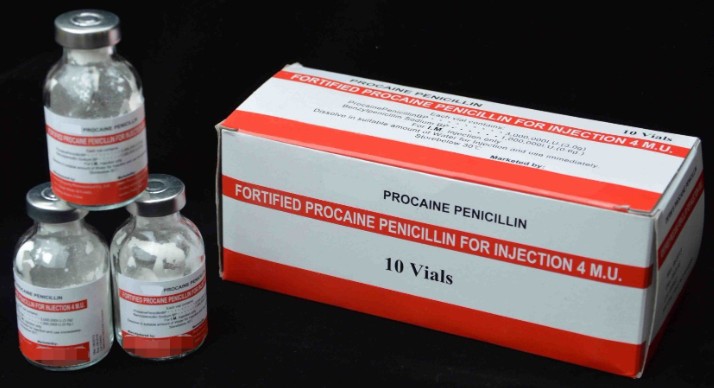
Procaine Penicillin and Benzathine Penicillin are both long-acting injectable forms of penicillin G, developed to maintain effective drug levels with reduced dosing frequency compared to aqueous penicillin. These forms, known as repository penicillins, differ primarily in how long they remain active in the body after intramuscular injection. They have become indispensable for treating various bacterial infections—especially those demanding prolonged, stable antibiotic exposure.[6][1]
- Chemical Name: Procaine benzylpenicillin
- Preparation: A crystalline suspension of penicillin G with the local anesthetic procaine
- Key Property: Designed to decrease local pain at the injection site and release penicillin over 12–24 hours.[7][8][1]
- Clinical Use: Effective for acute streptococcal infections, syphilis, anthrax, and certain skin and respiratory infections where daily dosing can be ensured.[8][9][7]
- Chemical Name: Benzathine benzylpenicillin
- Preparation: An even less soluble salt form of penicillin G, formulated with benzathine as a counterion
- Key Property: Releases penicillin steadily over 2–4 weeks post-injection.[10][11][1]
- Clinical Use: Ideal for treating latent or uncomplicated syphilis, preventing rheumatic fever, and cases of streptococcal pharyngitis where long-term therapy is needed.[11][12][13][14][10]
Both drugs disrupt bacterial cell wall synthesis by inhibiting enzymes, known as penicillin-binding proteins, that cross-link peptidoglycan chains. This leads to bacterial lysis and death. The main advantage of these repository forms lies in their ability to maintain a bactericidal concentration for an extended time, reducing the need for frequent injections and supporting better adherence in outpatient and field settings.[6]
The main distinguishing feature between Procaine Penicillin and Benzathine Penicillin is their pharmacokinetic profile—how the drug is absorbed, distributed, metabolized, and excreted:
- Absorption: Moderately slow absorption from intramuscular tissue.[1]
- Duration: Maintains effective blood levels for 12–24 hours, necessitating at least daily injections.[8][1]
- Use Case: Appropriate where close monitoring and daily healthcare contact are possible.
- Absorption: Extremely slow absorption, with low, steady concentrations in the blood.[1][6]
- Duration: Effective serum levels persist for 2–4 weeks from a single injection.[10][11][1]
- Use Case: Preferred for patient populations with limited healthcare access, long-term disease control, and for mass prophylaxis campaigns.
- Acute infections such as pneumonia, scarlet fever, and some soft-tissue infections.[9][1]
- Early syphilis, congenital syphilis, and some cases requiring rapid bactericidal action.[2][9]
- Anthrax, actinomycosis, and leptospirosis where hospitalization or daily monitoring is feasible.[15][8]
- Pediatric use when frequent visits are manageable or adherence is closely supervised.[9]
- Mainstay for syphilis (especially latent, secondary, and tertiary stages including neurosyphilis prophylaxis).[11][10]
- Prevention of rheumatic fever recurrence, especially in pediatric and adolescent patients.[12][10][11]
- Streptococcal pharyngitis where a single injection improves compliance.[5][13][12]
- Mass-treatment scenarios, such as outbreak control and public health interventions in resource-limited regions.

A pivotal clinical comparison involving congenital syphilis demonstrated that a single dose of benzathine penicillin G was as effective as a 10-day course of procaine penicillin G. No significant differences in clinical outcomes were observed, underlining that both agents, when dosed properly, deliver therapeutic success. Choice is therefore dictated by situational logistics, patient compliance, and follow-up feasibility rather than inherent product superiority.[2]
Both forms are generally safe, but the long duration means that allergic or adverse reactions may persist unless treated promptly.
- Potential for severe allergic reactions (anaphylaxis).[8][10]
- Local reactions at the injection site; less pain with procaine penicillin due to the anesthetic.[7][8]
- Jarisch–Herxheimer reaction when treating syphilis, often transient but potentially alarming for patients.[10][8]
- Avoid use in individuals with known hypersensitivity to penicillin antibiotics or specific excipients (procaine/benzathine).[4][15]
- NEVER inject either product intravenously due to risk of cardiopulmonary arrest and death. These must be strictly administered intramuscularly, and healthcare professionals should be thoroughly trained in safe injection practices.[3][4]
- Monitor renal and hepatic function for long-term antibiotic courses, as both drugs are primarily eliminated by the kidneys.[4][6]
- Always adhere to local practice guidelines for dose calculation and administration intervals, and beware of confusion between repository penicillins and rapidly acting forms.
As a Chinese OEM/ODM manufacturer, understanding and clearly labeling the distinctions between these forms is vital:
- Product labeling and documentation must specify the precise salt form (procaine or benzathine), concentration, dosing regimen, and administration route.
- Packaging should comply with major regulatory bodies such as the FDA, EMA, and WHO requirements for product traceability, especially regarding batch control, shelf life, and shipping stability.
- For international B2B trade, include multilingual leaflets and up-to-date pharmacovigilance data to support end-user compliance and safety.
- Partnering with international vaccine and antibiotic procurement agencies requires evidence of cGMP (current Good Manufacturing Practices) certification, validated sterility assurance levels, and robust supply chain reliability.
The widespread utility of repository penicillins makes them a core product for international public health, especially in syphilis elimination, rheumatic heart disease prevention, and managing outbreaks of diseases sensitive to penicillin G.
Key fields for OEM partnership include:
- Custom-formulated injectable suspensions, matched to client country pharmacopoeia.
- Support for branded/private-label contract manufacturing.
- Full regulatory documentation packs (CTD format), bioequivalence data, and product registration assistance in target export markets.
- Bulk packaging for hospitals and clinics, as well as unit-dose retail packaging for high-compliance patient care settings.
Increasing antibiotic resistance and evolutions in global regulatory requirements are reshaping the repository penicillin market:
- Some research is exploring novel depot formulations for even longer release or enhanced stability in extreme climates.
- Innovations in traceability—such as serialization—and supply chain security are driving reforms in responsible antibiotic distribution.
- Emerging markets demand both high-volume, low-cost products and tailored clinical/technical support for successful local product adoption.
Procaine Penicillin and Benzathine Penicillin each play a distinct, vital role in global infectious disease management. Their differences in dosing interval, pharmacokinetics, and application must be understood by medical professionals, international buyers, and pharmaceutical supply chain partners. Selecting the appropriate product guarantees effective infection control, optimized patient experience, and regulatory compliance.
For overseas pharmaceutical wholesalers, distributors, and branded medical companies, choosing a reputable OEM manufacturer is crucial to ensuring consistent quality, safety, and timely delivery. As a professional Chinese biotech and pharmaceutical factory, we are committed to offering world-class penicillin G derivatives, engineered and labeled to your market's requirements. Contact our technical and sales team today—you will receive custom quotations, regulatory support, and reliable partnership from first inquiry to final delivery.
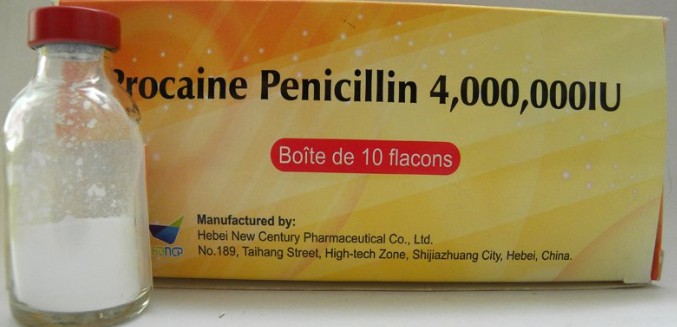
The primary distinction is the duration of effective blood levels—procaine penicillin persists for 12–24 hours, while benzathine penicillin maintains therapeutic levels for 2–4 weeks from one injection.[11][1][10]
No. Benzathine penicillin is standard for latent syphilis, rheumatic fever prophylaxis, and streptococcal throat infections requiring prolonged coverage. Procaine penicillin suits acute infections where daily administration is possible.[12][2][11]
Yes. Rare but serious allergic or hypersensitivity reactions, including anaphylaxis, can occur with both products. Procaine penicillin may cause fewer injection site discomforts due to its anesthetic component, but both must never be injected intravenously.[4][8][10]
Always use the correct product label, include precise dosing instructions, and provide comprehensive regulatory documentation per the end user's country. Full traceability and validated quality control are essential for successful export and import.[14][4]
Contact our OEM team through the official website for a quote, technical consultation, and a compliance roadmap customized for your market. We offer tailored manufacturing, international logistics, and full regulatory support for long-acting penicillin supply worldwide.
[1](https://www.sciencedirect.com/topics/medicine-and-dentistry/procaine-benzylpenicillin)
[2](https://pubmed.ncbi.nlm.nih.gov/8071762/)
[3](https://medlineplus.gov/druginfo/meds/a615053.html)
[4](https://labeling.pfizer.com/showlabeling.aspx?id=690)
[5](https://www.mayoclinic.org/drugs-supplements/penicillin-g-benzathine-and-penicillin-g-procaine-intramuscular-route/description/drg-20452194)
[6](https://www.ncbi.nlm.nih.gov/books/NBK554560/)
[7](https://www.medicinenet.com/penicillin_g_procaine/article.htm)
[8](https://en.wikipedia.org/wiki/Procaine_benzylpenicillin)
[9](https://my.clevelandclinic.org/health/drugs/18945-penicillin-g-benzathine-penicillin-g-procaine-injection)
[10](https://en.wikipedia.org/wiki/Benzathine_benzylpenicillin)
[11](https://www.ncbi.nlm.nih.gov/books/NBK507723/)
[12](https://www.mayoclinic.org/drugs-supplements/penicillin-g-benzathine-intramuscular-route/description/drg-20506360)
[13](https://my.clevelandclinic.org/health/drugs/20943-penicillin-g-benzathine-injection)
[14](https://medlineplus.gov/druginfo/meds/a615051.html)
[15](https://medlineplus.gov/druginfo/meds/a615052.html)
Hot tags: Benzathine Penicillin Uses, Procaine Penicillin Benefits, Antibiotic Administration, Penicillin Dosage Forms, Penicillin Resistance, Injectable Antibiotics, Procaine Penicillin Side Effects, Benzathine Penicillin Efficacy, Antibiotic Therapy Guidelines, Penicillin G Variants