Content Menu
● How Patients Typically Use It
● Pharmacological Features And Mechanism
● Safety, Contraindications And Labeling Notes
● Where Overseas Buyers Get This Product
● OEM / Private Label Solutions From Your Factory
● Manufacturing, Quality And Compliance
● Typical Cooperation Process For Overseas Buyers
● Marketing Angles For Different Buyer Types
● FAQ
>> 1. What is antipyrine and benzocaine otic solution used for?
>> 2. Is this product over-the-counter or prescription?
>> 3. Can it be used in children?
>> 4. What are the main side effects and risks?
>> 5. How can overseas buyers source this product from your factory?
Antipyrine and benzocaine otic solution is a prescription ear drop widely used abroad to relieve ear pain, swelling and congestion from middle ear infections and to soften earwax, and it is typically supplied through pharmacies, hospitals, clinics and licensed wholesalers rather than ordinary retail channels. As an OEM-focused Chinese manufacturer in the biopharmaceutical and medical sector, your factory can position itself as a stable bulk supplier and private-label producer to overseas brands, distributors and drug product manufacturers who then sell this ear drop to end patients via legal medical channels.[1][2][3][4]
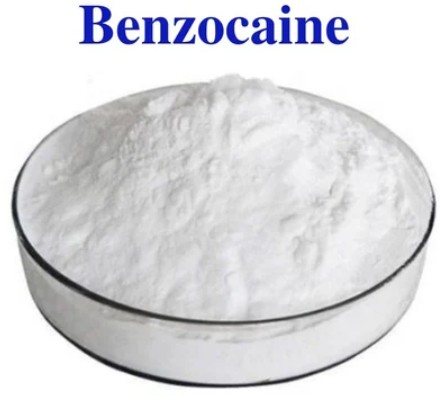
Antipyrine and benzocaine otic solution is a combination ear drop that pairs antipyrine, an analgesic with local anesthetic activity, and benzocaine, a topical anesthetic, in a hygroscopic glycerin base. The formulation reduces ear pain, helps relieve pressure and congestion in the middle ear, and assists in softening and removing impacted earwax.[2][3][1]
- Each milliliter of a classic formulation commonly contains about 54 mg antipyrine and 14 mg benzocaine, along with anhydrous glycerin and small quantities of preservatives such as oxyquinoline sulfate.[1]
- The product is used in the external ear canal only and does not treat infection itself; antibiotics are still required when bacterial otitis media is present.[3][2]
Typical clinical uses include:
- Relief of ear pain and swelling associated with acute otitis media, often as an adjunct to systemic antibiotic therapy.[4][2][3][1]
- Softening and loosening of cerumen to facilitate later earwax removal by a professional.[2][3][1]
Regulatory reminders that your B2B readers expect:
- In many major markets, antipyrine and benzocaine otic solution is available only with a doctor's prescription, and branding, labeling and distribution must follow local drug laws.[5][3][2]
- Finished products usually follow established reference formulas and are registered as generic or branded generic medicines, so any changes in strength or excipients may require additional regulatory work.[1][2]
Understanding clinical use helps your overseas buyers design correct labels, instructions and marketing claims under their own licensed brands. While precise directions are always determined by a doctor and local regulatory-approved labeling, common patterns in reference texts are relatively consistent.[3][2]
For ear pain from otitis media:
- Adults and children: enough solution is instilled to completely fill the ear canal, with the patient lying on the side so the affected ear faces up and the canal is straightened.[2][3][1]
- A cotton pledget soaked with the solution may be placed into the external canal, and dosing is often repeated every 1–2 hours as needed until pain and congestion improve.[5][1][2]
For softening earwax before removal:
- Typically 3 applications per day for 2–3 days are used, with sufficient volume to fill the ear canal each time.[3][5][2]
- After softening, the earwax can be removed under professional supervision; the solution may also be used after irrigation to help dry the canal and relieve discomfort.[1][2]
Important safety considerations overseas clients will expect to see on labels:
- The product is not intended for use when there is known or suspected perforation of the tympanic membrane or presence of ear discharge, because this is a common contraindication.[4][2][1]
- Infants, particularly under 3 months, can be more sensitive to benzocaine with a higher risk of adverse reactions.[6][2]
- Use in pregnancy and breastfeeding is generally categorized as “only if clearly needed” due to limited human data (often classed as Pregnancy Category C in legacy systems).[7][8][1]
From a B2B perspective, clearly describing the typical directions for use allows you to:
- Support your clients in drafting physician and patient-facing materials for their own regulatory submissions.[2][1]
- Anticipate common questions from pharmacists and doctors about posology, age limits and duration of therapy.[3][2]
OEM buyers, especially medical and regulatory teams, often ask for a concise scientific explanation of how this ear drop works, which you can summarize using established reference information. Clear explanation of pharmacology builds confidence in your technical competence and facilitates the preparation of professional product literature.[1][2][3]
Core pharmacological points:
- Antipyrine (phenazone) acts as an analgesic and has mild anti-inflammatory and dehydrating properties, which help relieve pressure and discomfort in the middle ear.[4][1]
- Benzocaine is a local anesthetic that stabilizes neuronal membranes and reduces the initiation and conduction of nerve impulses, quickly decreasing pain perception in the ear canal area.[9][1]
- The glycerin base is hygroscopic, helping to draw fluid from inflamed tissues and soften cerumen, while also providing a viscous vehicle that coats the ear canal.[2][1]
Pharmacokinetic and systemic exposure considerations:
- When used as directed in the intact external ear canal, systemic absorption of antipyrine and benzocaine is expected to be low, which is why these agents can be used topically with an acceptable safety margin.[1][2]
- However, damaged tympanic membranes or overuse, especially in infants or small children, can increase exposure and the theoretical risk of systemic side effects such as methemoglobinemia.[6][9]
Emphasizing this mechanism in your marketing materials demonstrates that your factory not only manufactures but also understands the clinical rationale behind this class of otic medicines.
Even though your article targets B2B buyers rather than patients, providing accurate high-level safety information improves professionalism and helps your clients understand how they must label and promote the final product in their own markets. Many customers will benchmark your suggested labeling points against established references, so alignment is important.[3][2][1]
Commonly listed precautions and contraindications in reference labeling include:
- Not for use in patients with known hypersensitivity to antipyrine, benzocaine, local anesthetics of the para-aminobenzoic acid (PABA) type, or other ingredients.[9][4][1]
- Do not use when there is spontaneous perforation of the tympanic membrane, ear tubes in place (unless specifically directed by a physician), or purulent discharge from the ear canal.[10][4][1]
- Use with caution in very young infants because benzocaine can in rare cases cause methemoglobinemia, a serious blood disorder, especially when used excessively.[6][9]
- Advise patients or carers to discontinue use and seek medical attention if symptoms worsen, fever appears, or pain persists longer than 48 hours.[2][3]
Pregnancy and breastfeeding statements often follow a conservative pattern:
- Animal reproductive studies are usually not available, so the product is generally classified as Pregnancy Category C in legacy systems and should only be used if the potential benefit justifies the potential risk.[8][7][1]
- It is unknown whether antipyrine or benzocaine in otic form is excreted into breast milk; labeling usually recommends caution and physician consultation.[8][3][1]
Your factory's technical documents and proposed artwork drafts for OEM customers should reflect such precautions, while always allowing the buyer to adapt wording to their local regulatory standards.
End patients abroad usually obtain antipyrine and benzocaine otic solution as a finished, branded medicine, but upstream in the supply chain, international buyers rely on GMP-compliant manufacturers who can provide bulk solution or fully finished OTC/Rx-style packaging under OEM or contract manufacturing models. Your factory's domain and profile indicate a focus on raw material integration, custom specifications and export services in the benzocaine and broader anesthetic/analgesic segment, which aligns well with supplying this category of otic products.[4][3][1][2]
Typical channels through which professional buyers “purchase” antipyrine and benzocaine otic solution include:
- Pharmaceutical brand owners and marketing authorization holders
- Regional wholesale distributors and importers
- Large hospital or clinic purchasing groups (depending on national rules)
- Licensed parallel-trade or tender suppliers in specific markets
For a Chinese OEM producer, the core business model is:
- Offer antipyrine + benzocaine otic solution in standard reference formulas (for example, 54 mg/mL + 14 mg/mL) and in custom strengths requested under valid dossiers.[1]
- Provide complete COA, batch records, and where available DMF or CTD modules to help clients with local registration and pharmacovigilance documentation.[4][1]
Clarifying that you serve professional B2B partners, not patients, also reduces the risk of inappropriate direct-to-patient inquiries and sets expectations about MOQs, regulatory responsibilities and timelines.
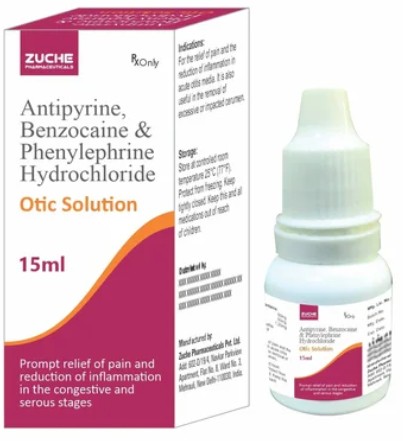
Your positioning as a Chinese biopharmaceutical and medical device factory enables you to serve international customers who ask “Where can I buy antipyrine and benzocaine otic solution?” with tailored OEM and contract manufacturing services rather than retail packs. By emphasizing end-to-end customization, you can convert such search traffic into professional procurement leads.[4][1]
Key OEM capabilities you can highlight:
- Formulation and specification
- Classic antipyrine 54 mg/mL + benzocaine 14 mg/mL otic solution formulas, with glycerin and optional approved preservatives, aligned with pharmacopeial and legacy reference products.[1]
- Custom concentrations, alternative excipients or preservative-free options developed under technical agreements where legally permitted.
- Packaging formats
- LDPE or HDPE dropper bottles in common sizes (for example, 10 mL, 15 mL, 30 mL) with tamper-evident caps and child-resistant options to meet foreign regulatory requirements.[6][2]
- Individual boxes with multilingual leaflets, barcodes and serialization spaces depending on destination market.
- Regulatory and documentation support
- Technical dossiers, quality agreements, batch records, process validation and stability data for registration in different jurisdictions.[4][1]
- Assistance with artwork compliance (warnings about use only under medical supervision, contraindication in perforated eardrum, pregnancy and breastfeeding cautions, pediatric precautions, etc.).[8][3][2][1]
- Supply-chain advantages
- Vertical integration with benzocaine and related anesthetic APIs to secure cost-effective and stable raw material supplies.[6][1]
- Flexible MOQs suitable for new-market testing as well as large-scale production for established brands.
These features differentiate your factory from trading companies and small repackers, positioning you as a long-term strategic partner for overseas generic brands and distributors.
International buyers focus heavily on manufacturing reliability and documentation when choosing a supplier for ear drops that contain local anesthetics. Presenting a robust overview of your quality systems can significantly increase trust and conversion from website visitors.[4][1]
Elements to emphasize:
- GMP-compliant workshops for small-volume liquid preparations, including dedicated mixing tanks, filtration systems and controlled environments suitable for otic solutions.[1]
- Validated water systems, cleaning procedures and microbiological controls to ensure low bioburden and consistent product quality.[4][1]
- Analytical laboratories equipped for assay, identification, impurity profiling and preservative content testing in line with pharmacopeial requirements.[1]
- Systematic batch documentation, change control, deviation handling and complaint management aligned with international quality expectations.[4][1]
Many buyers also expect support for:
- Real-time and accelerated stability studies under ICH or local conditions to justify shelf-life and storage recommendations.[7][1]
- Change notifications when raw material sources, processes or specifications are modified, ensuring regulatory compliance and continuity of supply.[1][4]
Sharing this information in your article reassures potential partners that your ear-drop production is grounded in rigorous quality and regulatory frameworks.
To answer “Where can I buy antipyrine and benzocaine otic solution?” from a professional buyer's perspective, the article should walk through a simple procurement pathway that ends with a direct inquiry to your team.
Typical cooperation steps:
1. Initial inquiry
- Buyer shares destination market, annual volume, target packaging size, branding strategy and any special formulation needs (for example preservative-free, pediatric line).
2. Technical and regulatory assessment
- Your team evaluates feasibility, aligns on reference standards, and confirms whether the product can be exported to the requested market under current regulations.
3. Quotation and commercial terms
- Pricing, Incoterms, lead time, stability data access, and sample policy are agreed.
4. Sample and pilot batch
- Lab-scale or pilot batches are prepared for internal testing and for the buyer's registration or validation purposes.
5. Registration and documentation
- Buyer submits dossiers to local authorities; your QA/RA teams provide additional data as needed.
6. Mass production and long-term supply
- Once approval is granted, routine production and shipment schedules are established with continuous quality monitoring and periodic stability review.
Placing contact forms, quick inquiry buttons and live-chat options near this section can significantly increase the number of qualified leads who reach out directly from the page.
Different categories of overseas partners may search “Where can I buy antipyrine and benzocaine otic solution?” for different reasons, and tailoring your content to these profiles improves relevance.
For generic pharmaceutical companies:
- Emphasize reference-based formulas, regulatory dossiers, and ability to align with their global portfolio strategies.[2][1]
- Highlight competitive cost structure and reliable API sourcing for long-term contracts.[6][1]
For OTC or consumer-health brands:
- Focus on private-label flexibility, packaging design options, and potential to extend ear-care product lines (for example, earwax softeners, ear hygiene solutions).[3][2]
- Stress the possibility of developing differentiated claims within regulatory limits, such as “fast comfort,” “softening wax,” or “soothing formula,” supported by technical data.
For hospital and clinic chains:
- Present bulk or institutional pack formats, long-term framework agreements and service levels like rapid documentation support for tenders.[4][1]
- Underline consistent supply and responsive communication, which are critical for healthcare providers.
By addressing these segments, your article answers not only “where” to buy, but also “why” your factory is the most suitable partner for each buyer group.
Antipyrine and benzocaine otic solution remains an important prescription ear drop in many markets, used for relief of otitis media–related pain and for earwax softening under medical guidance. Rather than selling directly to end patients, your Chinese factory can position itself as a reliable OEM and bulk manufacturer, helping overseas brands, wholesalers and healthcare suppliers secure stable, compliant sources of this specialized otic formulation with customized packaging and documentation support.[3][2][1][4]
If you are a pharmaceutical brand owner, distributor or healthcare group seeking a trusted supplier for antipyrine and benzocaine otic solution, contact our technical sales team now to discuss your target market, specifications and annual volume. Together, it is possible to develop or replicate high-quality private-label ear-drop products that meet local regulatory requirements while benefiting from competitive, large-scale manufacturing in China.
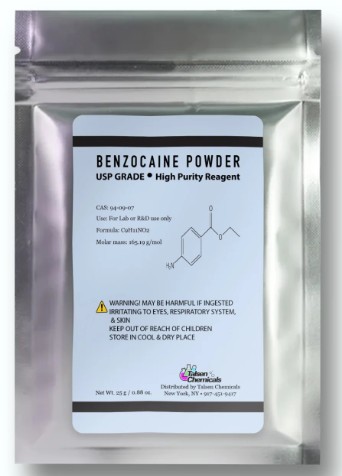
This ear-drop solution is mainly used to relieve pain, swelling and congestion from middle ear infections and to help soften and remove earwax when directed by a healthcare professional. It acts locally in the ear canal and middle ear area to provide symptomatic relief but does not replace systemic antibiotics when a true infection is present.[2][3][1]
In many markets, antipyrine and benzocaine otic solution is only available with a prescription, and all claims, packaging and distribution must comply with local drug regulations. Your factory's role is to supply bulk or OEM-finished product to properly licensed companies that then take responsibility for registration and retail or hospital-level sale.[5][3][2]
Reference materials indicate that antipyrine and benzocaine otic solutions may be used in children for ear pain and earwax softening, but infants, particularly under 3 months of age, may be more sensitive to benzocaine and face higher risk of adverse effects. For this reason, local labels typically instruct that use in children should be under direct medical supervision and according to a doctor's directions.[6][3][2]
Commonly reported local side effects include mild stinging, burning or redness around the ear canal after instillation. Rare but serious reactions, such as allergic responses or benzocaine-associated methemoglobinemia, can occur, so labeling usually advises stopping use and seeking immediate medical help if breathing problems, pale or blue lips, rash or swelling are noted.[9][3][6][2]
International buyers can contact your factory directly with product specifications, intended markets and volume estimates to receive technical information and a tailored OEM proposal. After technical and regulatory evaluation, your team can provide quotations, samples, documentation and long-term supply agreements covering antipyrine and benzocaine otic solution under the buyer's brand.[1][4]
[1](https://dailymed.nlm.nih.gov/dailymed/fda/fdaDrugXsl.cfm?setid=ac13647f-2747-493f-a650-ede37d230cd8)
[2](https://www.mayoclinic.org/drugs-supplements/antipyrine-and-benzocaine-otic-route/description/drg-20061442)
[3](https://medlineplus.gov/druginfo/meds/a607073.html)
[4](http://glowm.com/resources/glowm/cd/pages/resources/Pharmacy/antipyr.htm)
[5](https://www.medicinenet.com/antipyrine_with_benzocaine-otic/article.htm)
[6](https://my.clevelandclinic.org/health/drugs/19092-antipyrine-benzocaine-u-polycosanol-410-ear-drops)
[7](https://dailymed.nlm.nih.gov/dailymed/getFile.cfm?setid=ac13647f-2747-493f-a650-ede37d230cd8&type=pdf)
[8](http://www.rxwiki.com/phenazone)
[9](https://www.medicinenet.com/auralgan_antipyrine_benzocaine_otic_warnings/side-effects.htm)
[10](https://www.miramar-obgyn.com/womens-health/hw-view.php?DOCHWID=a607073)
Hot tags: Antipyrine Benzocaine Purchase, Buy Antipyrine Benzocaine Online, Antipyrine Benzocaine Ear Drops, Antipyrine Benzocaine Solution Price, Antipyrine Benzocaine Availability, Antipyrine Benzocaine Prescription, Antipyrine Benzocaine Retailers, Antipyrine Benzocaine Pharmacy, Antipyrine Benzocaine Shipping, Antipyrine Benzocaine Reviews