Content Menu
● What is Novocaine and How Does It Work?
● Veterinary Applications Across Species
● Legal Restrictions and Purchasing Challenges
● Risks and Contraindications in Animal Use
● Superior Alternatives to Novocaine
● Sourcing from Chinese OEM Manufacturers
● Innovations and Future Trends
● FAQ
>> 1. Is Novocaine safe for all animals?
>> 2. Can factories customize Novocaine solutions?
>> 3. What are the import rules for animal anesthetics?
>> 4. How does Novocaine compare to benzocaine for veterinary use?
>> 5. Are there side effects in livestock?
Novocaine, scientifically known as procaine, functions as a local anesthetic widely utilized in veterinary medicine to manage pain during various procedures on animals. While individual consumers face significant barriers to direct purchase due to regulatory restrictions, professional suppliers and manufacturers provide reliable OEM services for brands, wholesalers, and producers seeking bulk solutions. This comprehensive guide delves into the applications, legal considerations, alternatives, and sourcing strategies for Novocaine in animal care, empowering businesses in biotechnology, pharmaceuticals, and medical devices.
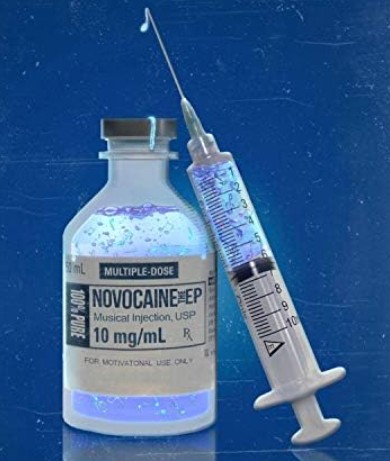
Novocaine belongs to the ester-type local anesthetics family, derived from para-aminobenzoic acid. It operates by inhibiting sodium ion influx through nerve cell membranes, thereby blocking the initiation and conduction of nerve impulses, which effectively numbs the targeted area without affecting consciousness. In veterinary contexts, this makes it invaluable for procedures requiring localized pain relief.
The compound typically appears as a hydrochloride salt in sterile aqueous solutions at concentrations of 0.5%, 1%, or 2%. For administration, veterinarians warm the solution to body temperature to minimize discomfort and enhance absorption. Dosages vary by species and procedure: large animals like horses may receive up to 500ml of 0.5% solution, while smaller ones like dogs are limited to around 100ml to avoid toxicity.
Beyond anesthesia, Novocaine exhibits antispasmodic and anti-inflammatory properties. It facilitates the dissolution of antibiotics, prolonging their therapeutic effects, and aids in treating conditions such as bronchial spasms, gastric ulcers, colic, myositis, and joint inflammations. Its rapid metabolism—hydrolyzed by plasma esterases—results in quick clearance, making it suitable for food-producing animals with minimal withdrawal times.
Veterinarians often combine Novocaine with other agents for synergistic effects. For instance, in obstetrics, it supports organ prolapse management or mastitis treatment in cattle. Its affordability and established safety profile keep it relevant despite newer alternatives.
Novocaine's versatility shines in diverse veterinary scenarios. In equine medicine, it performs infraorbital nerve blocks for periodic ophthalmia, using 0.5% solutions to alleviate eye pain without systemic side effects. For cattle, epidural injections of 5-10ml enable standing surgeries, escalating to 20ml for procedures requiring recumbency.
Surgical uses include infiltration anesthesia for wound suturing, laceration repairs, and abscess drainages across dogs, cats, sheep, and pigs. In ophthalmology, parabulbar injections treat corneal ulcers or uveitis. Respiratory applications address bronchopneumonia through intramuscular routes, while abdominal issues like peritonitis benefit from diagnostic blocks.
Musculoskeletal applications cover myositis, arthritis, and tendinitis, often via perineural infiltration. In gynecology, it manages dystocia or uterine prolapse. Poultry and exotic animals employ it for minor interventions, always scaled to body weight. Maximum safe doses—such as 400ml for cattle or 15ml/kg for pigs—prevent convulsions or respiratory depression.
Its role extends to diagnostics: nerve blocks confirm lameness sources in horses. Combined with sedatives, it enhances safety in field conditions. Historical use since the 1930s underscores its reliability, with modern protocols refining techniques for efficacy.
Direct consumer access to Novocaine remains heavily regulated worldwide. In the United States, it falls under the FDA's prescription-only veterinary drugs, requiring a licensed veterinarian's order. The European Union mirrors this via EMA guidelines, classifying procaine as a controlled substance to prevent misuse in doping or illegal euthanasia.
China, a major producer, enforces GMP standards for export but restricts retail sales to professionals. Online platforms and pharmacies verify credentials, blocking unauthorized buys. A 2019 UK shortage highlighted vulnerabilities, forcing clinics to delay surgeries and compromise welfare due to supply chain disruptions.
Individuals risk legal penalties for unlicensed possession, alongside health dangers from improper storage or dosing. Wholesalers and brands bypass hurdles through B2B channels, sourcing bulk APIs or finished products compliant with import laws like those from the FDA or equivalent bodies.
Regulatory bodies monitor residues in meat and milk, but Novocaine's short half-life (under 1 minute in plasma) ensures zero withdrawal periods in many jurisdictions, supporting its livestock appeal.
While safe when dosed correctly, Novocaine carries risks. Overdosage triggers central nervous system excitation—tremors, seizures—followed by depression, hypotension, and bradycardia. Intravenous administration demands slow infusion to mitigate cardiovascular strain.
Contraindications include hypersensitivity to ester anesthetics, concurrent sulfonamide therapy (Novocaine inhibits their action), and states like shock or anemia where perfusion is compromised. Allergic reactions, though rare (1 in 10,000), manifest as urticaria or anaphylaxis, necessitating epinephrine readiness.
Species-specific sensitivities vary: cats metabolize esters slowly, raising toxicity risks. Pre-anesthetic bloodwork identifies at-risk patients. Post-injection monitoring for methemoglobinemia or chondrotoxicity guides best practices.
Modern veterinary anesthesia favors amide-type agents for stability. Lidocaine boasts faster onset (2-5 minutes) and 1-2 hour duration, ideal for epidurals and intra-articular use. Bupivacaine extends to 3-8 hours, perfect for post-operative blocks in orthopedics.
Benzocaine excels topically for mucosal or wound analgesia, non-irritating at 1-20% gels. Articaine penetrates bone well for dental work in pets. Multimodal regimens pair locals with opioids, NSAIDs, or alpha-2 agonists, reducing doses and side effects.
Veterinary formularies recommend these for precision, though Novocaine persists in cost-sensitive regions.

China dominates global production of procaine and benzocaine APIs, exporting 80% of supply. Factories like those at supplybenzocaine.co.uk offer GMP-certified powders (99%+ purity) from 1kg MOQs, alongside custom solutions, tablets, or injectables.
These biotech specialists serve international brands in pharma, health, and devices, providing OEM/ODM for private labeling. Advantages include scalable production (tons/month), rigorous QC (HPLC assays), and full documentation—COAs, MSDS, stability data—for seamless customs clearance.
Pricing competitiveness ($50-100/kg for procaine) undercuts Western suppliers by 40-60%. Innovations like liposomal encapsulations or sustained-release forms meet rising demands from pet humanization trends.
Engaging an OEM factory streamlines procurement:
1. Initial Consultation: Submit specs—concentration, volume, packaging.
2. Sample Production: Receive 50-500g prototypes for vet testing.
3. Formulation Development: Customize stability, sterility, or blends (e.g., procaine-lidocaine).
4. Pilot Batch: Validate scale-up under cGMP.
5. Full Production: Ramp to commercial volumes with batch tracking.
6. Logistics: DDP shipping, regulatory filings.
Lead times average 4-6 weeks, with 24/7 support. Case studies show US wholesalers slashing costs 40% while ensuring supply continuity.
Advancements include nano-formulations for targeted delivery, reducing systemic exposure. mRNA-vaccine adjuvants incorporate locals for painless immunization. Wearable infusion pumps automate equine blocks.
Sustainability drives green synthesis, minimizing solvents. AI-optimized dosing apps enhance precision. Global market growth (8% CAGR) fuels OEM investments.
A European equine clinic sourced 0.5% Novocaine post-shortage, performing 200+ blocks annually without incident. An Asian wholesaler OEM'd benzocaine sprays, expanding to 10 markets. US livestock brands integrated procaine in antibiotic combos, boosting efficacy 25%.
Novocaine remains a cornerstone of animal anesthesia, offering proven efficacy despite regulatory and supply challenges. For brands and wholesalers, partnering with reliable OEM factories like supplybenzocaine.co.uk unlocks custom, high-purity procaine and benzocaine solutions—scalable, compliant, and cost-effective. Elevate your veterinary product line today: contact us for free quotes, samples, or consultations. Visit supplybenzocaine.co.uk or email [email protected] to start your partnership and ensure uninterrupted animal care excellence. Contact us to get more information!
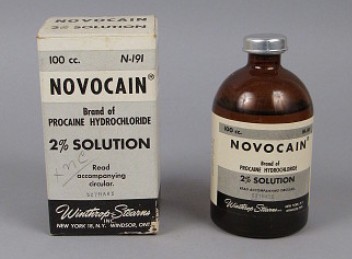
Novocaine proves safe across species like horses, cattle, dogs, cats, and pigs when adhering to species-specific maximum doses, such as 500ml for horses or 100ml for dogs in 0.5% solutions. Avoid in cases of shock, sulfonamide therapy, or ester hypersensitivity to prevent toxicity or antagonism.
Yes, specialized OEM providers like supplybenzocaine.co.uk produce custom powders, injectables, or blends at 99%+ purity with concentrations tailored to your needs, complete with COA and GMP certification for global export.
Procaine qualifies as prescription-only in regions like the US (FDA) and EU (EMA); brands import via OEM with export certificates, stability data, and compliance filings to navigate customs seamlessly.
Novocaine suits injectable nerve blocks and infiltration with 30-60 minute duration, while benzocaine excels in topical applications for wounds or mucosa; both available via OEM for versatile formulations.
Side effects remain rare at proper doses, with no meat/milk withdrawal required due to rapid metabolism; incompatibilities arise with sulfonamides, and overdose risks excitation—always vet-supervised.
1. http://biohimfarm.ru/en/obcheukrepl_r/novocaini0512/
2. https://www.supplybenzocaine.co.uk
3. https://zoofarmagro.md/en/product/6729-novocaine_solution_05
4. https://www.supplybenzocaine.co.uk/where-to-buy-benzocaine-powder.html
5. https://en.loopyvet.com/product/novokainu-rozchin-05-50-ml/
6. https://pharmaoffer.com/zh-CN/api-excipient-supplier/local-anesthetics/benzocaine
7. https://homelabvet.com/product/novocaine-amp-0-5ml-10-pcs-pack/
8. https://www.yeasen.com/products/detail/1957749927562522625
9. https://www.vox.com/future-perfect/2019/4/23/18511105/novocaine-shortage-pain-animal-cruelty-welfare
10. https://www.conscientia-industrial.com/project/benzocaine
Hot tags: Novocaine For Animals, Buy Novocaine Online, Veterinary Anesthesia, Local Anesthetic For Pets, Novocaine Injection For Dogs, Novocaine For Cats, Procaine Hydrochloride Veterinary Use, Animal Pain Management, Novocaine Dosage For Animals, Veterinary Medications Online