Content Menu
● Manufacturing Boric Acid: From Borates to Pure Acid
● How to Turn Boric Acid Into Boric Acid Flakes
>> The Science of Crystallization and Flake Formation
>> Step-by-Step Process for Producing Boric Acid Flakes
● Industrial Production of Boric Acid Flakes
>> Industrial Process Overview
● Advantages of Using Boric Acid Flakes
● Applications of Boric Acid Flakes
● OEM Supply and Custom Service
● Safety and Storage of Boric Acid Flakes
● Frequently Asked Questions (FAQ)
>> 1. How do boric acid flakes differ from boric acid powder or granules?
>> 2. Can I produce boric acid flakes at home from boric acid powder?
>> 3. What is the best way to store boric acid flakes?
>> 4. Are boric acid flakes safe to use and handle?
>> 5. Does converting boric acid into flakes change its chemical properties?
Boric acid, a versatile compound widely used in pharmaceuticals, medical devices, and industrial sectors, is commonly available in both granular and flake forms. Many manufacturers, wholesalers, and OEM partners around the globe favor boric acid flakes due to their distinct physical properties, which facilitate easier handling and better compatibility in formulations. In this comprehensive article, we will explore how boric acid in its powdered or granular state can be transformed into boric acid flakes. We will discuss the scientific principles, industrial procedures, practical considerations, and applications relevant for biotech, medical health, and medical device industries, all of which can greatly benefit from understanding this conversion process.
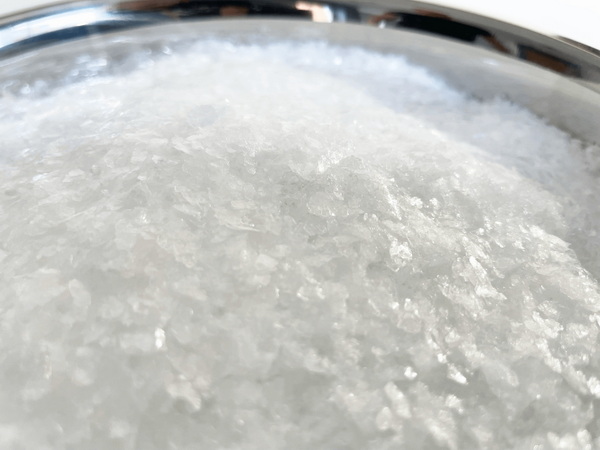
Boric acid (H₃BO₃) is a white, crystalline solid that exhibits weak acidic properties. It occurs naturally in minerals such as borax and can be industrially produced and purified to meet the requirements of different sectors including pharmacology, industrial manufacturing, flame retardants, and more. Boric acid's chemical stability, non-toxicity (in controlled amounts), and antiseptic properties have made it a useful ingredient in medical, cosmetic, and industrial applications.
- Chemical formula: H₃BO₃
- Physical state: White, odorless crystalline powder or flakes
- Solubility: Soluble in water (greater solubility at higher temperatures)
- Common applications: Antiseptics, buffers, preservatives, flame retardants, ceramics, and more
The industrial production of boric acid typically starts from borate minerals such as borax (sodium tetraborate decahydrate). The borax undergoes acid hydrolysis by reacting with mineral acids, commonly hydrochloric acid. This produces boric acid, sodium chloride (table salt), and water.
The chemical reaction can be expressed as:
Na₂B₄O₇·10H₂O + 2HCl → 4B(OH)₃ + 2NaCl + 5H₂O
This process yields a boric acid solution, which is further purified and crystallized to form the desired solid products—either as powder, granules, or flakes.
The key to converting boric acid powder or granules into flakes lies in the crystallization process. Boric acid flakes are thin, plate-like crystals formed by slowly crystallizing boric acid from solution under controlled temperature, cooling, and drying conditions.
1. Dissolution: Start by dissolving boric acid powder or granules in hot water. Boric acid has much greater solubility at elevated temperatures, enabling the preparation of a saturated solution.
2. Filtration: Optionally, filter the hot solution to remove any insoluble impurities or foreign particles, ensuring the final flakes are pure and uniform.
3. Controlled Cooling: Cool the solution slowly and steadily. The slow decrease in temperature encourages large, well-defined boric acid crystals to form. Rapid cooling tends to produce small powdery crystals rather than flakes.
4. Evaporation and Flake Development: Promote gradual evaporation from the solution. Evaporation causes water to leave the system, subsequently causing boric acid to crystallize out onto surfaces such as glass plates, stainless steel trays, or crystallizing bowls in thin layers.
5. Harvesting the Flakes: As thin boric acid plates form on the surfaces, gently collect them by scraping or peeling.
6. Drying: Dry the flakes using a warm but not excessively hot environment (temperatures below 170°C) to remove residual moisture without decomposing the boric acid.
This method results in thin, uniform flakes rather than irregular powders or granules. Flake thickness, size, and purity can be tailored by carefully adjusting temperature gradients, evaporation rate, and drying conditions.
In large-scale manufacturing, continuous crystallizers and advanced drying chambers optimize the production of boric acid flakes for OEM and industrial use.
- Raw Material Preparation: Borates are dissolved into aqueous solutions and neutralized as needed.
- Clarification: The solution is filtered and purified to remove impurities.
- Controlled Crystallization: Sophisticated equipment controls temperature and evaporation rates, maximizing flake formation.
- Mechanical Harvesting: Flakes are separated from the solution by mechanical means such as rotary scrapers or belt filters.
- Drying: Flakes are dried under carefully controlled conditions to maintain quality.
- Quality Assurance: Consistent particle size, moisture content, and purity undergo strict monitoring to meet client specifications.
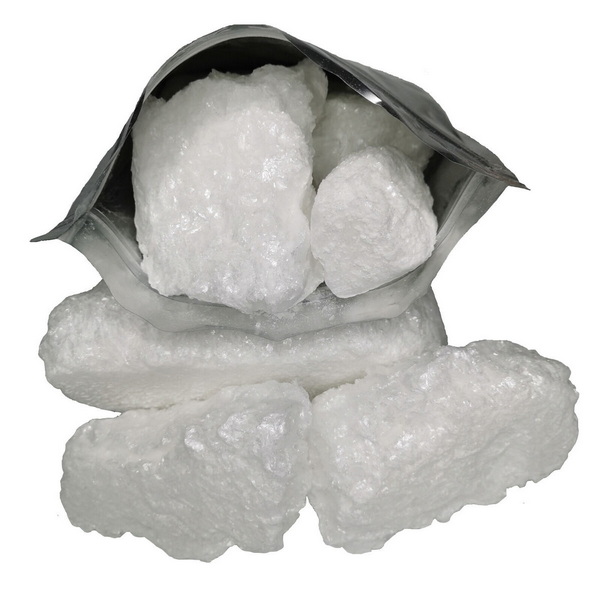
Choosing boric acid flakes over powders or granules offers several practical benefits:
- Reduced Dust and Improved Safety: Flakes create fewer airborne particles during handling, significantly reducing inhalation hazards.
- More Uniform Dissolution: Flakes dissolve evenly and predictably, which benefits precision manufacturing processes in pharmaceuticals and cosmetics.
- Reduced Caking and Clumping: Due to their morphology and larger size, flakes resist moisture-induced clumping better than powder.
- Ease of Packaging and Handling: Less dust means cleaner, safer storage and transport environments.
The unique physical characteristics and consistent quality of boric acid flakes make them highly sought after in diverse applications, including:
- Medical and Pharmaceutical Uses: Used as antiseptics, preservatives, pH buffers, and excipients in wound care, ophthalmic solutions, and topical pharmaceuticals.
- Medical Devices: Incorporated into sterilization procedures, wound dressings, and hygiene products.
- Industrial and Chemical Manufacturing: Utilized in producing fiberglass, ceramics, flame retardants, and lubricants.
- Agricultural Sector: Applied as micronutrient supplements or pest control agents.
We are a professional manufacturer specializing in the research, production, and international supply of boric acid and related products. Our factory offers:
- A reliable and stable supply chain, ensuring timely delivery worldwide.
- Customizable specifications, including flake size, thickness, and packaging tailored to client needs.
- Rigorous quality controls backed by certificates such as COA and MSDS relevant for regulatory compliance.
- Comprehensive technical support and consultation services for OEM and brand clients aiming to enhance their product portfolio.
Proper handling and storage ensure the longevity and safety of boric acid flakes:
- Store flakes in sealed, moisture-proof containers to prevent caking.
- Avoid exposure to strong acids, bases, and excessive humidity.
- Use appropriate protective equipment (gloves, masks) when handling the flakes, particularly in industrial environments.
- Follow local safety regulations and use MSDS guidance to maintain workplace safety.
The transformation of boric acid powder or granules into boric acid flakes is a carefully controlled process that involves dissolution, crystallization, evaporation, and drying steps. The unique crystalline structure of flakes enhances their usability by improving handling safety, dissolution uniformity, and storage stability, making them the preferred form in pharmaceutical, medical, industrial, and agricultural sectors. With professional equipment and expertise, producing high-quality boric acid flakes at scale is entirely feasible, allowing OEM customers and partners to benefit from customized products that enhance their operational capabilities.
Interested in sourcing or developing your own boric acid flakes with guaranteed quality and service? Contact us today to discuss your project requirements, request samples, or explore OEM opportunities. Let us be your trusted partner in bio-health and chemical innovation!
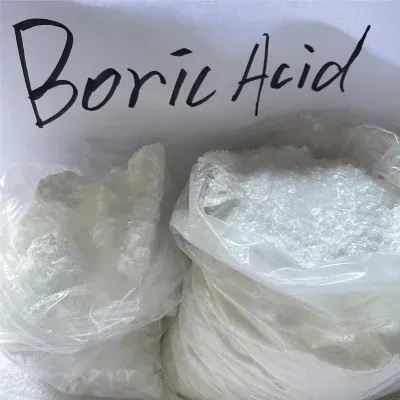
Boric acid flakes are thin, flat crystals formed through slow crystallization and evaporation, whereas powder and granules are more irregular and dusty particles. Flakes provide safer handling, less dust generation, and superior dissolution performance.
Yes, by dissolving powder in hot water and allowing the solution to cool and evaporate slowly on a flat surface, you can produce flakes. However, this method yields small quantities and lacks the precision and purity of industrial processes.
Store them in airtight, moisture-proof containers in a cool, dry place away from strong acids or bases. Industrial packaging often uses sealed drums or laminated bags to preserve quality during shipment and storage.
When handled properly with gloves and dust masks in industrial contexts, boric acid flakes are considered safe. They are widely used in pharmaceutical products, but it is important to follow safety data sheet (MSDS) guidelines and local regulations.
No, the chemical composition of boric acid remains the same. The flake form changes only the physical morphology, which influences handling and dissolution characteristics but not chemical efficacy.