Content Menu
● How to Make Boric Acid Into Flakes
>> Laboratory-Scale Recrystallization Method
>>> Step 1: Dissolution of Boric Acid
>>> Step 3: Collection of Flakes
>>> Step 4: Drying
>> Industrial-Scale Production of Boric Acid Flakes
>>> 1. Extraction and Leaching of Boron Ores
>>> 2. Controlled Crystallization
>>> 5. Packaging
● Why Are Boric Acid Flakes Preferred?
● Common Applications of Boric Acid Flakes
● Additional Considerations for Quality and Safety
● Frequently Asked Questions (FAQ)
>> 1. What is the difference between boric acid flakes and powder?
>> 2. Can I make boric acid flakes at home?
>> 3. What are the main uses of boric acid flakes?
>> 4. How should boric acid flakes be stored?
>> 5. How do I order OEM or bulk boric acid flake supply?
Boric acid flakes are a highly sought-after chemical product used in pharmaceuticals, medical devices, industrial manufacturing, pest control, and numerous other sectors worldwide. Characterized by their purity, pearly-white, fish-scale-like crystalline form, and ease of handling, boric acid flakes offer unique benefits over granular or powdered forms. This comprehensive guide explains how boric acid is processed and transformed into flakes, combining both laboratory and industrial perspectives, and answers essential questions to help you understand, source, and use this versatile material.
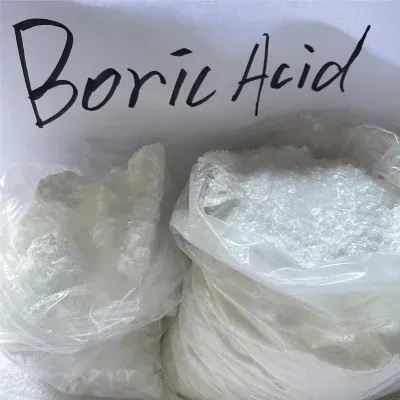
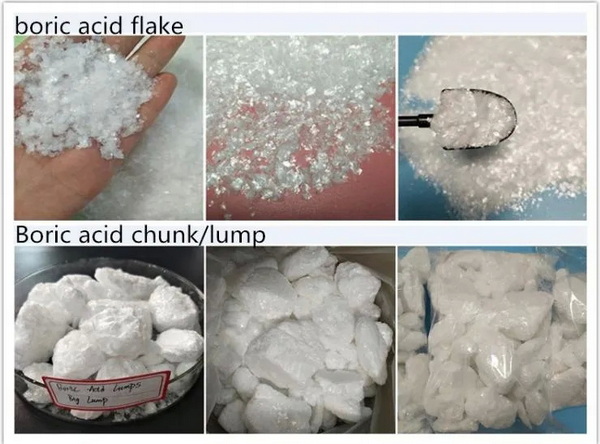
Boric acid (chemical formula H₃BO₃) in flake form appears as translucent, flaky crystals, often ranging between 3 and 9 mm in size. These flakes boast a high purity (often 99.9%), have a melting point around 169°C, and are almost odorless and tasteless.
Key characteristics include their fish-scale or pearly appearance, easy solubility in water, stable storage with long shelf life, mildly acidic and non-volatile nature, and environmentally friendly low toxicity. These features make boric acid flakes a preferred form for various applications that require precise dosing and easy handling.
The laboratory method to convert boric acid powder into flakes focuses on recrystallization, a process where boric acid is dissolved and then allowed to reform as crystalline flakes under controlled conditions:
First, weigh the desired amount of boric acid powder (for example, 40 grams). Place the powder into a beaker containing deionized water at a concentration suitable for effective dissolution, typically about 23 grams of boric acid per 100 milliliters of hot water. Heat the mixture gently on a hotplate, gas burner, or in a microwave until the boric acid completely dissolves. Use a watch glass or similar cover to prevent splashing during heating.
After complete dissolution, allow the solution to cool slowly to room temperature. Then, place the container in a freezer to encourage the formation of stable, sizable boric acid flakes. Slow cooling is critical for well-formed flakes; rapid cooling tends to produce smaller, less pure crystals. Within hours, translucent, white, fish-scale-like boric acid crystals will precipitate and settle along the container's bottom and walls.
Once crystals have formed, gently break up any clumps with a glass rod or similar tool without crushing the flakes. Use vacuum filtration or a fine sieve to collect the flakes. Rinse the crystals lightly with cold water to remove any remaining mother liquor, taking care not to dissolve the delicate flakes by overwashing.
Spread the collected flakes evenly on a non-stick surface such as parchment paper or glass trays. Dry the flakes at room temperature for several hours or place them in an oven set below 170°C to prevent decomposition of boric acid. Proper drying results in firm, pearly, and easy-to-handle boric acid flakes.
Industrial processes focus on mass production with consistent quality, purity, and crystal size, using ore-derived raw materials and more complex equipment.
Raw materials such as colemanite, ulexite, or borax are mined and crushed. These ores undergo chemical leaching with mineral acids like sulfuric acid inside reactors to extract boron as boric acid or borate solutions. The resulting solution then moves through thickening tanks to remove suspended solids.
The clarified borate solution is transferred to special crystallizers where temperature decrease and evaporation cause boric acid crystals to precipitate out. Parameters such as cooling rate, solution concentration, and residence time are tightly regulated to create large, uniform “fish-scale” crystals. Large batch volumes allow continuous crystal growth, maximizing yield.
Harvested crystals contain residual impurities and mother liquor. These are removed by washing with clean water, eliminating sulfate ions and other impurities. Afterwards, crystals are dewatered using vacuum filters, centrifuges, or rotary drum filters to reduce moisture content to approximately 20%.
Wet crystal masses are spread on conveyor belts or drying trays and dried with controlled hot air below 120°C. Drying below critical temperature prevents chemical decomposition or caking of flakes. Rollers and mixers break down agglomerates, and industrial sieves separate flakes by size, typically 3–9 mm, while removing fines under 1 mm.
Once dried and cooled to below 40°C, flakes are packed in moisture-proof containers for storage and shipment. Packaging is customized to customer specifications, including bulk bags, cartons, or OEM labeling for international brands.
Boric acid flakes present several advantages over powders or granular forms:
- Consistent dosing: Flakes have uniform shape and size, facilitating precise measurement.
- Reduced dust: Lower airborne dust improves safety and cleanliness during handling.
- Improved solubility: Flakes dissolve in water more predictably than irregular powder.
- Aesthetic appeal: The pearly, fish-scale appearance is favored in industrial and medical uses.
- Ease of handling: Flakes flow better and are less prone to clumping than powders.
These properties make flakes particularly suitable for sensitive applications such as pharmaceuticals, electronics manufacturing, and pesticide formulation.
Boric acid flakes are versatile and widely applied across multiple industries:
- Pharmaceuticals & Medical Use: Used in eye washes, antiseptic powders, wound care products, and pH buffers. Their purity and mild acidity make them safe for topical applications.
- Industrial Manufacturing: Employed as flux agents in metallurgy and soldering, glass and ceramic production aids, and in electronics for insulation and flame retardant materials.
- Pest Control: Ingredient in insecticides due to boric acid's effectiveness against ants, cockroaches, and termites.
- Laboratory Reagent: Used in buffer solutions, flame color tests, and crystal growth experiments.
- Household Products: Incorporated into foot powders, cleaning agents, and mildew prevention formulations.
Boric acid flakes intended for pharmaceutical or food-grade use must meet stringent purity standards, often exceeding 99.9%, to avoid contaminants that could compromise product safety. Industrial grades allow for slightly lower purity but still require consistent chemical composition.
Boric acid flakes are stable under normal conditions but should be stored in airtight containers away from moisture and incompatible chemicals. Exposure to moisture can cause clumping or dissolution of flakes; thus, dry conditions are essential. Keep out of reach of children and pets to avoid accidental ingestion.
Boric acid is considered relatively low in toxicity and environmentally friendly compared to other industrial chemicals. However, excessive release into water systems should be avoided, as boron compounds can affect aquatic organisms at high concentrations.
Boric acid flakes represent an effective and precisely engineered chemical form ideal for medical, industrial, and consumer product applications. Whether produced in the laboratory or at scale, the process focuses on achieving high purity, large shiny crystals with the classic “fish-scale” appearance, and safe, residue-free handling. Their unique characteristics enable consistent dosing, reduced dust, and improved solubility, making them invaluable in pharmaceutical formulations, manufacturing, pest control, and scientific research.
If your brand or manufacturing business requires a reliable, experienced supplier of boric acid flakes—including tailored purity or granule sizes—contact us today for a consultation and OEM service. Partner with an expert in chemical production for dependable delivery and top-quality materials.
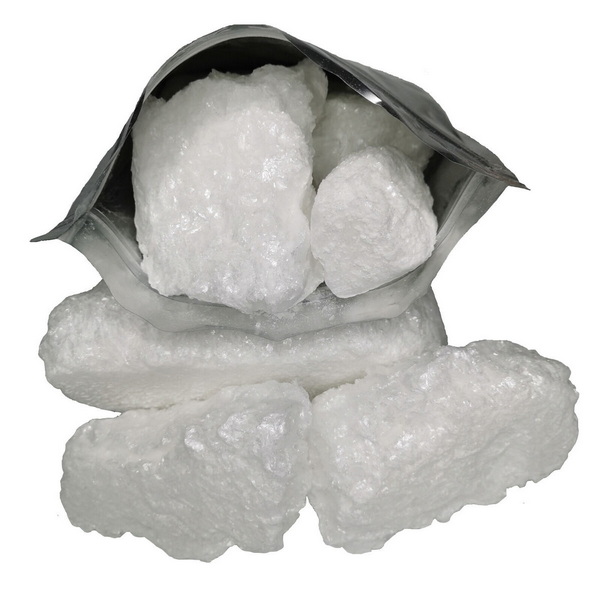
Boric acid flakes are larger, fish-scale shaped crystals typically 3–9 mm in size with minimal dust and enhanced handling properties. In contrast, boric acid powder is finely ground, dustier, and less visually distinctive.
Yes, by dissolving boric acid powder in hot water and carefully cooling the solution, you can recrystallize boric acid into flakes. However, producing industrial-grade flakes with consistent size and purity requires advanced equipment and quality control.
They are widely used in pharmaceuticals as antiseptics and eye washes, in pest control as an insecticide, in industrial manufacturing for glass, ceramics, and electronics, and in laboratories as reagents and flame colorants.
Store flakes in airtight containers, away from moisture and strong oxidizers, at room temperature. Keep out of the reach of children and pets. Proper storage ensures a long shelf life.
Contact our sales team with your specifications for purity, size, packaging, and quantity. We offer customized OEM solutions and global shipping tailored to your branding and production needs.