Content Menu
>> Lidocaine Hydrochloride (HCl)
>> Lidocaine Base (Free Base Form)
>>> Why Convert Lidocaine to HCl?
>> Healthcare
● Solubility and Formulation Insights
● Compounding, Customization, and Advanced Uses
● Industrial and OEM Considerations
>> Bulk Manufacturing & Global Supply
● Mechanism of Action and Clinical Considerations
● Market Advantages for OEM and Bulk Buyers
● Frequently Asked Questions (FAQ)
>> 1. What is the chemical difference between lidocaine base and lidocaine HCl?
>> 2. Why would a manufacturer request lidocaine base instead of HCl?
>> 3. Are there regulatory differences in handling the two forms?
>> 4. Can lidocaine base be injected?
>> 5. What are common OEM customization options?
Lidocaine, a cornerstone in both medical and industrial sectors, is revered globally for its proven efficacy as a local anesthetic and antiarrhythmic agent. However, a common question for buyers, manufacturers, and product developers—especially those exploring customized solutions or OEM partnerships—is: Does lidocaine exist in a form other than hydrochloride (HCl)? This comprehensive article dives deep into the nature and dynamics of both lidocaine free base and HCl forms, covering their chemical properties, applications, regulatory frameworks, compounding considerations, and implications for OEM and B2B channels, all structured to provide actionable insights for industry stakeholders.[1][2][3]
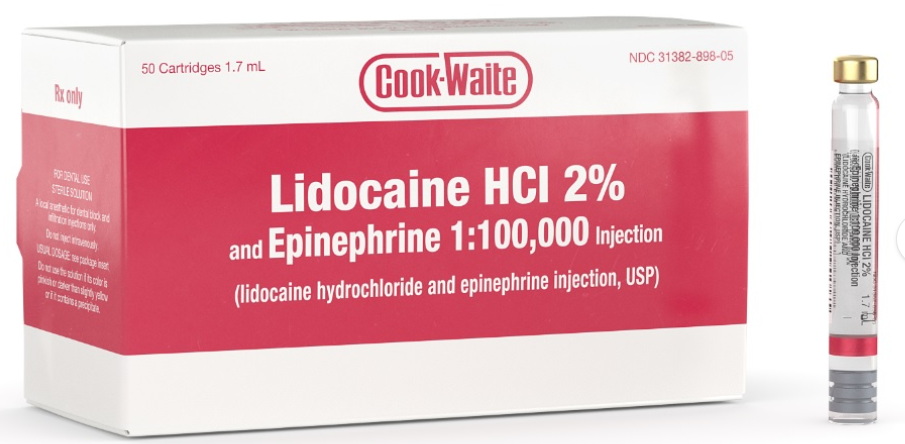
Lidocaine is a member of the amide-type local anesthetics, first synthesized in the mid-20th century. It quickly replaced older agents due to its broader safety margin and versatile applications. Today, lidocaine is employed not just in healthcare for local and regional anesthesia, but also in veterinary care, dental applications, industrial processes, and specialty compounded products.[4][1]
- Physical properties: White, crystalline powder; highly soluble in water.[2]
- Usage scenarios: Injectables, topical gels, intravenous infusions, medical sprays, and irrigations.[5][6][3]
- Pharmaceutical compatibility: Easily incorporated into water-based formulations; rapid onset for nerve blockade and surface anesthesia.
- Physical properties: White crystalline solid; soluble in oils and alcohol, not in water.[3][2]
- Usage scenarios: Lipophilic creams, ointments, transdermal patches, specialty adhesives, and cosmetic formulations.
- Compounding advantage: Compatible with oil-based carriers, ideal for tailored pharmaceutical or cosmetic products.[7]
Lidocaine's base form is non-ionized and lipophilic, ideal for fat-soluble formulas requiring deep skin penetration. However, transforming it into the HCl salt form yields a hydrophilic compound compatible with aqueous vehicles, greatly expanding its applications for injections and water-based topicals.[5][2][3]
Lidocaine HCl is FDA-approved for a wide array of applications, including:
- Local and regional anesthesia for surgeries, dental work, and minor procedures.[6][1]
- Topical anesthetic in skin creams, gels, and patches for immediate nerve pain relief, especially postherpetic neuralgia (shingles).[8][9]
- Intravenous use for treating acute ventricular arrhythmias in emergency medicine and post-surgical cases.[1][5]
Lidocaine base, while less frequently encountered in hospitals, finds its niche in compounded creams and ointments that demand fat solubility for effective dermal absorption.[7]
Major industries—ranging from pharmaceuticals to personal care—routinely source both lidocaine HCl and lidocaine base for large-scale production:
- Bulk supply: Chinese and global suppliers offer flexible procurement options to accommodate high-volume buyers.[10]
- Customization: Pharmaceutical companies and compounding pharmacies can request tailored forms and purity grades to fit specific application needs.
- Veterinary uses: Both forms are used by veterinarians for nerve blocks and localized procedures in animals.[4]
- Outstanding in water-based and injectable mediums due to high solubility.
- Preferred for hospital and clinical settings where aqueous stability and sterility are critical.
- Incompatible with certain anionic polymers in suspension, though generally more stable at low pH.[11]
- Indispensable for oil-based, alcohol-based, or eutectic preparations.
- Used by compounding pharmacists in customized pain creams, especially when creating eutectic blends for enhanced dermal absorption.[7]
- Must remain suspended—not dissolved—when included in water vehicles, creating unique formulation challenges for chemists.[11]

Specialized compounding frequently employs both lidocaine base and HCl:
- Eutectic mixtures: Lidocaine base can be combined with other anesthetic bases (e.g., benzocaine, tetracaine) to lower collective melting points, forming viscous liquids ideal for topical anesthetic gels.[7]
- Stability considerations: Certain compounding bases only tolerate specific loads of HCl salt or free base, and switching forms is sometimes the key to optimal product performance and shelf life.[7]
- Patient-tailored formulations: Compounding pharmacists select the form based on solubility, intended use, and possible stability or compatibility issues with other ingredients.
With China as a leading exporter, international buyers and brands can access lidocaine in both HCl and base forms. Buyers must consider:
- MOQ (Minimum Order Quantity) and bulk pricing which vary by supplier, formulation, and regulatory destination.[10]
- Packaging: Industrial and medical packaging tailored to meet export and safety standards.
- Documentation: COA, MSDS, GMP/ISO certificates, and regulatory paperwork for market entry.
- Lidocaine base is not classified as a controlled substance in many countries, but its handling and use must comply with pharmaceutical regulations and relevant safety standards.[12]
- In Europe, the US, and China, both forms have well-established acceptance for medical, cosmetic, and veterinary applications, provided supporting documentation is in order.[12]
- The regulatory difference often centers on product end use, permissible concentrations, and labeling.[13][12]
- Choose pharmaceutical-grade lidocaine base or HCl, meeting international standards.
- Request validated purity, stability studies, and batch traceability.
- Ensure suppliers have proven track records, proper certification, and responsive technical support.
Lidocaine blocks voltage-gated sodium channels on nerve membranes, inhibiting signal transmission and providing its rapid-onset anesthetic effect. The HCl form, being more soluble, is often favored for applications requiring quick absorption and action.[3][1]
In certain patient populations, such as those allergic to specific excipients or requiring atypical formulations, lidocaine base may be preferred for safer, more effective outcomes. OEM and B2B customers should understand that the form chosen can significantly impact both product safety and clinical performance.[3][7]
By sourcing both non-HCl (base) and HCl forms, manufacturers and distributors can:
- Address a broader spectrum of global market needs.
- Offer tailored products—oily, water-based, gels—for multiple end use cases.
- Differentiate as a full-service supplier for brands, clinics, and compounding pharmacies worldwide.
In summary, lidocaine does exist in a non-HCl form, known as lidocaine free base—a valuable option for specialty formulations, compounding, and OEM development. While lidocaine HCl dominates aqueous and injectable applications, the free base expands opportunities in topical, oil-based, and specialty pharmaceutical products, especially where solubility and compatibility are crucial. For global buyers and industrial partners, the versatility to supply both forms—backed by stringent standards and expert support—ensures a stronger competitive position in the international marketplace.
If you're looking for a trusted partner to supply lidocaine HCl or base in custom bulk, certified grades, and tailored packaging, contact our technical consultants at supplybenzocaine.co.uk for a strategic sourcing solution that fits your product vision and market requirements.

Lidocaine base is the non-ionized, fat-soluble form, while lidocaine HCl is its water-soluble hydrochloride salt, preferred for injectables and most creams.[2][3]
Oil-based topicals, adhesives, and certain compounded creams require the base due to its unique solubility, which allows for deeper skin penetration and eutectic gel formation.[7]
Generally, both are permitted for pharmaceutical and industrial use if documentation standards are met, but labeling, handling, and permissible concentrations can vary by region.[13][12]
No. Lidocaine base's insolubility in water makes it unsuitable—and unsafe—for injection; only the HCl salt form is used for parenteral formulations.[2][3]
Buyers can specify form (base or HCl), purity, packaging, and certifications. OEM suppliers often accommodate white-labeling, bulk quantities, and regulatory paperwork to speed up international market access.[10]
[1](https://www.ncbi.nlm.nih.gov/books/NBK539881/)
[2](https://www.chemicalbook.com/article/what-is-the-difference-between-lidocaine-and-lidocaine-hydrochloride.htm)
[3](https://www.pccarx.com/Blog/lidocaine-vs-lidocaine-hci3)
[4](https://en.wikipedia.org/wiki/Lidocaine)
[5](https://go.drugbank.com/drugs/DB00281)
[6](https://www.mayoclinic.org/drugs-supplements/lidocaine-injection-route/description/drg-20452273)
[7](https://www.pccarx.com/Blog/2-tips-for-compounding-with-lidocaine-and-lidocaine-hcl)
[8](https://www.mayoclinic.org/drugs-supplements/lidocaine-topical-application-route/description/drg-20072776)
[9](https://www.nhs.uk/medicines/lidocaine-skin-cream/about-lidocaine-skin-cream/)
[10](https://www.made-in-china.com/products-search/hot-china-products/Factory_Supply_Lidocaine.html)
[11](https://magis-pharma.be/en/question/which-cases-should-lidocaine-hcl-be-replaced-lidocaine-base)
[12](https://moehs.com/wp-content/uploads/2021/07/EN__LIDOCAINA-BASE000137-58-6.pdf)
[13](https://www.hmpgloballearningnetwork.com/site/thederm/article/7737)
[14](https://www.empowerpharmacy.com/compounding-pharmacy/topical-numbing-ointment/)
[15](https://academic.oup.com/asj/article/32/4/495/350514)
[16](https://patents.google.com/patent/CN112521298A/en)
[17](https://www.youtube.com/watch?v=RMxI773bWK4)
[18](https://pubchem.ncbi.nlm.nih.gov/compound/Lidocaine)
[19](https://medlineplus.gov/druginfo/meds/a682701.html)
[20](https://www.medicaid.nv.gov/Downloads/provider/Lidocaine_2021-09.pdf)
[21](https://my.clevelandclinic.org/health/drugs/19854-lidocaine-skin-cream-or-ointment)
[22](https://www.thermofisher.com/order/catalog/product/J63035.14)
[23](https://www.accessdata.fda.gov/drugsatfda_docs/anda/2011/040837Orig1s000.pdf)
[24](https://www.ncbi.nlm.nih.gov/books/NBK560339/)
[25](https://curistrelief.com/products/wholesale-lidocaine-cream-bulk)
Hot tags: Lidocaine Non HCL, Lidocaine Free Base, Lidocaine Hydrochloride, Lidocaine Alternatives, Lidocaine Uses, Lidocaine Injection, Lidocaine Properties, Lidocaine Side Effects, Lidocaine Mechanism, Lidocaine Dosage Forms