Content Menu
● Introduction to Procaine Hydrochloride
● Raw Materials Used in Synthesis
● Detailed Step-by-Step Synthesis Process
>> 1. Esterification: Creating the Procaine Base
>> 2. Purification of the Crude Ester
>> 3. Alternative Synthetic Route: Hydrogenation of p-Nitrobenzoic Acid Ester
>> 4. Formation of Procaine Hydrochloride Salt
>> 5. Crystallization of Procaine Hydrochloride
>> 6. Quality Control and Analysis
● Industrial Considerations and Safety
● Summary
● Frequently Asked Questions (FAQ)
>> 1. What raw materials are required for procaine synthesis?
>> 2. Why is procaine converted into its hydrochloride salt?
>> 3. What is the role of crystallization in the process?
>> 4. Can procaine be synthesized starting from p-nitrobenzoic acid?
>> 5. How is product quality ensured in manufacturing?
Procaine Monohydrochloride, also known as procaine hydrochloride, is a widely used local anesthetic effective for various medical and dental applications. Because of its utility and safety profile, it remains essential in pharmaceuticals. This compound is synthesized through a carefully controlled chemical process that transforms basic raw materials into a high-purity, stable pharmaceutical ingredient. This article will provide a detailed, beginner-friendly explanation of the synthesis process, focusing on the industrial manufacturing method with a step-by-step guide.
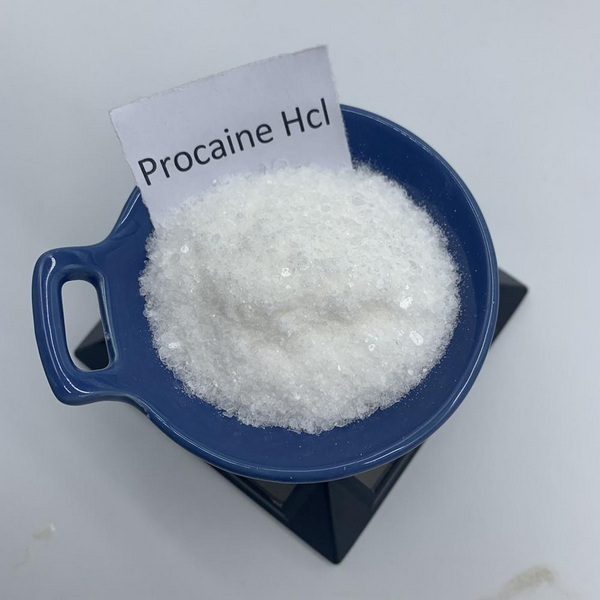
Procaine Hydrochloride is the hydrochloride salt of procaine, a compound first synthesized to provide local anesthesia without the severe side effects of earlier anesthetics. The salt form increases the drug's solubility in water and enhances its stability for storage and administration. Mechanistically, procaine works by blocking sodium ion channels in nerve cells, preventing the transmission of pain signals to the brain.
The synthesis of Procaine Monohydrochloride starts with several essential raw materials:
- 4-Aminobenzoic acid (PABA): This aromatic compound provides the benzoic acid framework for procaine.
- 2-(Diethylamino)ethanol: This alcohol contains an amino group crucial for the molecule's anesthetic properties.
- Hydrochloric acid (HCl): Used to convert the free base procaine into its hydrochloride salt form.
- Solvents: Distilled water, isopropanol, and sometimes xylene or butyl acetate for reaction and crystallization steps.
- Entrainer solvents: These facilitate removal of water by azeotropic distillation to improve product purity.
This initial and central chemical reaction is an esterification—where the carboxylic acid group of PABA reacts with the hydroxyl group of 2-(diethylamino)ethanol to form an ester linkage.
- Combine stoichiometric amounts of 4-aminobenzoic acid and 2-(diethylamino)ethanol in a reaction vessel.
- Heat the mixture gradually to approximately 140 to 145°C to promote reaction under reflux.
- Throughout the process, continuously remove the water formed during esterification using distillation techniques; this shifts the reaction equilibrium towards completion.
- Maintain the reaction for about 8 hours to ensure productive conversion.
- After completion, slowly cool the mixture before proceeding to purification.
Following esterification, the crude product mixture contains procaine alongside unreacted materials and by-products.
- Recover and separate solvents such as xylene or other reaction solvents by vacuum distillation.
- Filter the crude solid to remove insoluble impurities.
- Wash the solid product thoroughly with distilled water or suitable solvents to improve purity.
In some manufacturing processes, synthesis starts from p-nitrobenzoic acid rather than PABA. This route involves an additional hydrogenation step:
- Esterify p-nitrobenzoic acid with 2-(diethylamino)ethanol similarly as above.
- The nitro group is then reduced to an amino group via catalytic hydrogenation.
- Use nickel catalysts, operating at moderate temperatures (30–40°C) and elevated hydrogen pressures (around 3 atm).
- The hydrogenation converts the nitro ester into the amino ester (procaine base).
- This method allows production starting from nitro-substituted precursors.
The free base procaine is not sufficiently soluble or stable for pharmaceutical formulations; converting it to the hydrochloride salt addresses this:
- Dissolve purified procaine base in distilled water creating a clear solution.
- Slowly add diluted hydrochloric acid (approximately 10–20% concentration) under constant stirring.
- The salt forms immediately, producing a clear or slightly opalescent solution.
- This stage is carefully controlled for pH and temperature parameters to maximize yield.
Crystallization isolates and purifies the final product:
- Warm the solution to 35–40°C.
- Add an entrainer solvent such as isopropanol or butyl acetate strategically. This lowers water content and promotes crystal formation.
- Employ vacuum azeotropic distillation to reduce residual water content in the solution to less than 5–10%.
- Slowly cool the solution to near 0–5°C while stirring to encourage crystal nucleation and growth.
- Maintain the suspension to allow crystals to mature (typically 20 to 90 minutes).
- Finally, separate the crystals by filtration and dry them carefully to prevent decomposition.
Throughout the production process, stringent quality control ensures safety and efficacy:
- Use melting point measurement to check product purity and identity.
- Confirm chemical structure and purity by spectrometric techniques such as UV-Vis, IR, and NMR spectroscopy.
- Chromatographic methods like HPLC monitor residual impurities, unreacted materials, and by-products.
- Test residual solvents to meet pharmacopeial limits.
- Analyze particle size and morphology to ensure consistency in manufacturing batches.
- Stability testing over time ensures product shelf life and efficacy.
Operating an industrial synthesis of Procaine Monohydrochloride requires:
- Controlled reaction vessels with heating and distillation capabilities.
- Ventilation and solvent recovery systems to handle volatile organic compounds.
- Personnel trained in handling hazardous chemicals like hydrochloric acid and flammable solvents.
- Environmental controls for waste treatment and emissions compliance.
- Documentation and process monitoring to comply with Good Manufacturing Practice (GMP).
Procaine Monohydrochloride is synthesized through a multi-step reaction beginning from 4-aminobenzoic acid or alternatively p-nitrobenzoic acid. The process involves esterification, purification, salt formation, and crystallization to achieve a high-purity pharmaceutical ingredient. Quality control is integral to every stage of production to ensure compliance with medicinal standards.
For brand owners, wholesalers, and manufacturers seeking reliable OEM production of Procaine Monohydrochloride, partnering with experienced Chinese suppliers offering advanced manufacturing technology and strict quality protocols provides an efficient and cost-effective solution.
Contact us to inquire how our dedicated production facilities and R&D capabilities can meet your customized steroid pharmaceutical requirements with premium quality and prompt delivery.
The primary raw materials are 4-aminobenzoic acid (PABA) and 2-(diethylamino)ethanol, alongside hydrochloric acid and suitable solvents for reaction and purification.
Converting procaine to the hydrochloride salt increases its solubility and chemical stability, making it suitable for injectable formulations.
Crystallization purifies procaine hydrochloride, controls particle size, removes impurities, and provides the compound in a stable solid form.
Yes, an alternative method involves hydrogenation of the nitro derivative ester to the amino compound before subsequent processing.
Quality is controlled through analytical techniques such as melting point determination, chromatography, spectroscopy, and testing for residual solvents and impurities, following GMP standards.
Hot tags: Procaine Synthesis, Procaine Hydrochloride Preparation, Chemical Synthesis of Procaine, Procaine Monohydrochloride Recipe, Procaine Production Process, Local Anesthetic Synthesis, Procaine Chemical Reaction, Pharmaceutical Synthesis Techniques, Procaine Esterification Method, Procaine Hydrochloride Properties