Content Menu
● Lidocaine HCl: Pharmacology and Mechanism of Action
● Epinephrine: Pharmacological Utility
● Formulations: With and Without Epinephrine
● Clinical Applications and Comparative Benefits
>> Prolonging and Enhancing Local Anesthesia
>> Minimizing Intraoperative Bleeding
>> Lowering Systemic Side Effects
>> Effects on Soft Tissue and Lymphatic Function
● Differences in Concentration and Medical Efficacy
● Buffered vs. Non-Buffered Solutions
● Indications, Contraindications, and Warnings
● Injectable, Topical, and Specialized Forms
● Manufacturing, OEM, and Export Considerations
>> 1. What is the purpose of epinephrine in Lidocaine HCl injections?
>> 2. Are there risks associated with using epinephrine in injections?
>> 3. Can children safely receive lidocaine with epinephrine?
>> 4. How does epinephrine affect lymphatic or tissue healing?
>> 5. What should buyers look for in OEM or bulk lidocaine with epinephrine?
Lidocaine Hydrochloride (Lidocaine HCl) stands as one of the most frequently used local anesthetics worldwide in medical, dental, and veterinary fields. As both a cornerstone of clinical practice and a critical pharmaceutical product, its formulation can significantly affect performance, safety, and outcomes. One frequently asked question is whether Lidocaine HCl contains epinephrine, a vasoconstrictor often paired with anesthetics. Understanding why lidocaine is sometimes combined with epinephrine, and how it influences efficacy, safety, manufacturing standards, and patient care, is vital for healthcare professionals, buyers, and OEM partners.[1]

Lidocaine is a Class Ib antiarrhythmic and a powerful local anesthetic agent. It achieves anesthesia by blocking sodium channels in neuronal membranes, thus preventing pain signal transmission at the site of administration. Lidocaine is supplied mainly as an injectable solution, but also in topical creams, gels, and dental cartridges. Its rapid onset and moderate duration make it suitable for minor surgical and dental procedures, wound closure, biopsies, and as a component in pain management protocols.[2][1]
Epinephrine (adrenaline) is commonly included in certain local anesthetic preparations to induce vasoconstriction at the site of injection. This mechanism restricts local blood flow, which results in slower absorption of lidocaine into the bloodstream and leads to several clinical advantages:[3][2]
- Prolonged anesthesia: The local effect lasts longer, allowing extended surgical or dental intervention.
- Reduced bleeding: Vasoconstriction minimizes bleeding, providing clearer operative fields.
- Lower systemic toxicity risk: Keeping lidocaine localized means less risk of systemic side effects and toxicity, especially important with higher doses or repeat injections.
Not all Lidocaine HCl products contain epinephrine. Commercially, there are two categories:
- Plain Lidocaine HCl: Does not contain epinephrine, used when vasoconstriction is undesirable, e.g., in tissues with limited blood supply (fingers, toes, nose, ears, penis).
- Lidocaine HCl with Epinephrine: Contains specified ratios of epinephrine, such as 1:100,000, 1:200,000, or occasionally 1:80,000, depending on the clinical indication.[4][5]
Checking product labels, certificates of analysis, and regulatory data is essential to verify the presence and exact concentration of epinephrine within a given solution.
Combining lidocaine with epinephrine increases both the duration and intensity of the local anesthetic effect. For example, a dental procedure using 2% Lidocaine HCl and epinephrine achieves profound, lasting numbness for up to 60–120 minutes, allowing complex dental surgeries or restorative treatments with improved patient comfort.[6][7]
Reduced blood flow via vasoconstriction not only extends the anesthetic window but noticeably decreases intraoperative bleeding. In procedures involving minor surgery, dermatology, or oral/maxillofacial interventions, better hemostasis simplifies tissue manipulation and improves visibility for the operator.[2]
By restricting the anesthetic to the target tissue, epinephrine helps minimize systemic absorption, lowering the chances of lidocaine-induced central nervous system (CNS) or cardiac side effects.[8][4][2]
Recent research indicates the epinephrine-lidocaine combination can also affect lymphatic contractility by directly stimulating adrenoceptors on lymphatic vessels, boosting contractile frequency and lymph flow at the site of injection. This may have implications for wound healing and inflammation, though further data are required.[9]
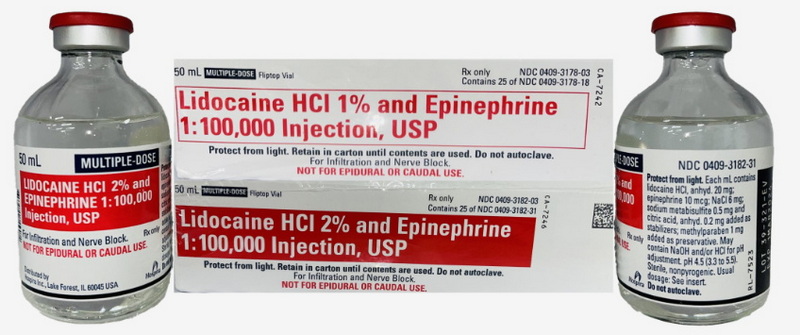
Formulations may vary in both lidocaine and epinephrine concentrations. For example, while 2% lidocaine HCl with 1:100,000 epinephrine is standard for dental blocks, studies show 4% lidocaine HCl with the same epinephrine content can be more effective clinically for certain procedures, such as impacted third molar removals. However, increases in epinephrine above 1:100,000 do not always yield medically significant improvements and may increase risk in patients with cardiovascular conditions.[10][5]
| Mix | Duration of Anesthesia | Bleeding Control | Applicability |
|---|---|---|---|
| 2% Lidocaine + 1:100,000 Epi | Extended | Excellent | Routine surgical/dental |
| 4% Lidocaine + 1:100,000 Epi | Maximum | Excellent | Dental, minor surgery |
| 2% Lidocaine (plain) | Moderate | Decent | Sensitive or at-risk sites |
Buffered lidocaine solutions (via sodium bicarbonate adjustment) bring the pH closer to physiological values, reducing injection pain and improving onset time, especially in acidic tissue environments. Non-buffered solutions, while more stable, can sting on injection due to their inherent acidity.[2]
- Indications: Local anesthesia for surgery, dentistry, minor skin procedures, obstetric blocks, and select pain relief applications.
- Contraindications: Hypersensitivity to lidocaine or any local anesthetic (amide-type), specific cardiovascular disease, and caution required for those with arrhythmias, severe hypertension, or on certain sympathomimetic medications.[4]
- Warnings: Epinephrine poses a greater risk in patients with heart disease and cannot be used in certain anatomical areas (digits, nose, ears, penis) due to risk of ischemia. Always follow recommended dosage and seek specialist advice.
Most applications utilize injectable formats administered subcutaneously, intramuscularly, or via nerve block. Dental carpules and topical sprays may contain epinephrine, but topical creams and gels rarely do.
China remains a leading global hub for lidocaine and epinephrine formulations meeting international GMP standards. When sourcing lidocaine (with or without epinephrine) for a brand or bulk distribution, ensure the supplier provides:
- Regulatory documentation (COA, GMP, DMF)
- Batch traceability and ingredient disclosure
- Customized formulas and private label (OEM) support
- Reliable export history and compliance with destination country requests.[11][12][13][14][15]
Working directly with certified Chinese suppliers can streamline product customization, regulatory approval, and cost efficiency, especially for wholesale and cross-border requirements.
Lidocaine HCl may be formulated with or without epinephrine, designed to address diverse clinical needs, patient safety parameters, and surgical outcomes. Adding epinephrine extends anesthesia and reduces bleeding but introduces considerations for tissue selection and cardiovascular risk. Manufacturers and buyers should prioritize detailed ingredient knowledge, regulatory compliance, and clinical context when choosing and sourcing products. Certification, traceability, and consultation with qualified experts underpin success for OEMs, clinics, and international buyers.
Contact our expert team at supplybenzocaine.co.uk for tailored OEM anesthetic solutions, technical consultation, regulatory support, and fast-quoted pricing. Empower your clinical and business practice with quality-assured lidocaine and epinephrine products.

Epinephrine acts as a vasoconstrictor, prolonging anesthesia duration, minimizing bleeding, and reducing the risk of systemic absorption of lidocaine at the injection site.[3][2]
Yes, patients with certain cardiovascular diseases, arrhythmias, or those receiving injections in tissues with limited blood supply should receive plain lidocaine without epinephrine.[4]
Yes, when administered by qualified clinicians, this combination is widely used in pediatric medicine and dentistry; dosage is carefully adjusted.[7]
Studies suggest epinephrine can increase local lymphatic contractility and blood flow, potentially benefiting wound healing, but further research is needed.[9]
Seek GMP certification, full documentation, transparent batch records, adaptability for customized formulations, and reliable bulk export experience—ideally from suppliers with proven international portfolios.[12][13][14][15][11]
[1](https://www.ncbi.nlm.nih.gov/books/NBK539881/)
[2](https://www.pfizermedical.com/lidocaine-hydrochloride/clinical-pharmacology)
[3](https://www.accessdata.fda.gov/drugsatfda_docs/nda/2004/021486s000_PharmR.pdf)
[4](https://labeling.pfizer.com/ShowLabeling.aspx?id=4499)
[5](https://pubmed.ncbi.nlm.nih.gov/28538371/)
[6](https://www.sciencedirect.com/science/article/pii/S0278239119311450)
[7](https://www.mayoclinic.org/drugs-supplements/lidocaine-and-epinephrine-injection-route/description/drg-20452177)
[8](https://www.sciencedirect.com/science/article/pii/S1079210405002817)
[9](https://pmc.ncbi.nlm.nih.gov/articles/PMC5097680/)
[10](https://pmc.ncbi.nlm.nih.gov/articles/PMC5564101/)
[11](https://www.made-in-china.com/products-search/hot-china-products/Factory_Supply_Lidocaine.html)
[12](https://pharmaoffer.com/api-excipient-supplier/local-anesthetics/lidocaine/china)
[13](https://www.volza.com/p/lidocaine/manufacturers/manufacturers-in-china/)
[14](https://www.pharmacompass.com/listed-active-pharmaceutical-ingredients/lidocaine-hydrochloride-epinephrine-1)
[15](https://www.pharmacompass.com/manufacturers-suppliers-exporters/epinephrine)
[16](https://pemcincinnati.com/blog/which-injectable-local-anesthetic-should-i-use/)
[17](https://www.accessdata.fda.gov/drugsatfda_docs/nda/2004/021504s000_Lidosite_PharmR.pdf)
[18](https://www.made-in-china.com/products-search/hot-china-products/Lidocaine.html)
[19](https://www.transopharm.com/blog/category/epinephrine)
[20](https://www.sandoopharma.com/api/p40)
Hot tags: Lidocaine HCL Epinephrine, Lidocaine Injection with Epinephrine, Epinephrine in Lidocaine, Lidocaine HCL Uses, Lidocaine HCL Side Effects, Lidocaine HCL Dosage, Local Anesthetic Lidocaine Epinephrine, Lidocaine HCL Injection Information, Epinephrine Effects in Lidocaine, Lidocaine HCL and Epinephrine Combination