Content Menu
● Industrial Synthesis of Benzocaine Powder
>> Step 1: Synthesis of p-Nitrobenzoic Acid
>> Step 2: Synthesis of Ethyl 4-Nitrobenzoate
>> Step 3: Catalytic Hydrogenation to Benzocaine
● Laboratory Preparation: Practical Alternative Starting from PABA
● Equipment and Safety Considerations
● Purification and Characterization Techniques
● Applications of Benzocaine Powder
● Environmental and Regulatory Compliance
● Customer-Oriented OEM Manufacturing Services
● Frequently Asked Questions (FAQ)
>> 1. What raw materials are needed to make benzocaine?
>> 2. How long does the benzocaine synthesis reaction take?
>> 3. What safety precautions should be taken during benzocaine production?
>> 4. How pure is the benzocaine produced by this method?
>> 5. Can benzocaine powder be customized for different applications?
Benzocaine is a widely used local anesthetic commonly found in over-the-counter medications such as topical pain relievers. It is a white crystalline powder known for its numbing effects, helping to relieve pain in various applications ranging from dental procedures to minor skin irritations. This article provides a comprehensive, step-by-step guide to the synthesis of benzocaine powder, covering chemical processes, equipment, safety considerations, and quality control measures involved. Throughout the guide, detailed explanations clarify the method, suitable especially for manufacturers and OEM service providers in the pharmaceutical and healthcare industries.
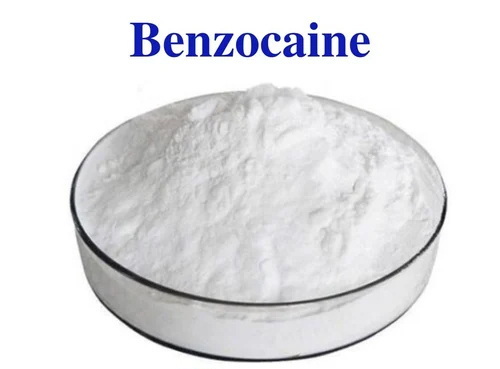
Benzocaine, chemically known as ethyl aminobenzoate, is a local anesthetic that serves to temporarily numb body tissues. It belongs to the ester class of local anesthetics, featuring an ester linkage within its molecular structure. This structure determines both its pharmacological activity and chemical reactivity. Benzocaine works by blocking sodium ion channels on nerve cell membranes, thus preventing the initiation and transmission of nerve impulses responsible for pain sensation.
It's important to distinguish benzocaine from cocaine despite the common suffix "-caine," as benzocaine is entirely synthetic and non-addictive. Its primary utility lies in topical formulations, such as sprays, gels, creams, and lozenges, to alleviate localized pain and itching caused by minor burns, insect bites, or dental treatments.
The industrial production of benzocaine powder involves multi-step chemical reactions starting from accessible raw materials such as para-nitrotoluene. The process generally proceeds through oxidation, esterification, and catalytic hydrogenation to produce pure benzocaine powder with consistent quality.
The initial stage is the oxidation of para-nitrotoluene to p-nitrobenzoic acid.
- Materials: Para-nitrotoluene, potassium permanganate (KMnO4), distilled water, bromide catalyst.
- Procedure: In a well-equipped three-neck flask, para-nitrotoluene is mixed with potassium permanganate and water. The reaction is carried out at 90–95°C under reflux with constant stirring for approximately 2.5 hours. The presence of a bromide catalyst accelerates oxidation.
- Outcome: After completion, the green manganese dioxide byproduct is filtered off. The filtrate is acidified to pH 2–3 with dilute sulfuric acid, resulting in the precipitation of pale yellow p-nitrobenzoic acid crystals. These crystals are washed and dried.
This step requires strict temperature control and efficient stirring to ensure complete oxidation and high purity of the intermediate product.
The second reaction involves esterification of the p-nitrobenzoic acid to generate ethyl 4-nitrobenzoate.
- Materials: p-Nitrobenzoic acid, absolute ethanol, concentrated sulfuric acid (catalyst).
- Procedure: The acid is mixed with excess ethanol and a few drops of concentrated sulfuric acid in a reflux apparatus. The mixture is heated in a water bath and refluxed for about 1.5 hours. This promotes Fischer esterification, converting the acid to its ethyl ester.
- Isolation: Following reaction, the mixture is cooled and stirred with a saturated sodium carbonate (Na2CO3) solution to neutralize residual acid and allow the ester to precipitate. The product is filtered and washed with water.
This step emphasizes reaction time and pH adjustment to maximize yield and purity.
The final chemical transformation is the reduction of the nitro group on ethyl 4-nitrobenzoate to an amine, yielding benzocaine.
- Materials: Ethyl 4-nitrobenzoate, absolute ethanol, palladium on carbon (Pd/C) catalyst, hydrogen gas.
- Procedure: The ester is dissolved in ethanol and hydrogenated in the presence of Pd/C catalyst under atmospheric or slight elevated hydrogen pressure. The reaction is monitored by Thin Layer Chromatography (TLC) until the complete reduction of the nitro group is achieved (typically several hours).
- Isolation: After completion, the catalyst is removed by filtration, and the solvent evaporated. White benzocaine crystals form upon cooling. These are further purified by recrystallization to achieve pharmaceutical-grade purity.
Hydrogenation requires stringent safety measures, due to the flammability of hydrogen gas and the sensitivity of catalysts.
A more straightforward lab method begins with p-aminobenzoic acid (PABA), eliminating the need for nitro-group reductions:
- Materials: p-Aminobenzoic acid (PABA), anhydrous ethanol, concentrated sulfuric acid.
- Procedure: PABA is combined with ethanol and sulfuric acid catalyst under reflux for 60–90 minutes, facilitating Fischer esterification to benzocaine ethyl ester. Upon cooling, the acidic mixture is neutralized with saturated sodium bicarbonate solution to precipitate benzocaine.
- Recovery: The solid benzocaine is collected by filtration, washed, and dried carefully under vacuum or in a drying oven to avoid degradation.
Although yields can reach approximately 70%, careful control of reaction parameters such as temperature and acid concentration is essential for product purity.
- Apparatus: A typical setup includes a three-neck round-bottom flask, reflux condenser, oil bath for precise heating, mechanical stirrer, vacuum filtration system, and drying oven.
- Safety: Strong acids like sulfuric acid require cautious handling — always add acid to water, never the reverse, to prevent exothermic splashes. Hydrogenation necessitates proper ventilation, inert atmosphere handling, and explosion-proof equipment. Personal protective equipment (PPE) such as gloves, goggles, and lab coats are mandatory. Waste disposal protocols must comply with local hazardous material regulations.
- Quality Control: Reaction monitoring via TLC and pH checks after various steps ensures reaction completeness. Post-synthesis purity evaluation uses recrystallization and could be followed by instrumental analyses like melting point determination, HPLC, or NMR for quality assurance.
Ensuring the benzocaine powder's purity and suitability for pharmaceutical uses requires additional purification and characterization:
- Recrystallization: Dissolving crude benzocaine in hot ethanol and cooling slowly allows impurities to remain in solution while benzocaine crystallizes out.
- Drying: Vacuum drying prevents moisture absorption which can degrade product quality.
- Characterization: Melting point verification helps confirm compound identity. Advanced methods like Fourier-transform infrared spectroscopy (FTIR) and nuclear magnetic resonance (NMR) spectroscopy verify molecular structure and confirm absence of contaminants.
These steps guarantee high purity (>98%) and compliance with industrial standards.
Benzocaine powder serves as a key raw material in multiple health-related applications:
- Topical Pain Relief: Incorporated in creams, gels, sprays for skin and mucous membrane analgesia.
- Oral Care Products: Used in lozenges and throat sprays to alleviate sore throat and minor oral irritations.
- Dental Procedures: Applied during dental interventions to numb localized areas.
- Cosmetic Formulations: Included in some cosmetic products for soothing skin sensations.
OEM manufacturers often cater to customized formulations tailored to client specifications, including particle size, purity level, and packaging.
Manufacturing benzocaine at scale demands adherence to environmental, health, and safety regulations:
- Waste Management: Proper treatment of acidic and organic waste prevents environmental contamination.
- Regulatory Standards: Compliance with pharmacopeial standards such as USP or BP ensures product safety and acceptance in international markets.
- Documentation: Maintaining batch records and quality control data supports traceability and regulatory audits.
Environmental sustainability practices such as solvent recycling and minimizing hazardous reagent use are increasingly emphasized.
Factories specializing in benzocaine production provide professional OEM services including:
- Flexible production volumes from pilot batches to bulk scales.
- Strict quality assurance practices for pharmaceutical-grade products.
- Customization according to client requirements – particle size, packaging, labeling.
- Technical support on formulation advice and regulatory documentation.
Such partnerships enable foreign brands, wholesalers, and manufacturers to access reliable benzocaine supplies with full traceability and compliance.
Producing high-quality benzocaine powder involves a series of well-controlled chemical reactions beginning from affordable raw materials such as para-nitrotoluene or p-aminobenzoic acid. Through oxidation, esterification, and catalytic hydrogenation, manufacturers achieve pharmaceutical-grade benzocaine with high purity. Proper laboratory techniques, safety protocols, and quality control ensure efficient and safe production. Our factory specializes in OEM manufacturing of benzocaine powder tailored to meet international quality standards and customer-specific needs. Contact us to discuss custom benzocaine production solutions designed to support your business growth and product excellence.
Benzocaine synthesis commonly begins with para-nitrotoluene or p-aminobenzoic acid, along with reagents such as potassium permanganate, ethanol, concentrated sulfuric acid, and palladium on carbon catalyst for hydrogenation.
Key reactions including oxidation, esterification, and hydrogenation typically require several hours in total—roughly 2.5 hours for oxidation, 1.5 hours for esterification, and variable time (often 2–4 hours) for hydrogenation—depending on scale and reaction conditions.
Use appropriate personal protective equipment including gloves, safety glasses, and lab coats. Work in well-ventilated fume hoods. Handle sulfuric acid carefully, adding acid slowly to avoid splashing. Hydrogenation must be conducted with proper gas handling systems and fire safety measures.
The process yields benzocaine powder exceeding 98% purity, suitable for pharmaceutical applications. Purity can be improved by recrystallization and rigorous quality control.
Yes. OEM manufacturers can customize particle size, purity, and packaging to meet specific pharmaceutical, cosmetic, or health product requirements.
[1] https://www.youtube.com/watch?v=RiTN1EYB-rs
[2] https://pmc.ncbi.nlm.nih.gov/articles/PMC6099396/
[3] https://patents.google.com/patent/CN106699579A/en
[4] https://patents.google.com/patent/CN107501108A/en
[5] https://patents.google.com/patent/US4241048A/en
[6] https://www.athabascau.ca/science-and-technology/_documents/centre-for-science-files/labs/organic-chemistry/exp/17_benzocaine.pdf
[7] https://pharmlabs.unc.edu/wp-storage/labs/formulation_records/benzocaine_gel_form.pdf
[8] https://www.roquette.com/innovation-hub/pharma/technical-illustration/lycoat-as-a-ready-to-use-excipient-in-oral-disintegrating-film-for-benzocaine-delivery
[9] https://adcare.com/addiction-resources-center/cutting-agents-drug-manufacturing/
[10] https://www.uspharmacist.com/article/benzocaine-2-and-vitamins-a-and-d-ointment
[11] https://www.sciencedirect.com/science/article/pii/S2211715623000693
[12] https://pmc.ncbi.nlm.nih.gov/articles/PMC10220575/
[13] https://patents.google.com/patent/US2457188A/en
[14] https://pubchem.ncbi.nlm.nih.gov/compound/Benzocaine
[15] https://www.tiktok.com/@integral_chemistry/video/7263212175764802859
[16] https://www.reddit.com/r/chemhelp/comments/16xdpe9/benzocaine_hcl_mixture_ratio_with_water/
[17] https://www.sciencedirect.com/topics/pharmacology-toxicology-and-pharmaceutical-science/benzocaine