Content Menu
● Benzocaine Powder Production Process
>> Step 1: Synthesis of Benzocaine
>> Step 2: Isolation and Neutralization
>> Step 4: Pulverizing and Sieving
>> Step 5: Recrystallization for Enhanced Purity (Optional)
● Quality Considerations in Benzocaine Powder Production
● Industrial Scale Manufacturing Insights
● Applications of Benzocaine Powder
● Environmental and Safety Considerations
● Frequently Asked Questions (FAQs)
>> 1. What chemicals are needed to prepare benzocaine powder?
>> 2. How is benzocaine purified for powder production?
>> 3. What particle size is typical for benzocaine powder?
>> 4. Can benzocaine be prepared without hazardous chemicals?
>> 5. What industries use benzocaine powder?
Benzocaine, a widely used local anesthetic, plays a vital role in various pharmaceutical, medical, and cosmetic products. This compound is most effective in powder form, which facilitates diverse applications such as gels, ointments, lozenges, sprays, and other dosage forms. For manufacturers, especially those providing OEM services, understanding the process of converting benzocaine into a high-quality powder is essential to ensure efficacy, safety, and consistency in final products.
This comprehensive article will guide you through the entire process of producing benzocaine powder—from synthesis and isolation to drying, pulverizing, and purification. Along with essential quality control measures and practical manufacturing insights, this detailed guide is designed to assist manufacturers and technical professionals involved in benzocaine powder production.
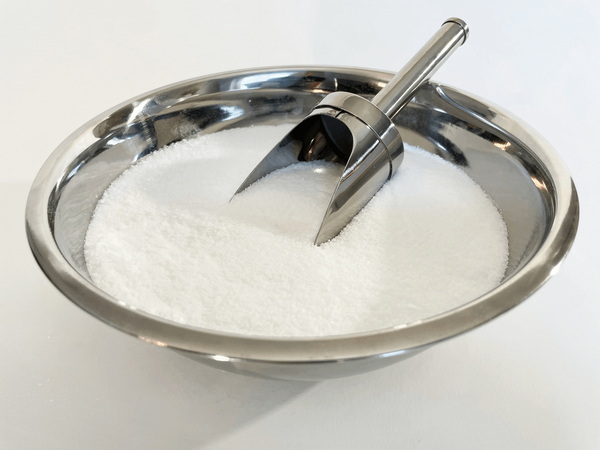
Benzocaine is an ester-type local anesthetic derived chemically from p-aminobenzoic acid (PABA). It functions by temporarily numbing nerve endings, providing localized pain relief. In its raw form, benzocaine appears as a white, crystalline solid with limited water solubility but good solubility in organic solvents like ethanol. Turning benzocaine into powder involves a multi-step process including synthesis, purification, particle size control, and sometimes recrystallization to meet pharmaceutical and cosmetic industry standards.
The importance of particle size uniformity, purity, and moisture control cannot be overstated, as these factors directly impact formulation stability, bioavailability, and product quality.
The starting point in benzocaine powder production is chemical synthesis, typically achieved by the Fischer esterification reaction:
- Reaction components: p-aminobenzoic acid (PABA) reacts with ethanol under acid catalysis.
- Catalyst: Concentrated sulfuric acid is commonly used to accelerate esterification.
- Process: The reaction mixture is refluxed under heat (usually 60–90 minutes), facilitating the conversion of PABA into benzocaine and water is simultaneously produced as a byproduct.
This stage requires meticulous control of temperature and reaction time to maximize yield while minimizing byproducts.
Once the esterification reaction is complete, the benzocaine must be isolated from the reaction mixture:
- The mixture is cooled to ambient temperature.
- Neutralization is done carefully using sodium carbonate or sodium bicarbonate solution, raising the pH to a slightly basic level (around pH 8).
- Benzocaine precipitates out due to its limited solubility at this pH.
- The solid benzocaine is separated by vacuum filtration, then washed with purified water to remove residual acid and inorganic salts.
Proper neutralization and washing are critical to prevent contamination and maintain product integrity.
The wet benzocaine cake must be efficiently dried to reduce moisture content, which affects powder flowability and stability:
- Drying ovens operating at 60–85°C are commonly used for durations ranging from 30 minutes to several hours depending on scale.
- Alternatively, benzocaine may be dried naturally at room temperature overnight if time permits, which is gentler but less efficient at scale.
- Care is taken not to expose benzocaine to excessive heat to avoid decomposition or discoloration.
The moisture content target usually stays below 1% for pharmaceutical grades.
To convert the bulk benzocaine solid into a fine powder form:
- Mechanical grinding methods are employed, ranging from traditional mortar and pestle for small-scale work to industrial pulverizers such as hammer mills or jet mills for larger batches.
- After grinding, the powder is passed through sieves or mesh screens to achieve uniform particle size distribution.
- Particle size control is essential, with a common specification being D90 below 50 microns, ensuring the powder is fine enough for consistent dispersion in formulations.
Particle size uniformity improves dissolution rate, smooth texture, and bioavailability in the final product.
For medical and cosmetic-grade benzocaine powders demanding high purity and consistency, recrystallization is often employed:
- Crude benzocaine powder is dissolved in hot ethanol.
- Additives such as alkylsulfonates (e.g., dodecyl sodium sulfate) may be introduced to influence crystal morphology and size.
- The solution is slowly cooled to initiate crystallization.
- Pure benzocaine crystals form and are collected by filtration followed by drying.
Recrystallization enhances chemical purity, removes trace impurities, and produces powders with desirable particle characteristics tailored for high-performance applications.

Maintaining strict quality parameters during production is fundamental:
- Chemical purity: Residual catalysts, acids, solvents, or unreacted precursors must be minimized to meet regulatory requirements.
- Particle size distribution: Uniformity affects handling properties, formulation stability, and product consistency.
- Moisture content: High moisture may cause aggregation, microbial contamination, or decreased shelf-life.
- Storage conditions: Benzocaine powder should be stored in airtight, light-resistant containers in a cool, dry environment to preserve stability.
- Safety: Handling benzocaine and reaction chemicals requires appropriate protective equipment due to toxicity and irritation potential.
Quality testing protocols including HPLC (High Performance Liquid Chromatography) to verify purity, laser diffraction for particle size analysis, and moisture analysis instruments should be implemented.
When scaling the production of benzocaine powder, several factors must be accounted for:
- Reaction vessel design: Efficient reflux systems with temperature and pH monitoring optimize synthesis yield and safety.
- Neutralization control: Automated pH regulation ensures complete and reproducible benzocaine precipitation.
- Drying technology: Industrial-scale dryers such as fluidized bed or vacuum drying reduce moisture without thermal degradation.
- Milling equipment: Jet milling offers superior fine grinding with minimal heat generation, preserving compound stability.
- Quality control automation: Inline particle sizing and moisture sensors enable real-time adjustments.
Effective process optimization reduces waste, lowers production costs, and ensures consistent product quality—critical in competitive global OEM supply.
Benzocaine powder is a key ingredient across many healthcare and consumer products:
- Topical anesthetic formulations: Creams, gels, and sprays providing localized pain relief.
- Lozenges and throat sprays: Deliver mild numbing effect to soothe sore throats.
- Dental care products: Applied via sprays or gels during procedures for desensitizing tissues.
- Cosmetic products: Included in depilatory creams or oral hygiene products.
- Medical devices: Used internally in sprays during minor surgeries or endoscopic procedures.
The demand for high purity and consistent particle size benzocaine powder continues to grow with expanding pharmaceutical and medical markets worldwide.
Production of benzocaine powder involves hazardous chemicals and solvents, requiring:
- Effective waste treatment systems to neutralize acidic and organic solvent effluents.
- Worker safety protocols including personal protective equipment (PPE) and proper ventilation.
- Compliance with local and international chemical handling, storage, and transport regulations.
Adopting green chemistry principles and sustainable manufacturing practices can further enhance environmental safety and lower the factory's carbon footprint.
Producing benzocaine powder with pharmaceutical-grade quality demands a carefully controlled process from chemical synthesis through isolation, drying, pulverizing, and optional recrystallization. Key factors such as particle size uniformity, purity, and moisture control directly influence the suitability of benzocaine powder for various medical, dental, and cosmetic applications.
Our factory specializes in manufacturing benzocaine powder with rigorous quality standards and flexible OEM solutions tailored to meet the specific needs of international brands, wholesalers, and manufacturers. If you require a trusted partner for high-quality benzocaine powder supply or customized manufacturing services, contact us today to discuss your requirements and benefit from our expertise and prompt delivery.
Benzocaine is synthesized by esterifying p-aminobenzoic acid (PABA) with ethanol using concentrated sulfuric acid as a catalyst.
After synthesis, benzocaine is precipitated by neutralization with sodium carbonate or bicarbonate, filtered, washed, dried, and optionally recrystallized from ethanol to improve purity and crystal quality.
Pharmaceutical benzocaine powders generally have a particle size distribution with D90 below 50 microns to ensure uniform dispersion and efficient formulation.
The synthesis involves concentrated sulfuric acid and organic solvents, so proper safety equipment and handling procedures are essential to minimize hazards.
Benzocaine powder is widely used in pharmaceuticals, dental products, cosmetics, topical anesthetics, throat lozenges, and medical devices.
[1] https://www.slideshare.net/slideshow/preparation-of-benzocaine-235703525/235703525
[2] https://patents.google.com/patent/CN107501108A/en
[3] https://pmc.ncbi.nlm.nih.gov/articles/PMC3840786/
[4] https://www.youtube.com/watch?v=RiTN1EYB-rs
[5] https://pubmed.ncbi.nlm.nih.gov/1568334/
[6] https://pharmlabs.unc.edu/wp-storage/labs/formulation_records/benzocaine_gel_form.pdf
[7] https://patents.google.com/patent/US2457188A/en
[8] https://patents.google.com/patent/CN112516074A/en
[9] https://adcare.com/addiction-resources-center/cutting-agents-drug-manufacturing/
[10] https://www.drugfuture.com/pharmacopoeia/usp32/pub/data/v32270/usp32nf27s0_m8077.html
[11] https://www.bbc.com/news/uk-10909884
[12] https://www.uspharmacist.com/article/benzocaine-2-and-vitamins-a-and-d-ointment
[13] https://patents.google.com/patent/US4241048A/en
[14] https://www.sciencedirect.com/topics/pharmacology-toxicology-and-pharmaceutical-science/benzocaine
[15] https://en.wikipedia.org/wiki/Benzocaine
[16] https://cdn.who.int/media/docs/default-source/medicines/pharmacopoeia/omitted-monographs/benzocaine.pdf?sfvrsn=623167ea_5
[17] https://www.youtube.com/watch?v=aUKOGlMWk4U
[18] https://www.youtube.com/watch?v=4H2MSSJkclw
[19] https://www.youtube.com/watch?v=gliVYEVLuvQ
[20] https://www.youtube.com/watch?v=reO05f1IGvg
[21] https://www.accio.com/supplier/benzocaine-powder-suppliers
[22] https://www.shutterstock.com/search/benzocaine
[23] https://www.youtube.com/watch?v=cg6PJYp3qPM
[24] https://my.rusi.org/resource/a-precursor-chemicals-and-adulterant-approach-to-tackling-crack-cocaine-trafficking-in-the-united-kingdom.html
[25] https://www.roquette.com/innovation-hub/pharma/technical-illustration/lycoat-as-a-ready-to-use-excipient-in-oral-disintegrating-film-for-benzocaine-delivery
[26] https://www.youtube.com/watch?v=h54XyEnYZDA
[27] https://goal.ge/news/147144/hidden-answers-to-benzocaine-powder-suppliers-uk-uncovered
[28] https://stock.adobe.com/search?k=benzocaine
[29] https://www.youtube.com/watch?v=KzWZobbiYWc
[30] https://www.fda.gov/drugs/drug-safety-and-availability/risk-serious-and-potentially-fatal-blood-disorder-prompts-fda-action-oral-over-counter-benzocaine
[31] https://www.tiktok.com/@integral_chemistry/video/7263212175764802859