Content Menu
● Understanding Lidocaine Cream and Its Composition
● Why Convert Lidocaine Cream Into Powder?
● Detailed Process to Convert Lidocaine Cream Into Powder
>> Step 1: Solvent Removal and Initial Concentration
>> Step 2: Inducing Crystallization of Lidocaine
>> Step 3: Crystal Collection Through Filtration
>> Step 4: Washing the Crystals
>> Step 5: Drying the Lidocaine Powder
>> Step 6: Grinding and Sieving for Uniform Particle Size
● Equipment and Materials Required
● Important Safety Considerations
● Applications of Lidocaine Powder
● Frequently Asked Questions (FAQ)
>> 1. What solvents are typically used for lidocaine crystallization?
>> 2. Can commercial lidocaine creams be directly converted into powder?
>> 3. What equipment is essential for the powder-making process?
>> 4. How is the purity of lidocaine powder ensured?
>> 5. What safety precautions are critical during conversion?
Lidocaine cream is a widely used local anesthetic in medical, pharmaceutical, and cosmetic industries for its efficient pain-relieving properties. It works by blocking nerve signals in specific areas of the body, making it highly valuable for topical anesthesia applications. While the cream form is convenient for direct application, manufacturers and researchers often require lidocaine in a powdered form for various purposes, such as compounding, raw material supply, and product development. This article provides a comprehensive, step-by-step guide on how to convert lidocaine cream into powder, detailing the necessary equipment, safety measures, and practical applications of the powder.
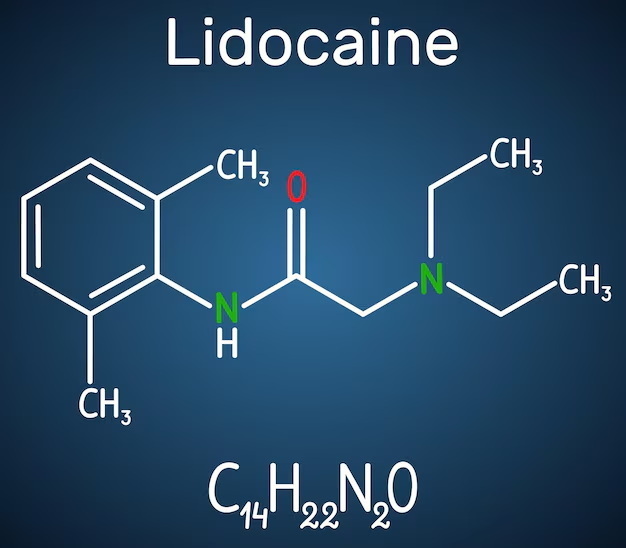
Lidocaine cream is an emulsion that usually contains 2.5% to 4% lidocaine hydrochloride dispersed within a base of various excipients designed to enhance skin absorption, stability, and usability. These excipients commonly include carbomers, mineral oils, polyethylene glycol derivatives, emulsifiers, preservatives, and stabilizers. The lidocaine is dissolved within this emulsion, which creates a semi-solid consistency suitable for topical delivery.
The challenge in converting lidocaine cream into powder lies in separating the active drug from its base and other additives while maintaining its chemical integrity and purity. The powder form of lidocaine offers better stability and versatility, making it an important intermediate for pharmaceutical manufacturers and custom formulators.
- Improved Stability: Lidocaine powder is less prone to degradation compared to its cream counterpart. Powders have a longer shelf life with less risk of microbial contamination.
- Easier Storage and Transportation: Powders are lighter, occupy less volume, and have fewer shipping restrictions than creams containing solvents and water.
- Purity and Quality Control: Separating lidocaine from cream excipients during the conversion process enables manufacturers to achieve higher purity and standardize dosage forms with precision.
- Flexible Manufacturing: Powdered lidocaine can be used as a raw material to create various formulations, including creams, gels, sprays, and patches, adapting easily to market needs.
- OEM Supply Chain Needs: Many foreign brands and wholesalers require lidocaine in powder form for blending and compounding under their private labels.
The first critical step is to remove the water and other volatile components present in the cream. This is typically achieved using a rotary evaporator (rotovap) under vacuum conditions. The vacuum lowers the boiling point of the solvents, allowing gentle removal without heating the lidocaine beyond safe temperatures that could degrade it. Controlled rotary evaporation removes water and organic solvents, resulting in a thick viscous residue enriched in lidocaine and some excipients.
Care must be taken to monitor temperature and pressure to avoid overheating.
The viscous concentrate is then treated to encourage lidocaine crystallization. This involves adding a non-solvent such as acetone or petroleum ether. The non-solvent decreases lidocaine's solubility, causing it to precipitate out of the solution. The mixture is stirred vigorously to promote uniform crystal formation.
The system is often cooled in an ice bath to accelerate and control crystal nucleation and growth, resulting in distinct lidocaine crystals forming.
Once crystallization is complete, the crystalline lidocaine is separated from the liquid by vacuum filtration. A vacuum filtration unit fitted with proper filter paper or fritted glass funnel is used to collect the crystals efficiently. The wet crystals may still contain some residual solvents and impurities.
To enhance purity, the crystals are washed gently with cold acetone or water to remove residual excipients and impurities. Washing removes emulsifiers, oils, and other non-crystalline impurities clinging to the crystal surfaces.
It is crucial to use cold solvents during washing to prevent dissolving the lidocaine crystals.
The wet crystals are thoroughly dried in a vacuum oven or desiccator at temperatures around 40°C. Vacuum drying helps remove residual solvents while preventing oxidation or decomposition of lidocaine.
Drying continues until the powder is free-flowing and moisture levels are minimized to <1%, ensuring a stable product.
If the dried powder forms lumps, it is gently ground using a mortar and pestle or mechanical mill under controlled conditions. Sifting the powder through fine mesh sieves ensures uniform particle size and pharmaceutical-grade consistency, which is essential for downstream compounding.

- Rotary evaporator: For efficient and gentle solvent removal under reduced pressure.
- Ice bath: To control temperature and induce rapid crystallization.
- Vacuum filtration setup: Including filter paper and a vacuum pump for crystal collection.
- Vacuum oven or desiccator: To dry the crystals without degradation.
- Mortar and pestle: For careful grinding of dry lumps.
- Sieves: To ensure homogeneity in particle size.
- Personal protective equipment (PPE): Gloves, goggles, lab coat, and masks.
- Fume hood: For safely handling volatile solvents such as acetone and petroleum ether.
- Always use appropriate PPE when handling chemicals and powders.
- Perform solvent evaporation and crystallization inside a fume hood with good ventilation to avoid inhaling vapors.
- Keep flammable solvents stored away from ignition sources.
- Manage chemical waste responsibly according to local regulations.
- Follow Good Manufacturing Practice (GMP) when producing lidocaine powder intended for pharmaceutical use.
- Clearly label all materials and keep documentation for traceability and quality control.
- Pharmaceutical Manufacturing: Used as an active ingredient in creams, gels, sprays, patches, or injectable formulations.
- Custom Compounding: Pharmacies and laboratories use powder to formulate specific doses and new topical products.
- OEM Services: Manufacturers produce customized lidocaine powders for global brand owners and wholesalers.
- Research and Development: Powder form facilitates pharmaceutical research, such as formulating novel delivery systems or studying stability.
- Cosmetic Products: Lidocaine powder in precise doses is used in cosmetic creams and products requiring local anesthesia.
Converting lidocaine cream into powder is a multi-step process involving careful solvent removal, crystallization, filtration, washing, drying, and particle sizing. The outcome is a high-purity lidocaine powder ready for diverse pharmaceutical uses. This transformation enhances the stability, handling, and application flexibility of lidocaine, aligning with the needs of manufacturers, compounding pharmacies, and OEM customers. By following proper procedures, using suitable equipment, and applying safety measures, one can efficiently produce reliable lidocaine powder from cream formulations.
If you are an overseas brand, wholesaler, or manufacturer seeking expert OEM services or high-quality lidocaine powder supply, please contact us for professional support and comprehensive production solutions compliant with global pharmaceutical standards.
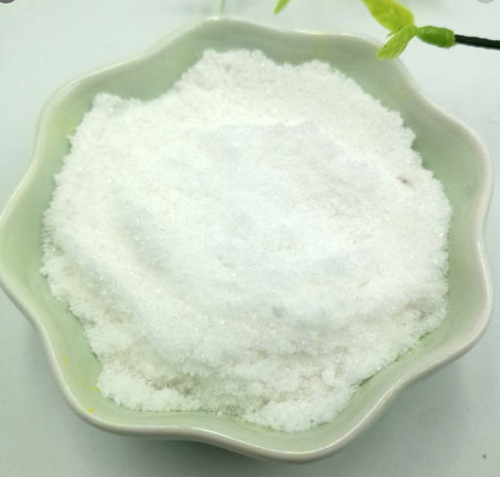
Non-solvents such as acetone and petroleum ether are commonly employed to induce lidocaine crystallization. These solvents decrease lidocaine's solubility, triggering its precipitation from the concentrated cream extract. Water and alcohol may act as initial solvents or diluents before crystallization.
No, commercial creams cannot be converted directly without a purification process. The emulsion base components must be removed via solvent evaporation and further cleaning steps to isolate pure lidocaine powder.
Key equipment includes a rotary evaporator for solvent removal, vacuum filtration apparatus for crystal separation, drying ovens or desiccators to remove moisture, and sieves for particle consistency. PPE and fume hoods are necessary for safe operation.
Purity is maintained by thorough washing of crystals, controlled drying to eliminate moisture and solvents, and standardized quality control testing, including impurity analysis, particle size distribution, and pH measurement.
Use PPE at all times, handle solvents in a fume hood to avoid inhalation of vapors, store flammable liquids properly, and adhere to industry regulatory standards and GMP guidelines throughout the process.
[1] https://patents.google.com/patent/CN106806338B/en
[2] https://www.drugs.com/pro/lidocaine-cream.html
[3] https://www.supplybenzocaine.co.uk/how-to-turn-lidocaine-liquid-into-powder.html
[4] https://patents.google.com/patent/CN102070483B/en
[5] https://www.goodrx.com/lidocaine-otc/what-is
[6] https://www.royalfree.nhs.uk/patients-and-visitors/patient-information-leaflets/about-lidocaine-and-prilocaine-cream-micropigmentation
[7] https://www.pccarx.com/Blog/2-tips-for-compounding-with-lidocaine-and-lidocaine-hcl
[8] https://dailymed.nlm.nih.gov/dailymed/fda/fdaDrugXsl.cfm?setid=a3216e25-82bb-4905-ac0b-b2ef4aa32ea0
[9] https://www.jstage.jst.go.jp/article/yakushi/128/4/128_4_611/_pdf
[10] https://www.webmd.com/drugs/2/drug-8532-1485/lidocaine-topical/lidocaine-ointment-topical-mucous-membrane/details
[11] https://myhealth.alberta.ca/Health/medications/Pages/conditions.aspx?hwid=fdb9170
[12] https://www.masspediatrictoolkit.com/wp-content/uploads/2017/02/LET-Formula-for-Pharmacy.pdf
[13] https://www.mayoclinic.org/drugs-supplements/lidocaine-topical-application-route/description/drg-20072776
[14] https://pmc.ncbi.nlm.nih.gov/articles/PMC9191217/
[15] https://www.nhs.uk/medicines/lidocaine-skin-cream/about-lidocaine-skin-cream/
[16] https://www.webmd.com/drugs/2/drug-8945-8170/lidocaine-prilocaine-topical/lidocaine-prilocaine-cream-topical/details
[17] https://pmc.ncbi.nlm.nih.gov/articles/PMC8464853/
[18] https://dailymed.nlm.nih.gov/dailymed/fda/fdaDrugXsl.cfm?setid=d1509740-f9f1-44e3-8fde-51d8683fcd87
[19] https://www.medisca.net/pdf/additional-sample-formulas/F%20009%20529%20Benzocaine%2020,%20Lidocaine%206,%20Tetracaine%204%20Topical%20Cream.pdf
[20] https://www.nhs.uk/medicines/lidocaine-skin-cream/how-and-when-to-use-lidocaine-skin-cream/
[21] https://www.childrensmercy.org/contentassets/fe10fd4584634973aef402f64cd744de/lidocaine-safety-information.pdf
[22] https://www.salispharm.com/knowledge/what-to-mix-lidocaine-powder-with-for-pain-
[23] https://www.salispharm.com/knowledge/can-i-add-lidocaine-powder-to-my-homemade-lotion-
[24] https://www.cerritos.edu/chemistry/chem_212/Documents/Lab/10_lidocaine.pdf
[25] https://www.sciencedirect.com/science/article/abs/pii/S1773224723004914
[26] https://www.sciencedirect.com/science/article/pii/S0378517324006112
[27] https://www.supplybenzocaine.co.uk/how-do-you-turn-liquid-lidocaine-into-powder.html
[28] https://pmc.ncbi.nlm.nih.gov/articles/PMC5609786/
[29] https://www.pharmacytimes.com/view/2005-06-9605
[30] https://pubs.acs.org/doi/10.1021/acs.oprd.6b00165
[31] https://www.reddit.com/r/cocaine/comments/gb9ghu/turning_1_lidocaine_liquid_to_powder/
[32] https://www.uspharmacist.com/article/morphine-sulfate-swish-and-swallow-44276
[33] https://www.youtube.com/watch?v=uA8iOhb-qM0
[34] https://pubchem.ncbi.nlm.nih.gov/compound/Lidocaine
[35] https://www.youtube.com/watch?v=vuzqIsWFn3o
[36] https://www.tiktok.com/discover/reconstitute-lidocaine
[37] https://www.youtube.com/watch?v=RiTN1EYB-rs
[38] https://www.moph.gov.lb/en/Drugs/index/0/64321/page:179/sort:Drug.atc/direction:desc
[39] https://brieflands.com/articles/ijpr-123787
[40] https://www.tylenol.com/safety-dosing/what-is-topical-lidocaine
[41] https://www.ontario.ca/files/moh-odp-reference-manual-en.pdf
[42] https://patents.google.com/patent/CN113244167B/en
[43] https://www.emla.co.uk/how-to-apply/
[44] https://www.tylenolprofessional.com/products-dosage-adult
[45] https://www.shutterstock.com/search/anesthetic-cream
[46] https://go.drugbank.com/drugs/DB00443
[47] https://pubs.acs.org/doi/full/10.1021/acsomega.4c05296