Content Menu
>> Chemical Structure and Properties
● Procaine Synthesis: An Overview
● Step-by-Step Procaine Synthesis Procedure
>> Step 1: Preparation of p-Nitrobenzoic Acid
>> Step 2: Formation of Nitrocaine through Esterification
>> Step 3: Catalytic Hydrogenation to Procaine
>> Step 4: Purification and Recrystallization
>> Step 5: Conversion to Procaine Hydrochloride
● Industrial Production Insights
● Safety and Environmental Considerations
● Frequently Asked Questions (FAQ)
>> 1. What raw materials are required to synthesize Procaine?
>> 2. Why is catalytic hydrogenation an essential step in Procaine synthesis?
>> 3. Is Procaine hydrochloride always preferred to Procaine base?
>> 4. What quality standards must Procaine meet for pharmaceutical use?
>> 5. Can Procaine be safely manufactured in a standard laboratory?
Procaine, commonly known by the brand name Novocaine, is a local anesthetic widely used in medical, dental, and veterinary practices. As a biotechnology and pharmaceutical manufacturing company, understanding the synthesis, handling, and commercial production of Procaine is crucial for meeting international market standards and delivering high-quality OEM services. This comprehensive guide explores the synthesis process, safety considerations, industrial production, applications, and commonly asked questions—offering in-depth information for brands, wholesalers, and manufacturers interested in procaine production and procurement.
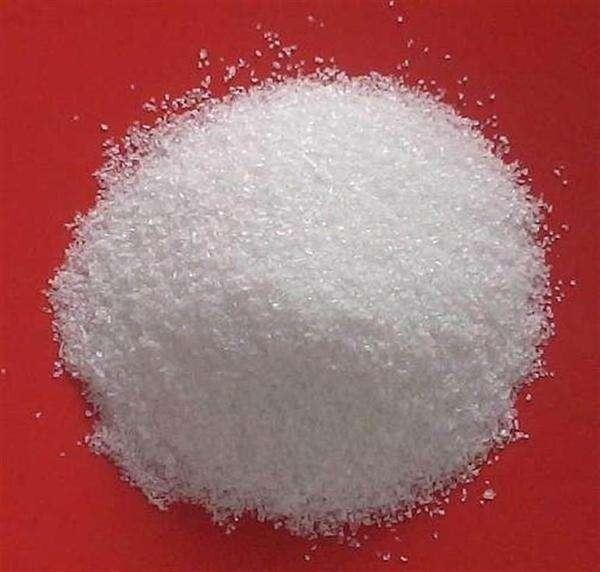
Procaine (Novocaine) is among the earliest synthetic local anesthetics and is still essential for various clinical procedures. Its reliable efficacy, favorable safety profile, and broad range of applications make knowledge of its manufacturing process invaluable—especially for brands, wholesalers, and manufacturers seeking OEM partnerships in international markets. This article provides a detailed overview of procaine's chemical nature, synthesis route, manufacturing protocols, safety measures, and application fields, perfectly suited for pharmaceutical business stakeholders.
Procaine is a benzoic acid ester and a local anesthetic synthesized mainly for pharmaceutical use. It is valued for its numbing effects, moderate duration of action, and relatively low toxicity compared to other anesthetics. The compound acts by inhibiting sodium channels in nerve cells, preventing the initiation and conduction of nerve impulses, which results in localized numbness.
Procaine is most often supplied and administered as Procaine Hydrochloride, a salt form that enhances its solubility and stability for medical applications. It is widely used in dentistry, minor surgical procedures, and is also an active ingredient in some formulations of penicillin for extended-release purposes.
- IUPAC Name: 2-(Diethylamino)ethyl 4-aminobenzoate
- Molecular Formula: C₁₃H₂₀N₂O₂
- Molecular Weight: 236.31 g/mol
- CAS Number: 59-46-1
- Physical State: White crystalline solid
Its structure features an ester linkage between a para-aminobenzoic acid derivative and a diethylaminoethyl moiety, which is essential for both its anesthetic activity and chemical synthesis.
Procaine production involves multiple organic synthesis steps, with the industrial method predominantly starting from commercially available p-nitrobenzoic acid or derivatives such as p-nitrotoluene. The process includes esterification, catalytic hydrogenation, and purification steps to yield pharmaceutical-grade procaine hydrochloride.
The main steps are:
1. Preparation of p-Nitrobenzoic Acid (or procurement) as starting material.
2. Esterification of p-nitrobenzoic acid with 2-diethylaminoethanol to form nitrocaine, an important intermediate.
3. Catalytic hydrogenation to reduce the nitro group to an amine, converting nitrocaine into procaine.
4. Purification and recrystallization to obtain a high-purity procaine base.
5. Conversion to Procaine Hydrochloride, the pharmaceutical salt form, often for medical preparations.
Each step demands specific reaction conditions and controls to ensure product quality, yield, and safety.
In industrial settings, p-nitrobenzoic acid can be prepared by oxidizing p-nitrotoluene using strong oxidizing agents such as potassium permanganate or chromic acid. This oxidation converts the methyl group to the carboxyl group under reflux conditions, producing p-nitrobenzoic acid as a white crystalline solid. For many processes, high-purity p-nitrobenzoic acid is purchased directly to streamline synthesis.
The esterification step involves reacting p-nitrobenzoic acid with 2-diethylaminoethanol in a suitable solvent like xylene or butyl acetate. An acid catalyst such as sulfuric acid or p-toluenesulfonic acid is usually added to accelerate the reaction. The mixture is refluxed at about 141–143°C for several hours.
During the reaction, water is formed as a byproduct and is removed via azeotropic distillation to drive the equilibrium towards ester formation. The ester product formed, known as nitrocaine, is an important intermediate and must be carefully handled and verified for completeness of reaction before proceeding.
In this key reduction step, nitrocaine is transformed into procaine via catalytic hydrogenation. The process typically uses a hydrogenation reactor where nitrocaine is dissolved in a suitable solvent and exposed to hydrogen gas under controlled pressure (2–10 atmospheres) and temperature (35–60°C). Catalysts such as Raney nickel or amorphous nickel facilitate the reduction of the nitro group to an amine.
Control of reaction parameters is crucial to avoid incomplete reduction or side reactions. The reactor is purged with inert gases like nitrogen prior to hydrogen addition for safety. Upon completion, hydrogenation yields procaine along with water as a byproduct.
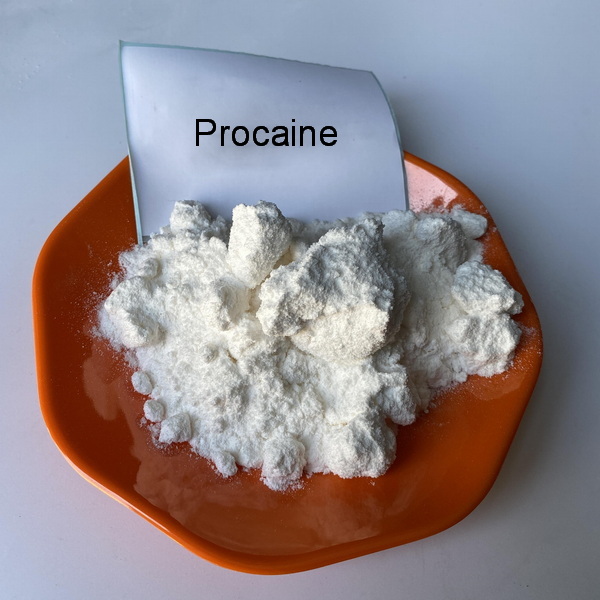
The crude procaine solution is filtered to remove catalyst residues and other impurities. Concentration under reduced pressure yields crude product, which undergoes recrystallization from solvents such as ethanol or dichloromethane. This step enhances purity to pharmaceutical standards by removing colored and insoluble impurities as well as residual organic solvents.
Recrystallization parameters such as cooling rate, solvent choice, and solvent volume are optimized to maximize yield and crystal quality.
Pharmaceutical applications generally require procaine in its hydrochloride salt form due to improved water solubility and stability. The procaine base is dissolved in distilled water, gently heated, and titrated with dilute hydrochloric acid until the solution clarifies. The solution is then filtered to remove any particulates.
Subsequently, an entrainer like isopropanol or n-butanol is added, and water is removed through vacuum azeotropic distillation to promote crystallization. The mixture is cooled slowly to approximately 0–1°C to induce the formation of procaine hydrochloride crystals, which are then filtered, washed, and dried under controlled conditions.
For large-scale industrial processes, an alternative method involves bubbling hydrogen chloride gas directly into a solution of procaine, precipitating the hydrochloride salt efficiently.
Procaine manufacturing on an industrial scale involves batch reactors capable of processing hundreds of kilograms per run, optimized for both yield and safety. Advanced process controls monitor temperature, pressure, and reaction times.
Safety protocols are stringent due to the use of hydrogen gas and flammable solvents. Hydrogenation reactors are explosion-proof with continuous monitoring for leaks and pressure relief systems. Catalyst handling is carefully controlled to minimize exposure to toxic nickel compounds and to ensure environmentally compliant disposal.
Quality assurance includes comprehensive testing of raw materials, in-process intermediates, and the final procaine hydrochloride. Assays verify purity, moisture content, residual solvent levels, and heavy metal contamination. Analytical methods such as HPLC, GC, and spectroscopy ensure consistent compliance with pharmacopoeial standards.
OEM manufacturers often customize production parameters for specific client needs, such as particle size distribution, polymorphic form, or impurity profiles, supporting downstream formulation requirements.
Manufacturing procaine requires meticulous attention to occupational safety and environmental protection:
- Handling Hydrogen: Hydrogen is highly flammable and explosive under pressure. Proper ventilation, explosion-proof equipment, and continuous gas monitoring are mandatory.
- Catalyst Disposal: Spent nickel catalysts are hazardous waste and must be collected and treated according to environmental regulations, sometimes requiring recycling or specialized disposal.
- Organic Solvents: Many solvents used (xylene, ethanol, dichloromethane) are volatile, flammable, and toxic. Usage involves fume hoods, solvent recovery systems, and fire suppression technology.
- Wastewater Treatment: Effluents containing organic compounds and metals undergo multi-stage treatment before discharge. This includes neutralization, filtration, and advanced oxidation processes.
- Personal Protective Equipment (PPE): Operators must wear gloves, goggles, flame-resistant clothing, and respiratory protection during production.
Compliance with local and international regulations such as OSHA, EPA, REACH, and Good Manufacturing Practices (GMP) ensures the safe production of procaine.
Beyond its well-known role as a local anesthetic, procaine has a variety of applications:
- Medical and Dental Anesthesia: Used extensively for local anesthesia in minor surgical and dental procedures due to its effectiveness in blocking nerve transmission.
- Combination Antibiotics: Procaine is formulated with penicillin G to form penicillin G procaine, offering a prolonged therapeutic effect through slow absorption.
- Veterinary Medicine: Frequently employed in veterinary formulations to provide localized pain relief in animals.
- Research: Investigated for central nervous system effects, cardiovascular impact, and anti-aging properties in experimental settings.
- Pharmaceutical Ingredient: Incorporated as a key raw material in the formulation of various injectable anesthetics and combined drug products.
Its broad application spectrum enhances the demand for high-quality, reliably sourced procaine from global suppliers.
The synthesis of procaine is a multi-step chemical process requiring precision, expertise, and strict quality controls at every stage—from raw material selection to final purification. Effective procaine manufacturing demands advanced chemical engineering capabilities, rigorous safety protocols, and an in-depth understanding of organic synthesis techniques.
For international brands, wholesalers, and pharmaceutical manufacturers seeking reliable OEM partners, working with experienced and certified Chinese producers offers advantages in cost efficiency, production scale, and compliance with global regulatory standards. Mastery of procaine's synthesis and production facilitates dependable supply chains and innovation in the global healthcare industry.
Whether you are a researcher, healthcare provider, or pharmaceutical company, a thorough grasp of procaine manufacturing processes is essential to ensure product quality and efficacy in your therapeutic solutions.
If you are searching for a professional, reliable OEM manufacturer of Procaine or other pharmaceutical raw materials, our team provides comprehensive R&D, customized production, and global logistics support designed to meet your specific needs. Contact us today for consultations, competitive pricing, and tailored manufacturing services!
Contact us now for OEM production, bulk supply, or custom solutions for Procaine and related pharmaceuticals. Your reliable, innovative partner in the global healthcare supply chain!
The primary raw materials are p-nitrobenzoic acid and 2-diethylaminoethanol. Some industrial routes may start from p-nitrotoluene for in-house oxidation, but purchasing purified p-nitrobenzoic acid is common to streamline synthesis.
Catalytic hydrogenation efficiently and selectively reduces the nitro group of nitrocaine to an amino group, producing procaine with high purity and yield. Nickel-based catalysts, under pressurized hydrogen gas, facilitate this transformation safely and economically.
Yes. The hydrochloride salt form is more water-soluble, stable, and pharmaceutically acceptable, facilitating formulation and administration. Procaine base is rarely used directly in medicinal products.
Pharmaceutical-grade procaine must comply with standards for purity (typically >99%), low residual solvents, absence of heavy metals, controlled particle size, and microbial limits as defined by pharmacopoeias like USP, EP, or Chinese Pharmacopoeia.
Due to the use of flammable gases, toxic catalysts, strong acids, and flammable solvents, procaine synthesis requires specialized industrial equipment, controlled environments, and trained personnel. Lab-scale synthesis can be done under stringent safety protocols with appropriate equipment.