Content Menu
● What is Benzocaine and Why Transform Gel into Powder?
● Understanding Benzocaine Gel Composition
● Step-by-Step Procedure to Turn Benzocaine Gel into Powder
>> Extraction of Benzocaine from Gel Matrix
>> Precipitation of Benzocaine
>> Separation and Collection of Precipitated Benzocaine
>> Drying the Benzocaine Powder
● Quality Control and Particle Size Management
● Common Challenges and Practical Tips
● Application and Benefits of Benzocaine Powder
>> 1. How long does it take to turn benzocaine gel into powder?
>> 2. What solvents are best for extracting benzocaine from gel?
>> 3. Is benzocaine powder safer than the gel form?
>> 4. Can this process be conducted in small labs or homes?
>> 5. What is the best way to store benzocaine powder?
Benzocaine is a widely used topical anesthetic commonly formulated in gels, ointments, sprays, and powders. It's valued for its local numbing properties in pharmaceutical and medical applications. As a manufacturer or brand looking to repurpose or reformulate benzocaine gel into powder form for OEM uses, understanding the chemical and practical processing involved is critical. This article provides a thorough guide on how to turn benzocaine gel into powder safely and efficiently, with technical insights, process steps, equipment recommendations, and quality considerations.
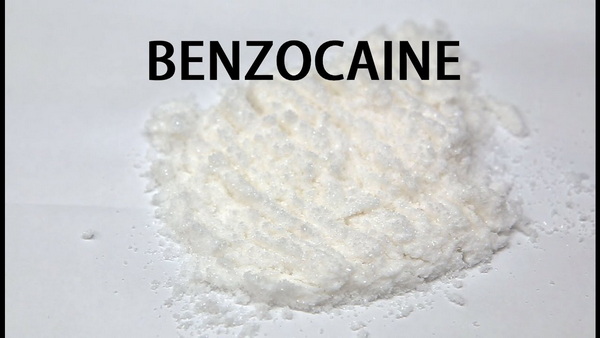
Benzocaine is an ester local anesthetic often supplied as a gel for direct topical application. The gel formulation offers ease of use and controlled dosage. However, for OEM manufacturing of different pharmaceutical forms or medical devices, powdered benzocaine has advantages:
- Versatility: Powdered benzocaine can be formulated into creams, ointments, aerosols, tablets, or incorporated into medical devices.
- Stability: Powder form often has longer shelf life under proper storage.
- Ease of Transport & Storage: Powders are more compact and less prone to leakage.
- Customization: It allows firms to tailor particle size and purity for optimal performance in diverse products.
Given these benefits, processing benzocaine gel into powder is a useful industrial step.
Benzocaine gels typically contain:
- Active ingredient: Benzocaine dissolved or suspended.
- Carriers: Such as propylene glycol, carbomers, water, ethanol.
- Stabilizers and preservatives: To enhance shelf life.
- Thickeners and emulsifiers: To maintain gel consistency.
The gel's semi-solid matrix must be broken down, and benzocaine must be extracted and dried to obtain a pure powder.
The primary step in the transformation is extracting benzocaine effectively from the gel base. This requires a solvent that can dissolve benzocaine without picking up much of the gel's thickening agents.
- An organic solvent such as ethanol or isopropanol is typically used.
- The gel is combined with the solvent and subjected to continuous stirring to maximize benzocaine's dissolution.
- This mixture is then filtered through a fine mesh or filter paper to remove insoluble gel components and impurities.
Once the benzocaine is in a solvent solution, it must be precipitated out as solid particles:
- Gradually introduce a nonsolvent like cold water or a saturated sodium bicarbonate solution.
- The benzocaine precipitates because its solubility decreases in this environment.
- Proper pH adjustment to mildly alkaline conditions around pH 8 enhances precipitation efficiency by promoting benzocaine's free base form.
- The precipitated benzocaine crystals are collected using vacuum filtration or centrifugation.
- Several washing steps with cold solvent remove traces of impurities or residual gel components.
- The wet powder is then prepared for drying.
Drying must be conducted with care to preserve the chemical integrity and quality of the benzocaine:
- Vacuum drying or oven drying at low temperatures 40-50°C removes residual solvents and moisture.
- Proper drying conditions minimize thermal degradation or chemical alteration.
- Storage in moisture-free conditions with desiccants helps preserve powder quality post-drying.
A few key pieces of equipment are necessary for a successful gel-to-powder process:
- Mixing vessel with stirrer: For dissolving benzocaine in solvents.
- Filtration apparatus: Such as a Buchner funnel connected to a vacuum pump for efficient separation.
- pH meter and reagents: To monitor and adjust pH during precipitation.
- Drying equipment: A vacuum dryer or temperature-controlled oven ensures gentle drying.
- Analytical tools: Microscopes and particle size analyzers help control final powder quality.
Maintaining consistent quality throughout the process ensures a high-value product:
- Purity testing: Methods like HPLC High-Performance Liquid Chromatography confirm that benzocaine purity meets pharmaceutical standards.
- Particle size: Desired particle fineness depends on application—controlled crystallization parameters determine this.
- Residual solvents: Testing ensures solvents are within permissible limits, keeping the product safe.
- Appearance: A fine, white to off-white powder with no agglomerates is ideal.
Each batch must undergo stringent quality controls before advancing to formulation or packaging.
Transforming benzocaine gel into powder is not without challenges, but they can be effectively managed:
- Gel matrix complexity: Preservatives and thickeners can complicate filtration; selecting solvents with high selectivity for benzocaine eases separation.
- Precipitate uniformity: Slow, controlled nonsolvent addition prevents crystal clumping, ensuring uniform particle size.
- Thermal sensitivity: Avoid high temperatures during drying to prevent benzocaine decomposition.
- Scale-up considerations: Optimize process parameters with pilot batches before full-scale production.
Good laboratory and production practices coupled with careful procedural adherence are key to successful outcomes.
Handling benzocaine and organic solvents warrants strict safety protocols:
- Use appropriate personal protective equipment gloves, goggles, lab coats.
- Work in well-ventilated areas or fume hoods to avoid solvent inhalation.
- Dispose of waste solvents and chemical residues according to environmental regulations.
- Maintain chemical storage to avoid contamination or accidental exposure.
Following safety regulations protects personnel and ensures compliance with industry standards.
Once converted into powder form, benzocaine opens up many formulation possibilities:
- Incorporated into creams, ointments, sprays, or transdermal patches.
- Used in aerosol formulations for throat sprays or topical anesthesia.
- Blended into dental gels or pastes.
- Utilized in medical device coatings requiring local anesthesia.
Manufacturers enjoy flexibility and increased product development options with the powder, serving a wider array of pharmaceutical and healthcare needs.
Turning benzocaine gel into powder is an effective process to expand the application range of benzocaine in pharmaceutical and medical markets. By following a precise protocol involving solvent extraction, precipitation, filtration, and drying, manufacturers can produce high-purity, pharmaceutical-grade benzocaine powder.
This powder form offers enhanced versatility for OEM production, stability benefits, and ease of formulation customization. By implementing rigorous quality control measures and safety protocols, you ensure a reliable, consistent final product.
If you seek professional support in benzocaine powder production or customized OEM formulation services in biotechnology, pharmaceuticals, or medical devices, our expert team is here to help. Contact us today to explore tailored solutions designed to meet your exact requirements.
The process typically takes several hours for a batch, including dissolution, precipitation, filtration, and drying. Drying time depends on equipment and batch size.
Ethanol and isopropanol are commonly chosen due to their effectiveness in dissolving benzocaine while minimizing gel base dissolution.
Safety depends on proper formulation, dosing, and usage. Powder form allows flexibility but must be handled and formulated correctly for safe use.
Due to solvent use, chemical handling, and equipment needs, the process is best performed by trained professionals in controlled environments.
Store benzocaine powder in airtight, moisture-proof containers away from heat and direct sunlight, ideally with desiccants to maintain dryness.
[1]https://www.youtube.com/watch?v=RiTN1EYB-rs
[2]https://patents.google.com/patent/US4241048A/en
[3]https://www.sciencedirect.com/science/article/abs/pii/S0378517303002564
[4]https://www.uspharmacist.com/article/benzocaine-2-and-vitamins-a-and-d-ointment
[5]https://www.pccarx.com/Blog/2-tips-for-compounding-with-lidocaine-and-lidocaine-hcl
[6]https://www.sciencedirect.com/topics/pharmacology-toxicology-and-pharmaceutical-science/benzocaine
[7]https://www.reddit.com/r/chemhelp/comments/16xdpe9/benzocaine_hcl_mixture_ratio_with_water/
[8]https://en.wikipedia.org/wiki/Benzocaine
[9]https://adcare.com/addiction-resources-center/cutting-agents-drug-manufacturing/
Hot tags: Convert Benzocaine Gel to Powder, Benzocaine Gel Powdering Process, Benzocaine Gel Preparation, Benzocaine Gel to Powder Method, Benzocaine Gel Conversion, Benzocaine Gel Crystallization, Benzocaine Gel Mixing Techniques, Benzocaine Gel to Powder Tips, Benzocaine Gel Processing, Benzocaine Gel Powder Recipe