Content Menu
● Understanding Lidocaine: Properties and Significance
● Why Convert Liquid Lidocaine to Powder?
● Core Principles and Step-by-Step Process for Conversion
>> Step 1: Preparation of Lidocaine Starting Solution
>> Step 2: Filtration and Clarification
>> Step 3: Concentration of the Solution
>> Step 4: Drying to Powder Form
>> Step 5: Powder Recovery and Processing
>> Step 6: Quality Control and Testing
● Equipment and Materials Needed
● Common Pitfalls and Solutions
● Applications of Lidocaine Powder
● Best Practices for OEM Manufacturers
● Frequently Asked Questions (FAQ)
>> 1. What is the most efficient method for converting liquid lidocaine to powder?
>> 2. Can lidocaine powder be made with simple laboratory equipment?
>> 3. How do you ensure the purity of lidocaine powder?
>> 4. What safety precautions are needed when converting lidocaine?
>> 5. How long can lidocaine powder be stored compared to liquid?
Lidocaine is a widely used local anesthetic with applications in medicine, dentistry, and pharmaceuticals. While liquid lidocaine solutions are common for immediate use, converting liquid lidocaine into powder form brings many advantages such as enhanced stability, easier storage and transport, and versatility in pharmaceutical formulations like creams, patches, and injectables. For manufacturers, especially those providing OEM services to international brands, mastering the process of turning liquid lidocaine into powder is essential to meet regulatory standards and customer requirements.
This comprehensive guide will explain the scientific principles, step-by-step methods, equipment involved, and best practices for successfully converting liquid lidocaine into high-quality powder. It will also include useful visuals and videos to illustrate processes, followed by a conclusion, call to action, and a FAQ section.
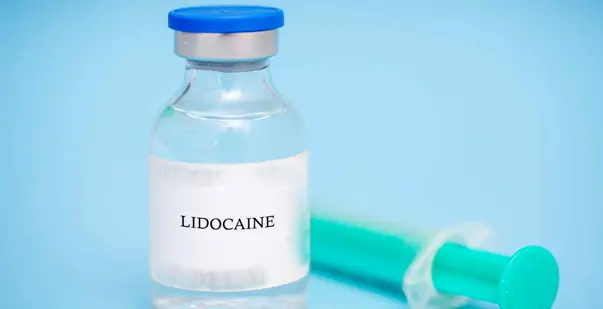
Lidocaine is an amide-type local anesthetic composed of an aromatic ring and an amide bond, which ensures good chemical stability under normal conditions. Its hydrochloride salt form is moderately soluble in water and appears as a white crystalline powder, whereas the free base form has low water solubility but excellent lipid permeability. Liquid lidocaine is typically available as hydrochloride dissolved in water or as a free base dissolved in organic solvents like ethanol or acetone.
The conversion to powder improves:
- Product stability by reducing hydrolysis and degradation risks seen in liquids
- Ease of handling for manufacturing and compounding processes
- Shelf life and storage convenience, particularly for export and large-scale distribution
- Powder form enables precise dosing and formulation flexibility in topical creams, films, or patches
- It facilitates transportation by reducing volume and weight compared to liquids
- Powders avoid some regulatory challenges associated with shipping controlled liquids internationally
- It allows manufacturers to optimize inventory and improve product lifespan
Start with a high-purity liquid lidocaine solution, either free base in volatile organic solvents (acetone, ethanol) or lidocaine hydrochloride in aqueous solution. Concentration should be optimized for drying efficiency—too dilute solutions increase drying time and cost.
Filter the liquid through fine pore size membranes to remove particulates and microbial contaminants that could clog drying equipment or compromise powder quality. A thorough filtration process not only safeguards product quality but also helps extend the lifespan of expensive drying equipment.
Remove excess solvent gently using a rotary evaporator or vacuum concentrator. This reduces volume and viscosity, facilitating efficient drying and minimizing thermal degradation. Careful temperature monitoring is essential during this stage to prevent breakdown of the lidocaine molecules.
Several advanced drying methods exist, chosen based on scale and purity needs:
- Freeze-Drying (Lyophilization): Rapidly freeze the solution and sublimate solvent under vacuum producing a highly porous, pure powder with minimal heat damage. Best for small to medium scale, high-quality demands. Freeze drying retains molecular integrity by avoiding high temperatures, which is critical for pharmaceutical applications.
- Spray Drying: Atomize the liquid into a hot air chamber where solvent rapidly evaporates leaving fine powder particles. Suitable for continuous large-scale production. Spray drying is efficient and scalable but requires strict control of inlet temperature to avoid lidocaine degradation.
- Vacuum Drying: Apply reduced pressure and moderate heat to evaporate solvent. Effective but slower and may cause some agglomeration. Vacuum drying is generally used as a supplementary step or for formulations sensitive to heat or oxygen exposure.
Collect the dried powder carefully using vacuum filtration or cyclone separators. Additional washing steps with solvents such as ethanol or distilled water may be performed to purify and remove residual solvents or impurities. Finally, dry the powder completely in controlled conditions to achieve free-flowing granules with the desired particle size. Particle size distribution is critical because it influences dissolution rate and formulation uniformity in end products.
After drying, the lidocaine powder undergoes rigorous quality control testing to ensure compliance with pharmaceutical standards. Typical tests include:
- Purity analysis via High-Performance Liquid Chromatography (HPLC)
- Particle size distribution measurement
- Residual solvent quantification
- Moisture content assessment
- Microbial contamination testing
These tests help guarantee batch-to-batch consistency and product safety.
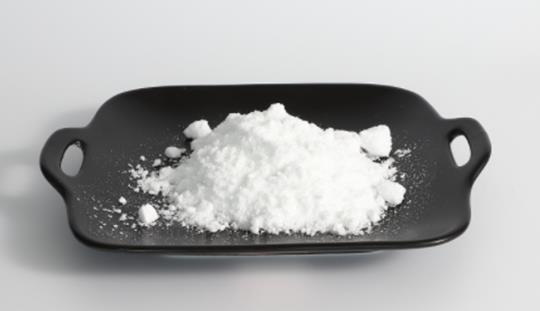
- High-purity liquid lidocaine solution
- Fine pore filtration units or membrane filters
- Rotary evaporator or vacuum concentrator
- Freeze dryer (lyophilizer) or spray dryer or vacuum dryer
- Vacuum filtration setup or cyclone separator for powder collection
- Solvents for washing (e.g., ethanol, distilled water)
- Controlled atmosphere drying chamber or vacuum oven
- Analytical instruments for quality control such as HPLC and moisture analyzers
Store lidocaine powder in airtight, moisture-proof containers away from light and heat to preserve potency and prevent aggregation. Use desiccants if necessary for humidity control. Packaging must comply with regulatory requirements for pharmaceutical APIs during transport and storage. Typically, containers are made of amber glass or coated aluminum foil to protect against UV radiation and oxygen exposure.
- Incomplete drying: Residual solvent can cause clumping—ensure proper drying time and conditions. Regular calibration and maintenance of dryers can prevent this issue.
- Thermal degradation: Avoid excessive heat during concentration and drying. Employ temperature sensors and automated controls for process monitoring.
- Poor filtration: Use appropriate membrane size and filtration technique to remove contaminants. Pre-filtration steps may be necessary for heavily particulate-laden solutions.
- Loss of yield: Minimize powder loss by gentle handling during washing and collection. Employ closed-loop systems and automated powder recovery devices.
- Powder agglomeration: Control humidity during storage and use flow agents if necessary to maintain powder flowability.
Lidocaine powder serves as a versatile raw material across multiple pharmaceutical and medical applications:
- Pharmaceutical compounding: Creams, gels, and ointments requiring precise anesthetic dosages. Powder form allows for better mixing and homogeneity.
- Transdermal patches and films: Lidocaine powder is incorporated into adhesive matrices or polymer films for localized anesthetic delivery. The powder form offers formulation flexibility.
- Injectable preparations: Though injections typically use liquid forms, powder lidocaine can be reconstituted for sterile injectable products.
- Medical device coatings: Lidocaine powder is used to coat medical instruments or implants to provide localized pain relief during procedures.
- Dental products: Incorporation in gels or sprays for topical oral anesthesia.
For OEM manufacturers supplying lidocaine-based products internationally, adhering to stringent quality and regulatory protocols is vital:
- Source pharmaceutical-grade raw materials from certified suppliers.
- Maintain Good Manufacturing Practice (GMP) compliance throughout production.
- Validate each step, including drying and powder handling, to ensure reproducibility.
- Provide detailed documentation to clients, including Certificates of Analysis (CoA) and Safety Data Sheets (SDS).
- Invest in staff training on safe handling of chemicals and equipment operation.
- Establish efficient communication channels with clients to customize formulations and packaging as required.
Employing these best practices enhances product reliability, safety, and client satisfaction when delivering OEM services to global partners.
Converting liquid lidocaine into powder form requires careful control of solution preparation, filtration, concentration, drying, and purification steps. Employing the appropriate drying technology—freeze-drying or spray drying—ensures a high-quality powder suitable for diverse pharmaceutical applications. This transformation enhances product stability, handling, and regulatory compliance, making it indispensable for manufacturers supplying global healthcare markets.
As an experienced biotech and pharmaceutical manufacturer offering OEM services, mastering this process positions your company as a reliable partner for foreign brands, wholesalers, and producers. If you want to learn more about lidocaine powder production or discuss OEM partnerships, contact us today for professional support and customized solutions.
Freeze-drying (lyophilization) is considered the most efficient for preserving lidocaine's bioactivity and purity, though spray drying is preferred for large-scale continuous production.
Basic extraction and drying can be performed with standard lab equipment, but industrial scale requires specialized dryers to ensure consistent quality and yield.
Purity is ensured by high-grade raw materials, filtration, controlled drying conditions, solvent washing, and rigorous quality control testing such as HPLC.
Handle solvents and bases with care, wear proper personal protective equipment (PPE), ensure good ventilation, and operate drying equipment according to safety guidelines to avoid chemical exposure and thermal hazards.
Lidocaine powder generally has longer shelf life—typically several years—when stored properly versus shorter stability for aqueous liquid solutions.
[1] https://www.uspharmacist.com/monthly_compounding_update/nl/83809/
[2] https://patents.google.com/patent/CN110642738A/en
[3] https://www.made-in-china.com/products-search/hot-china-products/Lidocaine_Powder.html
[4] https://www.youtube.com/watch?v=WA-q4pXd0Pk
[5] https://www.masspediatrictoolkit.com/wp-content/uploads/2017/02/LET-Formula-for-Pharmacy.pdf
[6] https://www.sigmaaldrich.com/JP/en/product/sigma/l7757
[7] https://patents.google.com/patent/CN102070483B/en
[8] https://pmc.ncbi.nlm.nih.gov/articles/PMC8464853/
[9] https://www.indiamart.com/proddetail/factory-supply-99-lidocaine-hydrochloride-hcl-powder-cas-73-78-9-with-good-price-for-pain-relief-2850329989555.html
[10] https://www.pccarx.com/Blog/2-tips-for-compounding-with-lidocaine-and-lidocaine-hcl
[11] https://www.sigmaaldrich.com/TC/en/product/sigma/l7757
[12] https://www.medisca.ca/products/lidocaine-hydrochloride-usp
[13] https://jpdb.nihs.go.jp/jp14e/14data/Part-I/Lidocaine.pdf
[14] https://pubs.acs.org/doi/10.1021/acs.oprd.6b00165
[15] https://www.fishersci.com/shop/products/lidocaine-powder/501801066
[16] https://www.youtube.com/shorts/eau2om6MLfY
[17] https://www.sciencedirect.com/science/article/abs/pii/S0167732217322420
[18] https://www.jianbeibio.com/plant-extracts/lidocaine-in-powder-form
[19] https://www.cerritos.edu/chemistry/chem_212/Documents/Lab/10_lidocaine.pdf
[20] https://pmc.ncbi.nlm.nih.gov/articles/PMC3920691/
[21] https://www.youtube.com/watch?v=mVBBJiTGfMo
[22] https://patents.google.com/patent/CN112521298A/en
[23] https://www.youtube.com/watch?v=b0iHmHNQd9w
[24] https://www.spectrumrx.com/media/flowchart/LI103_-_flowchart.pdf
[25] https://www.fengchengroup.com/pharmaceutical-api/local-anesthesia/lidocaine-cas-137-58-6-and-lidocaine.html
[26] https://www.youtube.com/watch?v=vuzqIsWFn3o
[27] https://www.youtube.com/watch?v=xLEKTIVt2QY
[28] https://www.supplybenzocaine.co.uk/how-to-make-lidocaine-hcl-powder.html
[29] https://www.youtube.com/watch?v=H4Nh9bDn2fQ
[30] https://environmentclearance.nic.in/DownloadPfdFile.aspx?FileName=MliA9v8q+wX1uy1VRRFbWJsExGVAs%2FNWN9YeTIwY0sB5w6NuIMxuAu4jZd3TCYDhof5TJa%2Ft5FvJ4siBzohwxBdDKrPDOco7YX7u47TpMcJ9ckY3flD8wGDxg3PnQNSB1aJr5HrkD5hZq6oxRRvGt4ROiJMxG2grrTyl8Slq%2FIs%3D&FilePath=93ZZBm8LWEXfg+HAlQix2fE2t8z%2FpgnoBhDlYdZCxzUlDadBGu7t8v4JoQvNU6UBlSmL0YQ7WQYaxkvlQvexKQ%3D%3D
[31] https://www.supplybenzocaine.co.uk/how-to-turn-lidocaine-into-powder.html
[32] https://study.com/academy/lesson/video/lidocaine-structure-mechanism-of-action.html
[33] https://pubs.acs.org/doi/abs/10.1021/jp101303j
[34] https://www.bloomtechz.com/synthetic-chemical/api-researching-only/99-9-pure-lidocaine-powder-cas-1377-58-6.html
[35] https://pmc.ncbi.nlm.nih.gov/articles/PMC3433813/
[36] https://www.sciencedirect.com/science/article/pii/S0378517324006112
[37] https://www.supplybenzocaine.co.uk/how-to-turn-liquid-lidocaine-into-powder.html
[38] https://www.shutterstock.com/video/search/lidocaine
[39] https://www.gettyimages.com/photos/lidocaine
[40] https://www.youtube.com/watch?v=gniltzvlQb8
[41] https://stock.adobe.com/search?k=lidocaine
[42] https://medlineplus.gov/ency/patientinstructions/000530.htm
[43] https://www.uv.mx/personal/izcamacho/files/2012/02/Pharmaceutical-Manufacturing-Handbook-Production-and-Processes-Wiley-2008.pdf
[44] https://www.shutterstock.com/search/lidocaine
[45] https://www.istockphoto.com/photos/lidocaine
[46] https://www.mayoclinic.org/drugs-supplements/lidocaine-topical-application-route/description/drg-20072776
[47] https://stock.adobe.com/search/video?k=lidocaine