Content Menu
● Thin Layer Chromatography Evidence
● Historical and Pharmaceutical Context
● Synthetic Routes and Polarity Impact
● Advanced Analysis: Computational Modeling
● FAQ
>> 1. Why is acetaminophen more polar?
>> 2. How does polarity affect synthesis?
>> 3. Can you supply these for OEM?
>> 4. What are Rf differences in TLC?
>> 5. Is phenacetin safe for research?
Acetaminophen, commonly known as paracetamol, exhibits greater polarity than phenacetin due to its hydroxyl (-OH) group, while phenacetin features a less polar ethoxy (-OCH2CH3) group. This difference influences their chemical behaviors, solubility, and applications in pharmaceuticals. Understanding this polarity contrast is crucial for researchers, manufacturers, and OEM partners in biotech and medical fields.
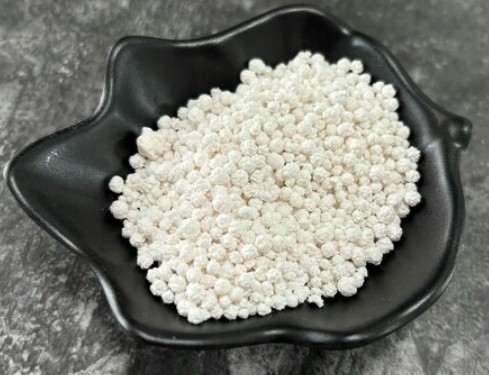
Acetaminophen's chemical formula is C8H9NO2, featuring a benzene ring with an acetamido group (-NHCOCH3) and a hydroxyl group (-OH) at the para position. The -OH group significantly enhances polarity because it can form strong hydrogen bonds with water and other polar molecules, creating a substantial dipole moment. In contrast, phenacetin (C10H13NO2) shares the same acetamido group but has an ethoxy group (-O-CH2-CH3) instead of the hydroxyl. This ethoxy group is less polar since ethers form weaker hydrogen bonds compared to alcohols, resulting in a more balanced electron distribution and lower overall polarity.
The structural difference is key: the direct O-H bond in acetaminophen allows for greater electronegativity imbalance (oxygen's electronegativity is 3.44 versus hydrogen's 2.20), amplifying its polarity. Phenacetin's longer alkyl chain dilutes this effect, making it behave more like a neutral organic compound in polar environments. This subtle substitution has profound implications in separation techniques, solubility profiles, and even metabolic pathways in biological systems. Researchers often visualize these molecules using molecular modeling software to appreciate how the -OH group's hydrogen-bonding capability creates a more "sticky" interaction with polar surfaces.
Expanding on this, acetaminophen's planar structure due to the aromatic ring and conjugated systems allows for efficient packing in polar solvents, whereas phenacetin's bulkier side chain introduces steric hindrance that reduces solvation efficiency. In pharmaceutical formulation, this polarity difference affects tablet disintegration and drug release kinetics, with acetaminophen dissolving faster in aqueous media.
Molecular polarity stems from uneven electron distribution caused by electronegativity differences between atoms, leading to dipole moments. More polar molecules have stronger intermolecular forces, particularly hydrogen bonding and dipole-dipole interactions, making them more soluble in polar solvents like water. Acetaminophen's -OH group participates vigorously in hydrogen bonding as both donor and acceptor, evidenced by its higher boiling point (around 420°C decomposition) compared to phenacetin's lower thermal stability.
Quantitative measures like dipole moment calculations show acetaminophen at approximately 2.4 Debye, higher than phenacetin's estimated 1.8 Debye, reflecting the -OH's influence. LogP values further quantify this: acetaminophen's logP of 0.46 indicates hydrophilic tendencies, while phenacetin's 1.02 suggests moderate lipophilicity. These metrics guide drug design, where polarity dictates blood-brain barrier penetration—phenacetin crosses more easily due to lower polarity.
In practical terms, polarity affects extraction processes in labs; acetaminophen partitions preferentially into aqueous layers during liquid-liquid extractions, while phenacetin favors organic phases. This principle underpins many purification strategies in industrial-scale production, especially for OEM manufacturing where purity exceeds 99%.
Thin Layer Chromatography (TLC) on silica gel, a polar stationary phase, provides direct evidence of polarity differences. In typical eluents like ethyl acetate:hexane (1:1), acetaminophen exhibits a lower Rf value (around 0.3-0.4), adhering strongly to the silica via hydrogen bonds from its -OH and -NH groups. Phenacetin, with higher Rf (0.6-0.7), migrates farther as its ether oxygen interacts weakly.
Experimental protocols confirm this: spotting equimolar solutions and developing plates under UV light reveals distinct spots—acetaminophen near the baseline, phenacetin near the solvent front. Factors like solvent polarity modulate Rf; increasing ethanol content lowers both but maintains the gap, underscoring inherent polarity. TLC's simplicity makes it invaluable for quality control in pharma factories, ensuring batch consistency for OEM clients.
Advanced variants like high-performance TLC (HPTLC) yield even sharper separations, with densitometric analysis quantifying spot intensities proportional to concentration. This technique has been pivotal in forensic analysis distinguishing illicit analogs.
Solubility directly correlates with polarity. Acetaminophen dissolves at 14 g/L in water at 20°C, rising sharply with temperature to over 50 g/L at 100°C, ideal for oral suspensions. Phenacetin manages only 4 g/L in water, preferring chloroform or ether where it exceeds 100 g/L. In ethanol, acetaminophen reaches 100+ g/L versus phenacetin's 50 g/L.
This profile impacts formulation: acetaminophen suits aqueous-based syrups, while phenacetin's lipophilicity fits ointments. Temperature-solubility curves show acetaminophen's endothermic dissolution, contrasting phenacetin's milder slope. pH effects are notable—acetaminophen's phenolic OH deprotonates above pH 9, boosting solubility, unlike stable phenacetin.
Industrial implications abound; Chinese OEM factories optimize recrystallization solvents based on these profiles, maximizing yields for export-grade products.
Infrared (IR) spectroscopy distinguishes them clearly. Acetaminophen displays a broad, intense -OH stretch at 3200-3500 cm⁻¹ and N-H at 3300 cm⁻¹, with carbonyl at 1650 cm⁻¹. Phenacetin lacks the -OH band, showing sharp C-O-C ether stretches at 1100-1200 cm⁻¹ and similar carbonyl/N-H.
NMR reinforces: acetaminophen's aromatic protons shift downfield (δ 7.2-7.5 ppm) due to -OH deshielding, with phenolic H at δ 9.5 ppm exchangeable. Phenacetin's ethyl signals (quartet at δ 4.0, triplet 1.4 ppm) confirm ether. Mass spectrometry shows acetaminophen's m/z 151 [M+], fragmenting via McLafferty rearrangement; phenacetin at m/z 179, losing ethoxy.
These orthogonal methods validate polarity in R&D pipelines.
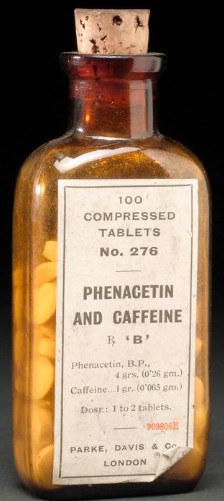
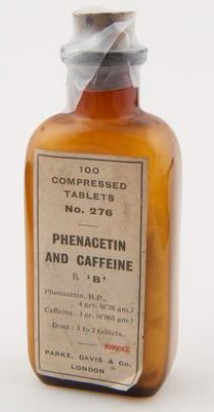
Phenacetin debuted in 1877 as an antipyretic, but nephrotoxicity led to bans by 1983. Acetaminophen, synthesized in 1877 but popularized in the 1950s, now dominates with billions of doses annually, safer via glucuronide/sulfate metabolism. Polarity aids acetaminophen's renal clearance, minimizing toxicity.
In China, factories produce acetaminophen at multi-ton scales, supplying global brands via OEM. Phenacetin lingers in niche research, valued for analgesic models.
Acetaminophen arises from p-aminophenol acetylation with acetic anhydride, preserving -OH. Phenacetin via p-phenetidine ethylation or Williamson ether from acetaminophen. Yields favor acetaminophen (90%+) due to polarity-driven crystallization.
Scale-up involves polarity-guided workups: acid-base extractions for acetaminophen.
Biotech leverages polarity for chiral separations, API purification via polar chromatography. OEM services customize polymorphs, stability enhanced by polarity-matched excipients.
Density Functional Theory (DFT) computes Mulliken charges, showing acetaminophen's oxygen partial negative charge higher (-0.45 e vs. -0.35 e). Molecular dynamics simulate hydration shells: 15 waters around acetaminophen vs. 10 for phenacetin.
Acetaminophen's polarity reduces hepatotoxicity risk at therapeutic doses; phenacetin's lipophilicity concentrates in kidneys.
Acetaminophen proves more polar than phenacetin across structural, chromatographic, solubility, and spectroscopic metrics. As a leading Chinese factory (supplybenzocaine.co.uk) specializing in biotech, pharma, and medical devices, we deliver premium OEM services for international brands, wholesalers, and producers. Contact us today for tailored acetaminophen, phenacetin, or custom intermediates—unlock reliable, high-purity solutions to elevate your production!
Contact us to get more information!
Acetaminophen's -OH group forms stronger hydrogen bonds than phenacetin's ether, confirmed by TLC and solubility data.
Higher polarity in acetaminophen improves polar solvent yields; phenacetin suits non-polar extractions.
Yes, supplybenzocaine.co.uk provides GMP-grade OEM production for global clients.
Acetaminophen: lower Rf (~0.3); phenacetin: higher (~0.6) on silica.
Used as reagent only; polarity data aids lab handling.
1. https://www.studocu.com/en-ca/messages/question/4023195/who-is-more-polar-between-acetaminophen-and-phenacetin-who-is-more-polar ...
2. https://www.benzocainesupplier.com/the-comprehensive-guide-to-choosing-the-best-phenacetin-china-supplier
3. https://homework.study.com/explanation/suppose-you-carry-out-a-tlc-separation-of-acetaminophen-and-phenacetin-on-silica-gel-usin ...
4. https://www.supplybenzocaine.co.uk/Article/list-r15.html
5. https://www.studocu.com/en-ca/messages/question/9572992/how-would-you-expect-phenacetin-to-behave-by-tlc-analysis-compared-to-ac ...
6. https://www.medchemexpress.cn/acetaminophen.html
7. https://www.coursehero.com/file/p55qqj/On-the-other-hand-the-less-polar-compound-will-be-easily-pulled-far-up-the/
8. https://cn.b2brazil.com/hotsite/anhuibbca/paracetamol-tablets-acetaminophenol-tabl
9. https://pmc.ncbi.nlm.nih.gov/articles/PMC9781932/
10. https://www.kaimosi.com/m-aminophenol.html
Hot tags: Acetaminophen Polarity, Phenacetin Polarity, Chemical Structure Comparison, Acetaminophen vs Phenacetin, Polarity of Drugs, Thin Layer Chromatography, Solubility of Acetaminophen, Solubility of Phenacetin, Drug Polarity Analysis, Organic Chemistry Concepts