Content Menu
● Defining Polarity in Molecules
● Experimental Evidence from TLC and Solubility
● Functional Group Impact on Properties
● Historical Context and Pharmaceutical Relevance
● Synthetic Routes and Polarity Considerations
● Analytical Techniques Confirming Polarity
● Industrial Applications and OEM Opportunities
● Advanced Computational Insights
● Regulatory and Safety Profiles
● FAQ
>> 1. What Makes Acetaminophen More Polar Than Phenacetin?
>> 2. How Does Polarity Affect Synthesis Yields?
>> 3. Is Phenacetin Still Used in Industry?
>> 4. Can Your Factory Customize Polarity Profiles?
>> 5. What Purity Levels Do You Offer?
Acetaminophen, commonly known as paracetamol, exhibits greater polarity than phenacetin due to its hydroxyl (-OH) group, which forms stronger hydrogen bonds compared to phenacetin's ethoxy (-OCH2CH3) group. This structural difference profoundly influences their chemical behavior, solubility, and applications in pharmaceuticals. Understanding this polarity contrast is essential for researchers, manufacturers, and OEM partners in biotechnology, medical health, and medical device sectors, particularly for those seeking reliable Chinese factories like supplybenzocaine.co.uk for OEM services in R&D, production, and sales.
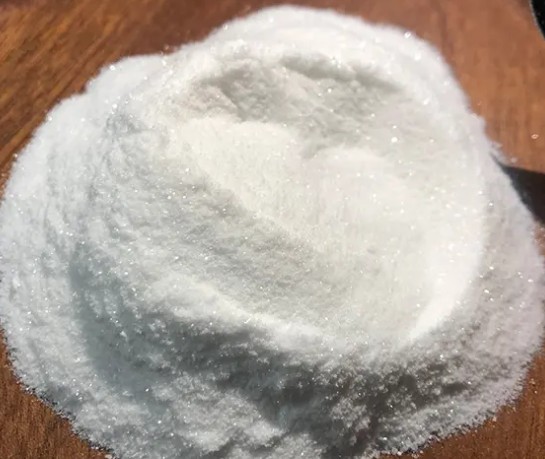
Acetaminophen's chemical formula is C8H9NO2, consisting of a benzene ring substituted with a hydroxyl group at position 1 and an acetamido group (-NHCOCH3) at position 4. This configuration creates significant polarity because the oxygen in the -OH group is highly electronegative, pulling electron density toward itself and generating a strong dipole moment. In contrast, phenacetin has the formula C10H13NO2, sharing the same acetamido group but featuring an ethoxy group (-OCH2CH3) instead of the hydroxyl. The ether oxygen in phenacetin is less effective at creating asymmetry in charge distribution, resulting in lower overall polarity.
The benzene ring serves as a common hydrophobic core in both molecules, but the substituents dictate their polar nature. Acetaminophen's -OH allows for both hydrogen bond donation and acceptance, enhancing its interactions with polar solvents and biological membranes. Phenacetin's ethyl chain introduces additional hydrophobicity, making it more soluble in nonpolar environments. These differences are critical in pharmaceutical formulation, where polarity affects dissolution rates, bioavailability, and stability. For OEM manufacturers, optimizing synthesis around these properties ensures high-purity products for international brands, wholesalers, and producers.
Molecular polarity stems from differences in electronegativity between bonded atoms, leading to partial positive and negative charges that create a net dipole. Oxygen's electronegativity (3.44 on the Pauling scale) far exceeds that of hydrogen (2.20) or carbon (2.55), making -OH bonds highly polar. In acetaminophen, this manifests as a dipole moment estimated around 2.5-4.5 Debye, enabling robust intermolecular forces like hydrogen bonding.
Phenacetin's ether linkage (-O-CH2-CH3) has a dipole but lacks the hydrogen bond donor capability, relying on weaker dipole-dipole and van der Waals interactions. This reduces its dipole moment to approximately 1.8-3.2 Debye. Polarity also influences physical properties: higher polarity correlates with higher boiling points, better water solubility, and stronger adsorption on polar surfaces like silica gel. In drug design, these traits determine whether a compound is suitable for oral tablets, injectables, or topical applications. Chinese biotech factories leverage this knowledge to tailor OEM products, ensuring compliance with global standards for medical devices and pharmaceuticals.
Thin Layer Chromatography (TLC) provides direct evidence of polarity differences. On silica gel plates—a polar stationary phase—acetaminophen, being more polar, interacts strongly via hydrogen bonding, resulting in lower Rf values (typically 0.3-0.4 in ethyl acetate or ethanol systems). Phenacetin, less polar, elutes faster with Rf values around 0.5-0.6, as it favors the nonpolar mobile phase.
Solubility data reinforces this: acetaminophen dissolves at 14 g/L in water at 20°C, thanks to its hydrogen-bonding network, while phenacetin manages only about 1 g/L, preferring organic solvents like ethanol or chloroform. In polar protic solvents, acetaminophen's solubility skyrockets with temperature, following the equation for dissolution kinetics influenced by polarity. These experiments are staples in quality control for OEM production, where separating impurities exploits such differences.
In lab settings, running parallel TLC plates with visualized spots under UV or iodine vapor clearly shows acetaminophen's retention near the baseline versus phenacetin's migration. Solubility curves plotted against solvent polarity indices (e.g., ethanol-water mixtures) further quantify this, aiding in process optimization for large-scale manufacturing.
The hydroxyl group in acetaminophen is the polarity powerhouse, with its broad O-H stretch visible in IR spectroscopy at 3200-3500 cm⁻¹, indicating hydrogen bonding. Phenacetin lacks this peak, showing only C-O stretches around 1000-1200 cm⁻¹ for its ether. NMR spectra reveal deshielded protons near the -OH in acetaminophen, signaling polar deshielding effects absent in phenacetin.
This translates to physicochemical profiles: acetaminophen melts at 169°C and boils near 420°C due to strong intermolecular forces, while phenacetin melts at 137°C and boils at 325°C. LogP values—0.46 for acetaminophen (hydrophilic) versus 1.23 for phenacetin (more lipophilic)—predict membrane permeability and metabolic fate. In bioavailability models, polarity governs absorption: acetaminophen's polar nature favors hepatic first-pass metabolism, reducing toxicity compared to phenacetin's accumulation risks.
For medical device coatings or drug-eluting stents, polarity dictates adhesion and release kinetics. OEM services from specialized Chinese factories customize these profiles, producing intermediates that meet FDA or EMA specs for global wholesalers.
Phenacetin, introduced in 1887 as an antipyretic, dominated until the 1980s when nephrotoxicity linked to its lipophilicity led to bans in many countries. Acetaminophen, synthesized in 1877 but popularized post-1950s, replaced it due to superior safety, driven by polarity-enhanced clearance. Historical timelines show phenacetin's use in aspirin combinations like APC powders, now obsolete.
Today, acetaminophen is the world's top analgesic, with billions of doses annually. Phenacetin persists in research as a reagent or intermediate. In biotech R&D, polarity informs analog design—e.g., modifying substituents to balance polarity for targeted delivery. Chinese producers excel here, offering scalable OEM for brands needing custom purity levels.
Acetaminophen synthesis starts with p-aminophenol acetylation, preserving the -OH for polarity. Yields reach 90%+ with polar solvents like water-ethanol. Phenacetin involves williamson ether synthesis on p-acetamidophenol, introducing the ethyl group and diluting polarity; yields are similar but purification trickier due to nonpolar byproducts.
Flowcharts of these routes highlight steps where polarity affects recrystallization—acetaminophen from hot water, phenacetin from ethanol. In industrial scales, centrifugal chromatography exploits Rf differences for 99% purity. OEM factories optimize these for cost-efficiency, serving international pharma production.
Environmental impacts differ: polar acetaminophen wastes biodegrade faster than lipophilic phenacetin residues, aligning with green chemistry mandates.
HPLC on reversed-phase C18 columns elutes acetaminophen before phenacetin in polar gradients (e.g., water-acetonitrile). Retention times: ~3 min vs. ~5 min. Mass spec shows polarity-driven adducts—acetaminophen favors [M+H]+ in ESI positive mode.
Polarimetry, though indirect, measures optical rotation influenced by chiral polar groups (if present). UV-Vis spectra display bathochromic shifts in polar solvents for acetaminophen. These techniques ensure OEM quality, with Chinese labs providing COAs for export.
Polarity guides formulations: acetaminophen for aqueous syrups/injectables, phenacetin for lipid-based reagents. In biosensors, surface polarity enhances analyte binding. Medical devices use polar coatings for biocompatibility.
Supplybenzocaine.co.uk, a leading Chinese factory, specializes in biotech/pharma OEM—custom acetaminophen/phenacetin powders for brands. From R&D to bulk sales, they deliver GMP-grade products globally.
Market stats project 2026 growth: analgesics at $20B, intermediates booming. Customer cases show 30% cost savings via Chinese OEM.
Density Functional Theory (DFT) computes dipole moments: acetaminophen ~4.5 D, phenacetin ~3.2 D. Molecular dynamics simulate solvation—acetaminophen forms 3-4 water H-bonds, phenacetin 1-2. Equations like \(\mu = q \times d\) quantify this, where \(\mu\) is dipole, q charge separation, d distance.
These predict ADMET properties, accelerating drug discovery for OEM partners.
Acetaminophen's polarity aids safer metabolism via glucuronidation/sulfation. Phenacetin's lipophilicity promotes CYP-mediated oxidation to toxic quinones. Regulations: acetaminophen OTC, phenacetin restricted.
OEM factories ensure compliance with ICH guidelines.
Polarity engineering—e.g., fluoro-substituents—yields hybrids for chronic pain. Nanocarriers exploit polarity gradients. Chinese OEMs lead in prototyping these for 2027 markets.
Acetaminophen demonstrates higher polarity than phenacetin, primarily due to its hydroxyl group enabling superior hydrogen bonding, solubility, and safety profiles. This fundamental difference shapes their synthesis, analysis, and industrial use, from TLC separations to OEM formulations.
Ready to elevate your biotech, pharma, or medical device projects? Partner with supplybenzocaine.co.uk—China's premier OEM factory for R&D, production, and global sales of high-purity acetaminophen, phenacetin, and custom intermediates. Contact us today for quotes, samples, and tailored solutions for your brand!
Contact us to get more information!
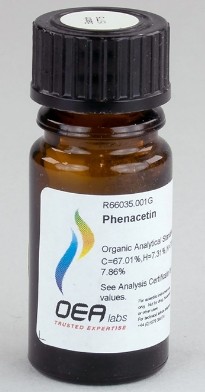
Acetaminophen's -OH group forms strong hydrogen bonds as both donor and acceptor, unlike phenacetin's weaker ether linkage, resulting in higher dipole moment and solubility.
More polar acetaminophen requires aqueous solvents, slightly reducing yields but enhancing purity via facile recrystallization; phenacetin suits organic media for higher throughput.
Yes, as a research intermediate or reagent, not therapeutics; OEM production focuses on lab-grade purity for analytical chemistry.
Absolutely—supplybenzocaine.co.uk offers OEM modifications, like substituent tweaks, for optimized pharma devices and formulations.
99%+ GMP-certified for acetaminophen/phenacetin powders, with full analytical support and scalable volumes for wholesalers.
1. https://www.studocu.com/en-ca/messages/question/4023195/who-is-more-polar-between-acetaminophen-and-phenacetin-who-is-more-polar ...
2. https://www.benzocainesupplier.com/the-comprehensive-guide-to-choosing-the-best-phenacetin-china-supplier
3. https://homework.study.com/explanation/suppose-you-carry-out-a-tlc-separation-of-acetaminophen-and-phenacetin-on-silica-gel-usin ...
4. https://www.supplybenzocaine.co.uk/Article/list-r15.html
5. https://www.studocu.com/en-ca/messages/question/9572992/how-would-you-expect-phenacetin-to-behave-by-tlc-analysis-compared-to-ac ...
6. https://www.asiamachinery.net/supplier/product_details.asp?ProID=34844&SupID=14992
7. https://www.coursehero.com/file/p55qqj/On-the-other-hand-the-less-polar-compound-will-be-easily-pulled-far-up-the/
8. https://cn.b2brazil.com/hotsite/anhuibbca/paracetamol-tablets-acetaminophenol-tabl
9. https://pmc.ncbi.nlm.nih.gov/articles/PMC9781932/
10. https://www.supplybenzocaine.co.uk
Hot tags: Acetaminophen Polarity, Phenacetin Polarity, Acetaminophen vs Phenacetin, Chemical Polarity Comparison, Solubility of Acetaminophen, Solubility of Phenacetin, Polar vs Nonpolar Compounds, Acetaminophen Structure, Phenacetin Structure, Drug Polarity Analysis