Content Menu
● Understanding Penicillin G Procaine
>> Composition and Mechanism of Action
>> Medical Uses
>> Implications
● Are Penicillin G Procaine and Penicillin Interchangeable?
● Summary of Clinical Applications and Considerations
● Frequently Asked Questions (FAQ)
>> 1. What is the main difference between Penicillin G and Penicillin G Procaine?
>> 2. Can Penicillin G Procaine treat all infections treated by Penicillin G?
>> 3. Why is procaine added to Penicillin G?
>> 4. Are there any risks associated with Penicillin G Procaine?
>> 5. How is Penicillin G Procaine administered?
Understanding the nuances between medications, especially antibiotics, is critical for healthcare providers, pharmaceutical companies, and patients alike. This article explores the question: Is Penicillin G Procaine the same as Penicillin? Through a detailed examination of their chemical composition, pharmacokinetics, medical applications, and differences, this article clarifies how these two are related yet distinct.
Penicillin, discovered in 1928 by Alexander Fleming, revolutionized medicine as the first widely effective antibiotic. It belongs to the beta-lactam group of antibiotics, which exert their effect by interfering with bacterial cell wall synthesis, causing bacterial death. Penicillin is naturally derived from mold species such as Penicillium chrysogenum and Penicillium rubens. Since its discovery, penicillin has saved countless lives by treating numerous bacterial infections.
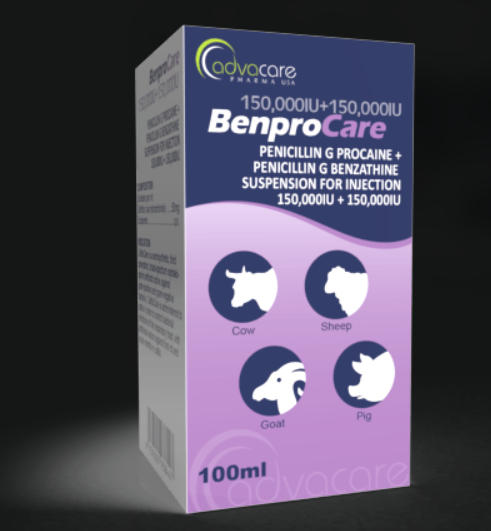
Penicillin is not a single drug but a class with various forms, primarily:
- Penicillin G (Benzylpenicillin): Administered mainly by injection because it is unstable in stomach acid. Used in treating serious infections caused by susceptible bacteria.
- Penicillin V: An acid-stable form taken orally, used for mild to moderate infections.
Several derivatives and salt forms exist to improve penicillin's pharmacokinetic properties and administration routes.
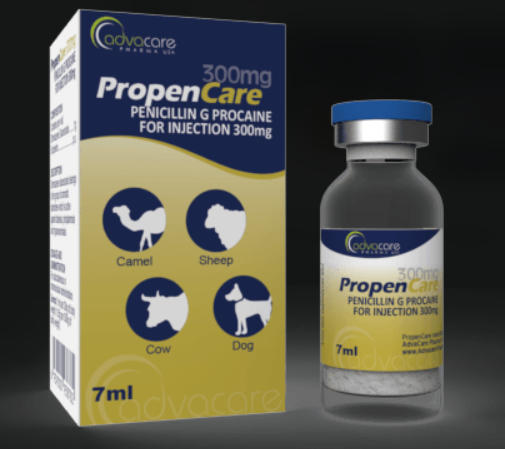
Penicillin G Procaine, often referred to simply as procaine penicillin, is a specific formulation of Penicillin G designed for long-acting intramuscular injection. It is a salt formed by combining penicillin G and procaine, a local anesthetic.
- Penicillin G Component: Kills bacteria by blocking their ability to create vital cell walls.
- Procaine Component: Serves as a local anesthetic to numb the injection site and slows the release of penicillin G into the bloodstream, providing sustained blood levels for up to 24 hours or more.
The procaine salt causes the medication to form a depot at the muscle site, gradually releasing penicillin to maintain therapeutic plasma concentrations over an extended period, reducing the need for frequent injections.
Penicillin G Procaine is commonly used to treat:
- Syphilis,
- Anthrax,
- Pneumonia,
- Skin and soft tissue infections,
- Prophylactic treatment against bacterial endocarditis in at-risk patients.
Its long-acting nature makes it particularly useful when consistent antibiotic blood levels are needed without continuous dosing.
Though penicillin G and penicillin G procaine share the same antibacterial agent, their pharmacokinetics differ significantly due to the procaine component.
- Penicillin G alone (e.g., as potassium salt) is absorbed quickly and cleared relatively fast, with a half-life of around 12.9 hours.
- Penicillin G Procaine has a longer half-life — approximately 24.7 hours for penicillin G due to the slow release from the muscle depot.
- The procaine component itself also has a longer elimination half-life when given as penicillin G Procaine (around 15.6 hours) compared to quicker clearance when injected as procaine hydrochloride alone.
These differences mean that penicillin G procaine maintains effective blood concentrations for a longer duration, potentially improving treatment adherence by reducing injection frequency.
Not exactly. They are related but have distinct clinical implications.
| Aspect | Penicillin G | Penicillin G Procaine |
|---|---|---|
| Drug formulation | Pure penicillin G (various salts) | Penicillin G combined with procaine salt |
| Administration route | Intravenous, intramuscular | Intramuscular only |
| Duration of action | Short-acting (hours) | Long-acting (up to 24+ hours) |
| Injection pain | Higher, no anesthetic effect | Reduced, due to procaine anesthetic |
| Use case | Requires frequent dosing | Suitable for sustained release |
Thus, Penicillin G Procaine is best used when a long-acting injectable is needed, whereas penicillin G in other forms may suit different clinical scenarios, including intravenous therapy where immediate blood levels are desired.
Both medications carry potential allergic reactions, as with all penicillins—ranging from mild skin rashes to severe anaphylaxis. Procaine-specific allergies can occur but are rare.
Common side effects include:
- Pain or swelling at the injection site
- Allergic reactions (rash, itching)
- Rare neurological effects with procaine overdose
Proper screening for allergies is essential before administration.
- Penicillin G Procaine is preferred for sustained antibiotic coverage with lower injection site discomfort.
- Plain penicillin G salts are used for rapid systemic antibiotic levels or intravenous therapy.
- They are not interchangeable, and choice depends on infection type, severity, patient compliance, and clinical setting.
Penicillin G Procaine is not the same as penicillin per se but a long-acting, procaine salt formulation of penicillin G designed for intramuscular injection. Understanding their differences in pharmacokinetics, administration, and clinical use is critical for effective patient treatment and pharmaceutical applications. If your organization is seeking expert manufacturing and OEM services for advanced penicillin formulations, contact us to explore collaboration opportunities tailored to your needs.
Penicillin G is the pure antibiotic, whereas Penicillin G Procaine is a procaine salt formulation that allows for long-acting intramuscular injections with reduced injection pain.
No, Penicillin G Procaine is mainly used for infections requiring sustained release and is not suitable for intravenous administration or infections needing immediate high plasma levels.
Procaine acts as a local anesthetic and slows absorption, enabling the antibiotic to be released gradually over time.
Yes, allergic reactions to penicillin or procaine can occur. Injection site pain and rare neurological effects are possible.
It is given by intramuscular injection by a healthcare professional, typically once daily or less frequently depending on dosing needs.
[1](https://madbarn.com/research/pharmacokinetics-of-penicillin-g-procaine-versus-penicillin-g-potassium-and-procaine-hydrochloride-in-horses/)
[2](https://pubmed.ncbi.nlm.nih.gov/10895905/)
[3](https://jamanetwork.com/journals/jama/fullarticle/357863)
[4](https://pubmed.ncbi.nlm.nih.gov/12241099/)
[5](https://www.sciencedirect.com/topics/medicine-and-dentistry/procaine-benzylpenicillin)
[6](https://en.wikipedia.org/wiki/Penicillin)
Hot tags: Penicillin G Procaine, Difference Between Penicillin G, Penicillin G Uses, Penicillin G Procaine Injection, Antibiotic Penicillin G, Penicillin G Procaine Side Effects, Penicillin G Procaine Benefits, Penicillin G Procaine Dosage, Penicillin G Procaine vs Benzathine, Penicillin G Procaine Mechanism