Content Menu
● What lidocaine is and why the hydrochloride salt is common
● The chemical rationale for using HCl
● Common synthesis routes and where HCl fits in
● Purification, salt forms, and formulation considerations
● Quality control and regulatory readiness for OEMs
● Safety, handling, and environmental aspects
● Manufacturing considerations for international brands
● Integration into a complete article
>> Advanced synthesis considerations and green chemistry perspectives
>> Quality and analytical considerations
>> Supply chain and customer engagement
● FAQs
>> Q1: What is lidocaine hydrochloride used for in medical products?
>> Q2: Why is HCl used in lidocaine synthesis?
>> Q3: Are there safety concerns when handling lidocaine and HCl?
>> Q4: Can lidocaine hydrochloride be used in all formulations?
>> Q5: What should an OEM supplier provide to international buyers?
In the global pharmaceutical and medical device supply chain, lidocaine remains one of the most widely used local anesthetics. For OEM manufacturers serving international brands, the efficient and compliant production of lidocaine—and specifically lidocaine hydrochloride (Lidocaine HCl)—requires a clear understanding of the role that hydrochloride (HCl) plays in synthesis, purification, stability, and formulation. This article examines the chemical, practical, and regulatory dimensions of using HCl in lidocaine synthesis, with a focus on how a Chinese manufacturer can align processes, documentation, and quality control to meet global expectations. By detailing reaction strategies, salt-formation principles, and downstream considerations for dosage forms, this piece aims to equip supply partners with actionable guidance for reliable outsourcing, contract manufacturing, and contract development services in the international market.
Lidocaine is a well-established amide-type local anesthetic. In its pharmaceutical practice, lidocaine is frequently supplied as lidocaine hydrochloride, because the hydrochloride salt form is more water-soluble, enhances stability in many formulations, and improves handling for injectable and topical products. The hydrochloride variant also provides predictable pharmacokinetic behavior and dosing consistency across a wide range of delivery systems. For an OEM supplier, delivering lidocaine as the hydrochloride salt often simplifies quality control, shipping, and formulation development for customers who require sterile injections, gels, creams, or transdermal systems.
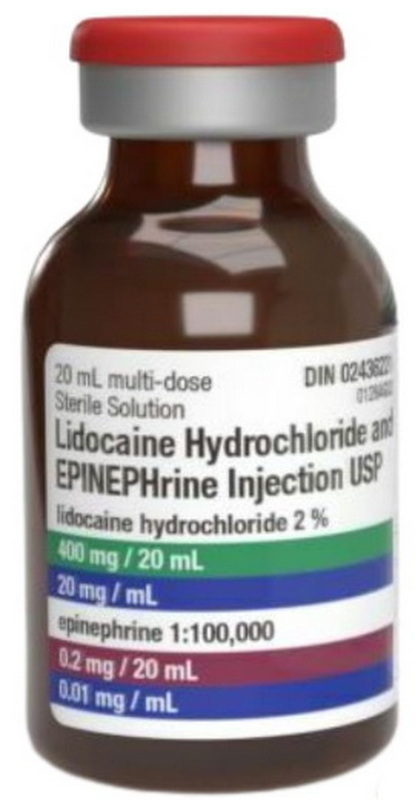
The addition of hydrochloric acid during lidocaine synthesis serves several practical purposes:
- Salt formation: Protonation of the amine moiety in lidocaine converts the base into a stable, water-soluble salt, which is essential for parenteral and some topical formulations.
- pH and reaction control: Acidic conditions help stabilize reaction intermediates and can drive certain steps toward completion, including acylation and subsequent transformations in several published syntheses.
- Purification and crystallization: Salt formation often improves crystallinity and facilitates purification by enabling selective crystallization or phase separation from impurities, aiding downstream quality control.
In industrial settings, converting free-base lidocaine into lidocaine hydrochloride yields a product that is easier to formulate into sterile injections, ophthalmic solutions, regional anesthetic creams, or other dosage forms, while also enabling more straightforward analytical testing and standardization across batches.
Across the literature, lidocaine is typically synthesized via routes that involve an acylation step to form the lidocaine backbone, followed by introduction of the diethylaminoethyl side chain, and finally salt formation with HCl to yield lidocaine hydrochloride. While exact reagents and conditions vary, a representative high-level sequence includes:
- Step 1: Activation and acylation. An aniline derivative (commonly 2,6-dimethylaniline) reacts with an α-haloacetyl compound (or equivalent acylating agent) under controlled conditions to form an amide intermediate.
- Step 2: Nucleophilic addition or substitution to install the diethylaminoethyl side chain, furnishing the lidocaine skeleton.
- Step 3: Salt formation. The free-base lidocaine is treated with hydrogen chloride (gas,aq. HCl, or an HCl-containing solution) to form lidocaine hydrochloride, enhancing solubility and enabling formulation in aqueous media.
In patent and academic sources, some processes emphasize one-pot or telescoped approaches, where the acylation, amination, and salt-formation steps are executed within a single reactor sequence with careful control of temperature, solvent choice, and acid-base balance. These strategies can reduce processing time, minimize intermediate handling, and improve overall yield and purity, which is especially relevant for high-volume OEM production intended for international markets.
- Salt forms and solubility: Lidocaine hydrochloride is the most common salt form for injectable and topical products due to its high aqueous solubility. Some specialized formulations or markets may require alternative salts or free-base forms, but HCl-based salt formation remains dominant for broad compatibility.
- Purity and impurities: After salt formation, standard purification steps include crystallization, filtration, washing, drying, and analytical testing to verify assay, residual solvents, and impurities according to pharmacopeial standards. Consistency of salt content and moisture control are critical for dose accuracy and shelf stability.
- Formulation compatibility: The chosen salt form influences final product viscosity, pH, and excipient interactions. For instance, lidocaine HCl in injectable formulations is typically prepared under sterile conditions with buffering systems to maintain stability and patient comfort, whereas topical products may require pH adjustments and surfactants compatible with the salt form.
- Stability considerations: The lidocaine HCl salt is generally stable under refrigerated or controlled room-temperature conditions when packaged appropriately. Moisture control, light protection, and temperature excursions are important to maintain potency and prevent degradation.
- Documentation: Comprehensive COA (certificate of analysis), MSDS (material safety data sheet), batch records, and regulatory declarations are essential for international buyers. Documentation should clearly describe the salt form, assay results, impurity profiles, residual solvent limits, and packaging specifications.
- Regulatory alignment: OEM suppliers should map their processes to the pharmacopoeial and regulatory expectations of key markets (for example, USP/FDP or EP equivalents where applicable) and be prepared to support customers with dossier-ready data or deviations as needed.
- Traceability and change control: Implement robust lot-tracking systems and change-control procedures to preserve supply chain integrity, essential for multinational brands that require consistent supply and rapid recalls if necessary.
- Patents and IP landscape: Be mindful of filings and claims related to lidocaine synthesis and salt-formation processes in the relevant jurisdictions. Clear IP stewardship reduces risk for both the supplier and the customer in international supply chains.
- Worker protection: PPE including gloves, eye protection, lab coats, and appropriate engineering controls (fume hoods) is essential when handling lidocaine, HCl, and related reagents.
- Storage and handling: HCl solutions are corrosive; lidocaine-containing materials should be stored to minimize moisture exposure and photodegradation. Proper labeling and segregated storage help reduce risk of cross-contamination and accidental reactions.
- Waste management: Acidic waste streams require neutralization and compliant disposal in line with local and international regulations. Environmental stewardship should be integrated into the manufacturing workflow, with clear SOPs and training for personnel.
- Safety data and emergency planning: Readily accessible MSDS sheets, spill response plans, and emergency contact details are standard requirements for facilities producing lidocaine-related products.
- Capacity and scalability: For international brands, scalable production capacity with consistent quality is a critical differentiator. OEMs should be prepared to provide scalable batch sizes while maintaining tight control over impurities and moisture content.
- API and excipient compatibility: If the OEM also supplies active pharmaceutical ingredients (APIs) or excipients, compatibility with lidocaine HCl formulations must be validated. This includes solubility, stability, and compatibility testing in representative dosage forms.
- Packaging and labeling: Packaging must meet regulatory requirements for each destination market, including labeling in appropriate languages, batch traceability, expiration dating, and compliance with shipping regulations for hazardous materials where applicable.
- Quality agreements: Strong quality agreements that specify acceptance criteria, change control, audit rights, and remediation plans help ensure a smooth supplier-customer relationship across markets.
To meet the needs of international audiences, the article remains technically rigorous while remaining accessible to readers who may not be specialists in lidocaine chemistry. The emphasis is on practical implications for manufacturers: how HCl is used to form lidocaine HCl, how that salt form influences downstream formulation, how to maintain regulatory readiness, and how to communicate technical capabilities to potential buyers.
- Process efficiency: One-pot or telescoping approaches can reduce solvent use and processing time, lowering production costs and environmental impact while improving throughput. For OEMs, process intensification strategies can translate into shorter cycle times and more consistent product quality.
- Green chemistry principles: Replacing hazardous or highly toxic solvents with greener alternatives, minimizing waste, and maximizing atom economy align with industry trends toward sustainable manufacturing. While lidocaine synthesis historically relied on chlorinated solvents or halogenated reagents in some steps, researchers and manufacturers continually explore substitutions that maintain performance and safety.
- Life-cycle thinking: From raw materials to packaging, lifecycle considerations highlight opportunities to reduce the environmental footprint of lidocaine HCl manufacturing. This includes solvent recovery, energy efficiency, and waste minimization programs as part of broader corporate sustainability goals.
- Analytical methods: Precise quantification of lidocaine and lidocaine HCl requires validated analytical methods, including potency assays, impurity profiles, and residual solvent analysis. Consistency across lots is essential for regulatory acceptance in different markets.
- In-process controls: Real-time monitoring of critical parameters (temperature, pH, solvent composition) supports consistent salt formation and final product quality. Documenting these controls in batch records helps ensure compliance with international standards.
- Stability testing: Stability studies under various temperature and humidity conditions provide data for shelf-life determinations and storage recommendations, supporting regulatory submissions and customer confidence.
- Partnering with foreign brands: OEMs should present clear capability statements that describe synthesis routes, salt-formation strategies, purification capabilities, and quality assurance processes. Transparent communication about control strategies and testing regimes helps build trust with international customers.
- Regulatory support: Providing regulatory-ready documentation, such as COAs, pharmacopoeial test data, and certifications, can streamline the customer's own regulatory submissions and import processes.
- Risk management: Identifying and mitigating potential supply chain risks—such as raw material sourcing, vendor qualification, and logistics constraints—helps maintain continuity of supply for global customers.
HCl-enabled salt formation is central to the practical production of lidocaine hydrochloride, delivering the solubility, stability, and formulation flexibility demanded by international markets. For Chinese OEM manufacturers servicing foreign brands, a robust approach to salt-formation, purification, quality control, regulatory alignment, and traceability translates into reliable partnerships and market-ready products. By embracing efficient synthesis strategies, green chemistry principles where feasible, and rigorous documentation, suppliers can meet the expectations of distributors, pharmaceutical companies, and medical device manufacturers worldwide. Contact us to know more!
A: It is the salt form used to improve solubility and stability for injectable and topical anesthetic formulations, enabling consistent dosing and easier handling in diverse dosage forms.
A: HCl promotes salt formation, stabilizes intermediates, and facilitates purification, contributing to a more process-friendly and formulation-ready product.
A: Yes; appropriate PPE, ventilation, and waste management practices are essential to ensure safe handling and environmental compliance.
A: While lidocaine HCl is preferred for most injectable and topical products due to solubility, some formulations may use other salts or free-base forms depending on specific pharmacokinetic or delivery requirements.
A: Comprehensive COA, MSDS, batch traceability data, regulatory declarations, and consistent quality data, along with clear communication about salt form and formulation capabilities.
[1](https://patents.google.com/patent/CN110642738A/en)
[2](https://patents.google.com/patent/CN112521298A/en)
[3](https://www.cerritos.edu/chemistry/chem_212/Documents/Lab/10_lidocaine.pdf)
[4](https://pubs.acs.org/doi/10.1021/ed076p1557)
[5](https://people.chem.umass.edu/mcdaniel/CHEM-267/Experiments/Lidocaine.pdf)
[6](https://scholars.csus.edu/view/pdfCoverPage?instCode=01CALS_USL&filePid=13232594650001671&download=true)
[7](https://pmc.ncbi.nlm.nih.gov/articles/PMC3148842/)
[8](https://eureka.patsnap.com/patent-CN112441938A)
[9](https://home.sandiego.edu/~khuong/chem302L/Handouts/Lidocaine_handout_Su07.pdf)
Hot tags: HCL in Lidocaine Synthesis, Lidocaine Hydrochloride Synthesis, Chemical Reactions of Lidocaine, Role of HCL in Organic Chemistry, Lidocaine Production Process, Hydrochloric Acid in Drug Synthesis, Lidocaine Synthesis Steps, Pharmaceutical Chemistry of Lidocaine, HCL as a Reagent in Synthesis, Lidocaine Chemical Properties