Content Menu
● What Is Lidocaine HCL Topical Use?
● Common Formulations and Applications
● Therapeutic Areas and Use Cases
● Regulatory and Safety Considerations
● OEM Sourcing and Manufacturing Considerations
● Quality and Compliance in Practice
● Practical Handling and Safety Guidelines
● FAQ
>> 1. What are the common topical Lidocaine HCl concentrations?
>> 2. What regulatory licenses are required for importing Lidocaine HCl powder?
>> 3. How does Lidocaine HCl compare to other topical anesthetics?
>> 4. Can OEMs provide small-batch sampling and pilot runs?
>> 5. What is the typical OEM process for Lidocaine HCl products?
- Add a brief definition of Lidocaine HCl and why it is formulated for topical use.
- Distinguish between lidocaine base vs. lidocaine hydrochloride salt forms and typical topical concentrations.
- Explain how lidocaine blocks voltage-gated sodium channels to prevent initiation and conduction of nerve impulses.
- Explain how this translates into local anesthesia and duration of effect in topical applications.
- Include practical notes on onset time and duration for common topical products (e.g., gels, creams, patches).
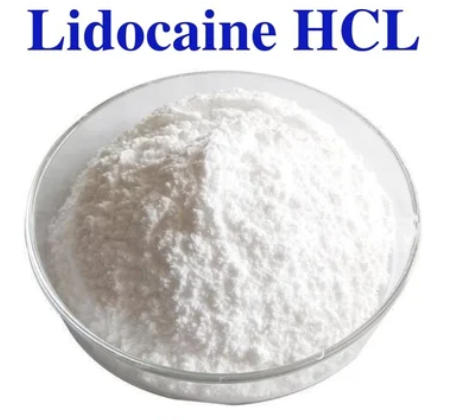
1. Topical creams and ointments
2. Gels and solutions for mucosal surfaces
3. Transdermal patches
4. Injectable/local infiltration vs. topical routes (clarify scope)
- Describe typical concentrations (e.g., 2–5% lidocaine HCl in creams/ointments, patch percentages vary) and carrier science (emollients, permeation enhancers, polymers).
- Minor dermatological procedures, sunburn relief, burns, insect bites, itching, scalp relief, mucosal anesthesia, dental procedures, etc.
- Emphasize suitability for cosmetics, dermatology, and pre-procedural analgesia when used topically.
- Briefly discuss regulatory classifications (OTC topical anesthetic status, pharmaceutical GMP/ISO considerations for OEM manufacturing).
- Safety profile: common adverse effects, risk of systemic absorption, interactions with other drugs.
- Special populations and safety precautions (e.g., skin integrity, pediatric considerations).
- Storage, handling, and labeling requirements for bulk Lidocaine HCl powder or finished products.
1. Purity and quality certifications
2. Customization capabilities (concentration, formulation base, packaging, labeling)
3. Regulatory compliance and documentation (MSDS, COA, GMP certificates)
4. Supply chain reliability and lead times
- Emphasize the importance of traceability, batch testing, and QA/QC workflows.
- Outline QA/QC steps: raw material qualification, in-process testing, finished product testing, stability studies.
- Mention standard tests: API potency, residual solvents, microbiological limits, purity, endotoxins if relevant to sterile products.
- Discuss packaging integrity, tamper-evidence, and serialization if applicable to OEM shipments.
- Benefits of partnering with a capable Chinese OEM factory for Lidocaine HCl powders and finished topical products: scale, compliance, customization, supply security, cost efficiencies, lead-time advantages.
- How to begin: RFI/RFP process, sample requests, quality documentation, and NDA considerations.
- Safe handling practices for Lidocaine HCl powder in manufacturing environments.
- Personal protective equipment, spill response, and waste disposal.
- Summarize key takeaways: Lidocaine HCl topical use, formulation options, and the value of a dependable OEM partner.
- Include a strong call to action inviting inquiries about OEM collaboration, customization, and private-label opportunities.
Contact us to know more!
Typical consumer-grade topical lidocaine products use concentrations around 2% to 5% lidocaine HCl for creams, gels, sprays, and ointments intended for local anesthesia or analgesia. Higher-concentration formulations may exist for dental or medical procedures under professional supervision, but for OTC topical products, 2–5% is standard. In radiating medical contexts or prescription products, concentrations and formulations are tailored to specific indications, and a compounding pharmacist or regulatory guidance governs those limits.
Import requirements vary by country, but generally:
A licensed importer or distributor registration with the national drug or pharmaceutical authority.
Documentation for controlled or restricted chemical substances if lidocaine HCl is regulated in bulk form in the destination market.
Certificates of Analysis (CoA), GMP/ISO certifications from the supplier, and proper labeling in compliance with local pharmacopoeias.
Compliance with customs, chemical safety, and potentially pre-authorization for pharmaceutical intermediates.
In some jurisdictions, an import license or permit specific to pharmaceutical ingredients may be required.
It is essential to verify local regulations (e.g., EU, UK, US, or other jurisdictions) before procurement.
Lidocaine HCl offers rapid onset and reliable duration of anesthesia when applied topically, with a well-characterized safety profile. Compared with alternatives like benzocaine, tetracaine, or prilocaine:
Onset and duration vary by formulation; lidocaine generally provides faster onset with predictable duration in many formulations.
Potency and risk of systemic absorption differ; some agents may cause more methemoglobinemia risk (e.g., benzocaine at certain concentrations) or skin irritation in sensitive individuals.
Choice depends on application site (mucosal vs skin), required depth of anesthesia, duration, patient safety considerations, and regulatory status for the intended use.
In selection for OEM products, compatibility with carriers, permeation enhancers, and product labeling considerations are important.
Yes, reputable OEMs typically offer:
Small-batch sampling for formulation development and quality verification.
Pilot runs to validate scale-up from lab or pilot batch to commercial production.
Customization options for concentration, base (cream, gel, patch), packaging formats, and labeling.
Documentation support (COA, SDS, batch records) and regulatory-ready packaging options.
Timescales and minimums vary; ensure to align with your project timeline and QA requirements.
A typical process includes:
Requirement gathering: target concentration, formulation type, packaging, labeling, regulatory jurisdictions, and QA expectations.
Supplier qualification: verify GMP/ISO certifications, CoAs, material safety data, and lot traceability.
Development and formulation: tailor base formulations (cream, gel, patch) and permeation enhancers to achieve desired delivery profile.
Pilot and scale-up: small-batch production to validate process, stability testing, and QA checks.
QA/QC and compliance: potency, residual solvents, microbiological limits, packaging integrity, and labeling compliance.
Regulatory documentation: compile COA, MSDS, import permits (if required), and region-specific documentation.
Commercial production and packaging: full-scale manufacture, final packaging, serialization if applicable, and logistics planning.
Post-sale support: stability studies, ongoing QA, and customer liaison for audits and audits readiness.
[1](https://www.tylenol.com/safety-dosing/what-is-topical-lidocaine)
[2](https://www.supplybenzocaine.co.uk/where-can-i-buy-lidocaine-hcl-powder.html)
[3](https://www.mayoclinic.org/drugs-supplements/lidocaine-topical-application-route/description/drg-20072776)
[4](https://www.supplybenzocaine.co.uk)
[5](https://my.clevelandclinic.org/health/drugs/19854-lidocaine-skin-cream-or-ointment)
[6](https://patents.google.com/patent/CN106806338B/en)
[7](https://healthy.kaiserpermanente.org/health-wellness/drug-encyclopedia/drug.lidocaine-hcl-2-5-topical-ointment.248643)
[8](https://www.bicbiotech.com/en/product_detail.php?id=4253)
[9](https://www.ncbi.nlm.nih.gov/books/NBK539881/)
[10](https://www.jkbio.cn/product-15169)
Hot tags: Lidocaine HCL, Topical Anesthetic, Pain Relief, Local Anesthesia, Skin Numbing, Medical Procedures, Lidocaine Gel, Topical Use, Side Effects, Dosage Instructions