Content Menu
● Indications and Clinical Uses
● Pharmacokinetics and Administration
● Manufacturing and OEM Considerations
● Safety, Regulation, and Ethical Considerations
● Why Partner With Us (supplybenzocaine.co.uk)
● Practical Considerations for Prospective Clients
● FAQ
>> 1) What is Penicillin G procaine used for in clinical practice?
>> 2) How is Penicillin G procaine administered?
>> 3) What are the main safety considerations?
>> 4) How does OEM collaboration work for Penicillin G procaine products?
>> 5) What documentation should buyers request when sourcing Penicillin G procaine via OEM?
Penicillin G procaine is a formulation combining penicillin G with procaine to create a slow-release injectable suspension. This depot-delivery mechanism sustains low, steady penicillin G levels after intramuscular administration, enabling therapeutic exposure over an extended period. The technology is particularly relevant for international brands, wholesalers, and contract manufacturers seeking reliable, regulated injectable antibiotics under OEM arrangements. In this article, readers will find clinically grounded information on indications, pharmacology, administration, regulatory considerations, and practical guidance for manufacturing, quality assurance, and partnership opportunities. The discussion reflects a broad spectrum of uses—from human medicine to veterinary applications—while underscoring compliance, safety, and ethical marketing in global markets. Visuals, explainer videos, and media guidance are embedded throughout to support understanding and training for OEM teams and distributors.
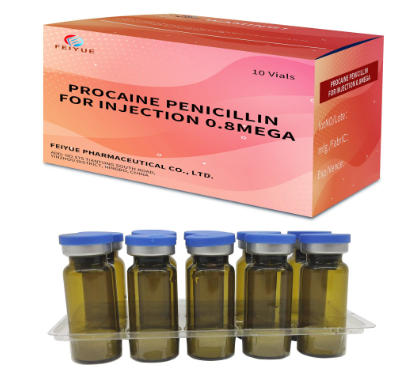
Penicillin G procaine leverages a procaine salt to form a suspension that dissolves gradually after intramuscular injection. This slow-release profile maintains serum penicillin G concentrations at therapeutic levels for a defined window, reducing the need for frequent dosing in suitable infections. The depot mechanism is especially helpful when sustained exposure is beneficial, such as certain streptococcal infections or mildly severe soft tissue conditions where patient compliance or access to healthcare may be limited. The formulation is typically presented as an injectable suspension with fixed units per milliliter, designed for single-dose administration in clinical settings under medical supervision. For OEM contexts, this section also highlights formulation stability considerations, container types (vials or prefilled syringes), and compatibility with regional packaging standards. Proper manufacturing controls ensure uniform suspension viscosity, uniform distribution of penicillin G, and stability under anticipated storage conditions. Visuals would include a labeled diagram of the depot at the injection site and a time-concentration curve illustrating gradual release over 24 to 48 hours and beyond, aiding training for OEM staff and healthcare partners.
Historically, Penicillin G procaine has been used to treat moderately severe infections caused by susceptible organisms where a sustained penicillin exposure is advantageous. Commonly cited indications include:
- Moderately severe to severe infections of the upper respiratory tract and soft tissues caused by susceptible streptococci.
- Skin and soft-tissue infections where penicillin-susceptible organisms predominate.
- Certain presentations of scarlet fever and erysipelas due to susceptible strains.
- Selected cases in which low, persistent penicillin levels are preferred or required by clinical guidelines.
It is important to note that modern practice often prioritizes alternative penicillin formulations or regimens depending on the infection, patient factors, and local resistance patterns. For OEM developers and distributors, aligning product indications with current regulatory guidance, clinical best practices, and regional formularies is essential. Visual elements such as an infection-indication infographic can clarify scope, while a video voiceover with an expert discussion can contextualize decision-making in clinical workflows.
Administration is by intramuscular injection, typically in a clinical or veterinary setting, with dosing intervals and amounts determined by infection type, severity, patient age, weight, and renal function. The procaine component slows absorption, producing a plateau in blood levels that gradually declines over time, with the pharmacokinetic profile influenced by tissue perfusion, injection site, and formulation specifics. Because penicillin G is hydrophilic and primarily renally excreted, kidney function can affect clearance and duration of effect, with adjustments needed for pediatric or renally impaired patients. Safety considerations include accurate allergy history assessment and monitoring for local injection-site reactions or systemic hypersensitivity. Visual aids such as a step-by-step IM injection diagram and a PK time-concentration curve support training for OEM manufacturing and healthcare staff. In OEM programs, providing dosing guidelines, patient education materials, and site-of-exjection best practices enhances safety and compliance across markets.
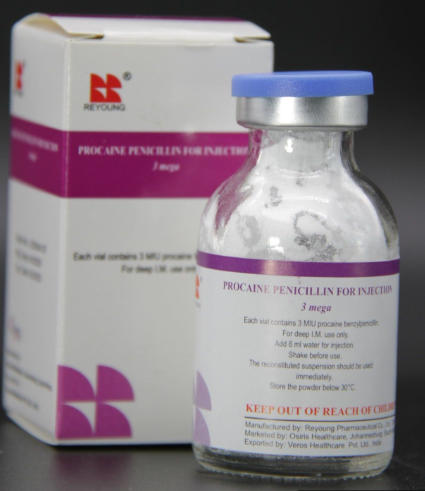
This section translates clinical content into a manufacturing and business context suitable for OEM partnerships. Key topics include:
- Quality and regulatory alignment: Ensure GMP-compliant production, validated aseptic processes, raw material traceability, and robust nonconforming product handling.
- Formulation and fill-finish: Control suspension viscosity, uniform drug distribution, and appropriate viscosity modifiers or stabilizers to preserve suspension integrity during transport and storage.
- Packaging customization: Offer multi-language labeling, country-specific packaging sizes, and regulatory documentation packages (COAs, batch records, stability data) tailored to target markets.
- Documentation and QA: Maintain batch records, certificates of analysis, sterility and pyrogen testing results, and clear QA protocols aligned with international regulatory expectations.
- Stability and storage: Provide validated stability data under different storage conditions and timelines, ensuring product performance throughout the distribution chain.
- QA/QA training for OEM teams: Develop standardized training materials for sterile filling, labeling, storage, and handling to support partners in diverse regulatory landscapes.
Visual guidance includes a flowchart of the OEM lifecycle from raw material sourcing to final packaged product, with QA checkpoints. A short factory tour video (60–90 seconds) can illustrate cleanroom areas, QA laboratories, and packaging lines, reinforcing confidence in supply capabilities for overseas brands.
Regulatory expectations vary by region but share core principles: quality, traceability, pharmacovigilance, and responsible use of antibiotics. Key considerations for OEM partners and buyers include:
- GMP compliance and regulatory dossiers: Maintain current GMP certificates, validation reports, and country-specific regulatory documentation to support export and import requirements.
- Pharmacovigilance and post-market surveillance: Establish processes for adverse event reporting and ongoing product safety monitoring.
- Antimicrobial stewardship: Promote judicious use, clear indications, and appropriate labeling to prevent misuse and resistance development.
- Ethical marketing and transparency: Avoid exaggerated claims, disclose limitations, and provide accurate dosing and safety information for end users.
Visual support: A regulatory readiness checklist infographic and a world-regional map illustrating major regulatory frameworks. A brief expert interview video can explain practical implications for cross-border supply and compliance.
Positioning for OEM collaboration, this section highlights the value proposition for international brands, wholesalers, and manufacturers seeking Penicillin G procaine formulations. Differentiators include:
- Rigorous QA programs and traceable supply chains.
- Scalable production capacity with flexible packaging options.
- Multilingual documentation support and regulatory liaison capabilities.
- Comprehensive stability data packages and dossier preparation assistance.
- Timely, transparent communication and on-time shipment assurances.
Visual material: Case-study graphic showing a successful OEM engagement from formulation to market entry, plus a testimonial-style montage video (with consent). These assets reinforce reliability, compliance, and customer-centric service.
This practical section helps buyers and distributors plan partnerships:
- Channel strategy: Private-label branding, co-branding, and regional regulatory clearance support.
- Documentation expectations: COAs, GMP certificates, batch records, stability data, sterility testing, and QA procedures.
- Dossier components: Regulatory-ready documents, labeling templates, and safety data packages suitable for target markets.
- Training and support: Technical training for local partners on storage, handling, and administration to ensure product integrity and proper use.
Visual cues: Downloadable sample dossier sections and annotated screenshots to guide document preparation.
Penicillin G procaine remains a clinically relevant antibiotic option under appropriate medical supervision, with an OEM-friendly pathway to deliver compliant, high-quality injectable formulations to international brands. Prospective clients are encouraged to contact the sales team for a customized OEM proposal, regulatory-ready documentation, and a detailed timeline for supply, quality, and compliance. This collaborative approach ensures that partners can meet patient needs while navigating diverse regulatory environments with confidence. Contact us to know more!
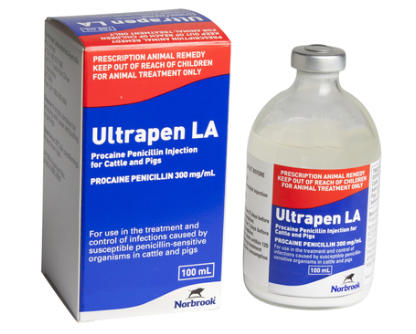
Penicillin G procaine is used for treating certain susceptible bacterial infections where sustained penicillin exposure is advantageous, including specific streptococcal infections and selected regimens for syphilis, under physician guidance. It is not effective against resistant strains and is contraindicated in penicillin-allergic patients.
It is administered by intramuscular injection in a healthcare setting, with dosing intervals and amounts determined by infection type, severity, patient factors, and regulatory guidance. Correct injection technique and asepsis are essential.
Key safety considerations include allergy history to penicillin or beta-lactams, potential local reactions at the injection site, and monitoring for adverse effects or hypersensitivity. Avoid in patients with prior anaphylaxis to penicillin.
OEM collaborations typically involve formulation customization, regulatory documentation, quality assurance, stability testing, packaging options, and post-sale support. A clear contract defines responsibilities, timelines, and compliance with GMP and regional regulations.
Buyers should request GMP certificates, COAs, batch records, stability data, sterility and pyrogen testing results, and detailed QA/QC procedures, along with labeling and regulatory compliance declarations for target markets.
[1](https://www.rxlist.com/penicillin-g-procaine-drug.htm)
[2](https://www.fda.gov/drugs/bioterrorism-and-drug-preparedness/questions-and-answers-consumers-penicillin-g-procaine)
[3](https://labeling.pfizer.com/showlabeling.aspx?id=718)
[4](https://reference.medscape.com/drug/penicillin-g-procaine-999572)
[5](https://www.mayoclinic.org/drugs-supplements/penicillin-g-benzathine-and-penicillin-g-procaine-intramuscular-route/description/drg-20452194)
[6](https://clinicaltrials.eu/inn/benzylpenicillin-procaine/)
[7](http://inspection.canada.ca/en/animal-health/livestock-feeds/medicating-ingredients/penicillin)
[8](https://www.msdmanuals.com/professional/infectious-diseases/bacteria-and-antibacterial-medications/penicillins)
Hot tags: Procaine Penicillin G Uses, Antibiotic Treatment, Bacterial Infections, Injection Therapy, Syphilis Treatment, Anthrax Prevention, Respiratory Infections, Skin Infections, Penicillin G Procaine, Medical Applications